2027 BS in Business Administration Curriculum: How to Evaluate Preparation in Financial Accounting
Audited and Verified:
Our Editorial and Data Verification Process
Research.com uses government datasets, official education statistics and primary institutional information to support its career and degree guides. Our review process checks factual accuracy, occupational definitions, source dates and the requirements associated with the credentials discussed.
How This Article Was Fact-Checked
Our editorial team verifies salary estimates, employment projections, education requirements and program information against original data providers and official organizations. Salary figures are checked against the relevant occupational definitions and reporting periods. Information about licensure, accreditation and required in-person training is reviewed separately.
Fact-checked and verified on:

Co-Founder and Chief Data Scientist
A BS in Business Administration may require financial accounting, but a course title alone cannot tell you whether you will leave able to interpret financial statements or handle accounting-related work. This distinction matters if you are choosing a concentration, transferring credits, or considering an accounting career.
This guide shows you what to look for in the curriculum, assignments, and program policies - and where a general business degree may fall short. Use it to compare programs against the financial accounting skills you actually need.
Key Things You Should Know
- Look for assessed work with transactions, adjusting entries, financial statements, and interpretation - not just an introductory course on the degree plan.
- A general business degree can build accounting literacy, but CPA eligibility depends on state-specific education and other requirements; the degree title is not enough.
- The U.S. Bureau of Labor Statistics projects 5% employment growth for accountants and auditors from 2025 to 2035, but that occupation-wide forecast does not predict an individual graduate's prospects.
What Is Financial Accounting Preparation in a Business Administration Degree?
Financial accounting is the process of recording transactions and preparing financial statements for people who need to understand an organization's financial position and performance. In a BS in Business Administration, the goal is often accounting literacy: reading a balance sheet, income statement, and statement of cash flows; recognizing how transactions affect them; and questioning the quality of the information used in a business decision.
That differs from managerial accounting, which emphasizes internal decisions such as budgeting and cost analysis. A business student might use financial statements to assess a supplier's stability, while an accounting major would typically study reporting rules and complex transactions in greater depth. If your goal is primarily logistics rather than financial reporting, compare that curriculum with shorter supply chain degrees and career value before paying for accounting electives you may not need.
Which Financial Accounting Courses Should a Business Administration Curriculum Include?
Start with the required course sequence, not the concentration label. The following comparison shows what each course can add and where a general business curriculum may stop.
| Course or course group | Preparation to look for | What its presence does not establish |
| Introductory financial accounting | Transactions, the accounting equation, adjusting entries, and basic financial statements | Ability to handle complex reporting independently |
| Financial statement analysis or accounting-focused finance | Ratios, cash-flow interpretation, and discussion of accounting assumptions | The same depth as an additional accounting course |
| Intermediate accounting electives or concentration courses | More detailed treatment of assets, liabilities, revenue, and reporting standards | CPA eligibility without a state-by-state course review |
Check prerequisites and the catalog term: an attractive elective may be unavailable when you need it, or may require courses outside the business core. A listed accounting elective is not an official accounting concentration unless the school awards one. National online business program rankings can help you identify programs to investigate, but the current catalog and syllabi are better evidence of accounting depth.
How Can You Evaluate Financial Accounting Skills in a Degree Program?
Ask for a recent syllabus, sample assignment, and grading rubric. A strong introductory course should require students to produce and explain accounting information, not only recognize terms in quizzes. When comparing programs, look for evidence in this sequence:
- Confirm that students record transactions and prepare adjusting entries before assembling statements.
- Check whether an assessed assignment connects the income statement, balance sheet, and cash flows.
- Look for a written explanation of errors, estimates, or changes in financial results, with feedback on the reasoning.
- Ask which spreadsheet or accounting tools students use and whether they must check outputs rather than accept them uncritically.
A case using fictional records can demonstrate classroom learning; it does not prove experience with an employer's books. If your actual goal is tracking project costs rather than preparing external financial statements, compare the relevant coursework and project management degree tuition comparisons before choosing extra accounting courses. Neither pathway substitutes for supervised accounting experience.
Accreditation is a useful screening tool, not a skills assessment. Verify the institution's accreditation and its current status. Then check whether any AACSB, ACBSP, or IACBE accreditation covers the business school or program you would enter. Do not assume that business accreditation also covers a separate accounting program or establishes that a BS in Business Administration contains enough accounting coursework for licensure.
Accreditation also does not decide whether a prior course satisfies a specific requirement. The receiving institution makes that determination through its transfer and degree-audit policies. This distinction matters across business fields: human resources bachelor's residency and transfer rules illustrate why students must check credit applicability separately from program recognition. For financial accounting, request written confirmation that a transferred course fulfills the required accounting course rather than only an elective.
The learning outcomes may be similar, but the route to feedback can differ. An online course might use recorded demonstrations, discussion-based cases, and submitted spreadsheet files; a campus course might work through entries and statement problems in class. Neither format is inherently more rigorous. Compare how often students practice, receive corrections, and ask questions before the next topic builds on an earlier one.
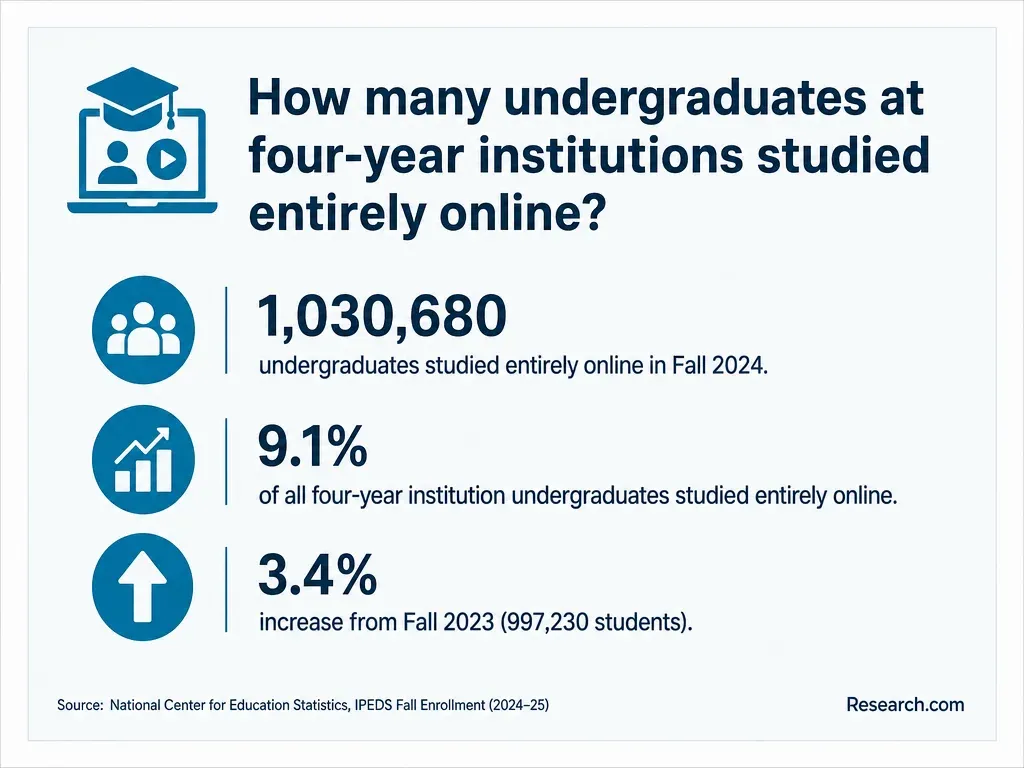
If you work while studying, verify live-session times, weekly deadlines, exam proctoring, group-work expectations, and access to accounting tutors. "Online" does not necessarily mean self-paced. Guides to flexible business administration programs for career progression can help narrow your search; confirm the accounting course's actual schedule before enrolling.
Requirements vary by institution and by entry point. First-year applicants may need a secondary-school credential and transcripts; transfer applicants usually submit prior college records. Some schools admit students directly to the business major, while others require prerequisite courses or a separate major application. A non-business background does not automatically prevent admission, but prior mathematics and accounting work can affect course placement and sequencing.
Ask admissions which requirements apply to entry, then ask a business adviser which courses you must complete before financial accounting and any advanced electives. Transfer students should obtain an official evaluation: accepted credit may count toward graduation without satisfying the accounting requirement. If speed matters, fast-track undergraduate study options are worth comparing only after you confirm prerequisite availability and how prior credits apply.
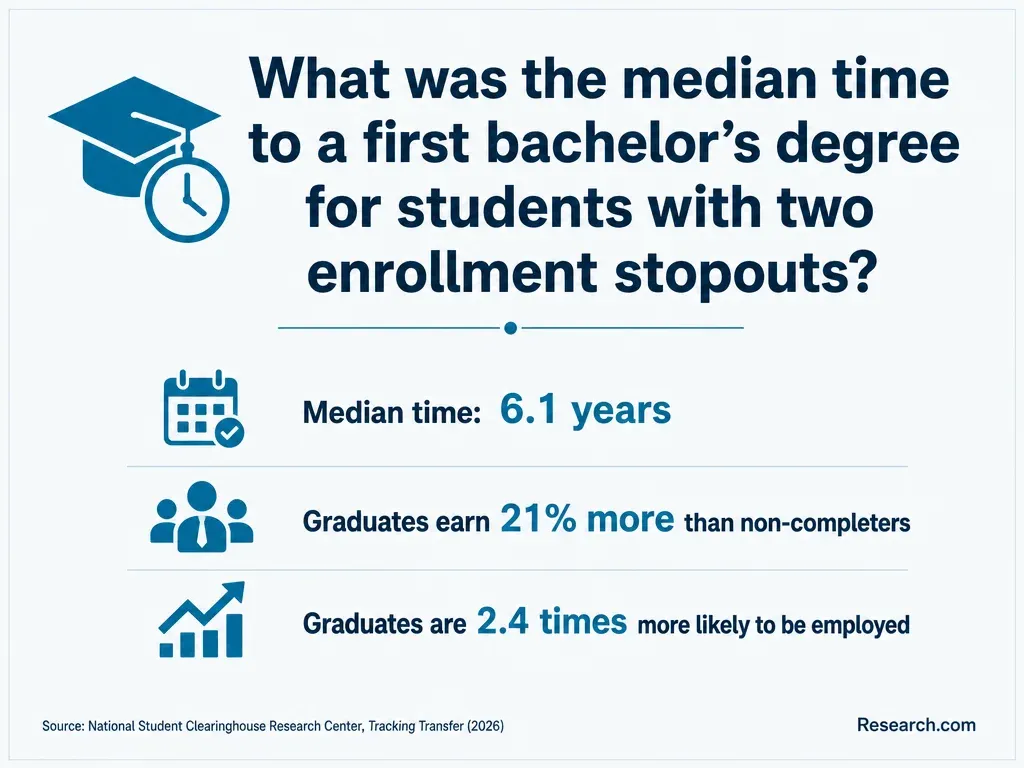
A full-time bachelor's pathway is commonly planned across four academic years, but your completion date depends on accepted credits, required prerequisites, course availability, and enrollment pace. An accounting elective offered infrequently can delay completion even if most other requirements are finished.
For a useful cost comparison, request a degree audit and price the remaining required courses, not the advertised tuition alone. Include mandatory fees, books or software, proctored exams, and any travel; account separately for borrowing costs and time away from paid work. Shorter business administration study options and career prospects can provide comparison candidates, but a shorter calendar schedule is not automatically cheaper if it leaves you with extra required credits or a heavier course load.
Possibly, but not by itself. CPA eligibility is set by the state board where you intend to seek licensure and involves education, the CPA exam, and experience requirements. A general BS in Business Administration may lack the required number or types of accounting courses. Requirements and acceptable pathways can change, so do not rely on a concentration name or a school's general career description.
Before choosing electives, send the state board's requirements to the program's accounting adviser and request a course-by-course plan. Ask how missing coursework could be completed and whether transfer courses would be accepted; confirm eligibility with the board. If you do not want to meet the additional accounting and licensure requirements, a different business function may be a better fit. For example, accelerated undergraduate supply chain programs serve a distinct career goal - not an alternate route to becoming a CPA.
The strongest fit depends on your coursework and demonstrated experience. Accounting assistants and bookkeeping staff help maintain records and reconcile accounts; employers may prioritize software skills and accuracy over a particular bachelor's major. Some staff accountant or auditor openings accept a business-related degree, while others seek an accounting degree, substantial accounting coursework, or a CPA-eligible education. Read the qualifications for the specific role rather than treating "accounting career" as one entry standard.
For entry-level applications, pair the degree with evidence: a supervised internship, authorized workplace tasks, or a clearly labeled academic work sample showing statement preparation and error checking. Keep confidential records out of any portfolio. If you are considering American colleges offering fast-track business bachelor's, verify that the faster route still leaves room for the accounting courses and relevant experience your target employers request.
What Salary and Job Outlook Can Accounting Graduates Expect?
For U.S. accountants and auditors, the Bureau of Labor Statistics reports a $83,680 median annual wage in May 2025 and projects 5% employment growth from 2025 to 2035. The median covers workers across experience levels, industries, and locations; it is not a starting salary or an earnings estimate for BS in Business Administration graduates.
Use occupation data to assess the broad market, then compare local job postings for the exact roles you could qualify for at graduation. Note their coursework, experience, and credential requirements alongside pay. When weighing an accelerated program, compare fast-paced online business degrees on total cost and accounting-course access - not on the assumption that finishing sooner will produce the occupation-wide median wage.
Other Things You Should Know About Business Administration
For U.S.-focused study and work, prioritize the reporting framework used in your coursework and target roles, often U.S. GAAP. IFRS knowledge can be useful for international reporting, but introductory exposure is not specialist proficiency.
Yes. Publicly available statements let you trace figures, compare reporting periods, and test your interpretations. Distinguish what the filings show from assumptions you make about the business.
Spreadsheets are valuable for checking calculations and analyzing statements. If a target job names a particular accounting system, seek practice with that system as well; familiarity with one tool does not prove accounting judgment.
Refresh the accounting equation, journal entries, and adjusting entries before enrolling. Ask whether the school offers a review module or tutoring, especially if the next course assumes mastery of those foundations.
- Chapter 5: Financial Reporting - Financial Statement Elements https://nces.ed.gov/pubs2015/fin_acct/chapter5_1.asp
- Education Requirements | texas.gov https://www.tsbpa.texas.gov/applicants/education/
- Managerial Accounting and Finance Concentration | Valley City State University https://catalog.vcsu.edu/undergraduate-catalog/programs/majors/business-administration-managerial-accounting-finance-concentration/
- ACCT 2217: Financial Accounting - Common Course Outline | The ECHO https://www.rctc.edu/files/ccos/ACCT-2217-CCO.html
- Business Administration | South University https://catalog.southuniversity.edu/business-administration/bachelor-of-business-administration-bba/business-administration
- GAAP vs. IFRS in Accounting | University of Phoenix https://www.phoenix.edu/articles/accounting/gaap-vs-ifrs-in-accounting.html
- ACCT G101: Financial Accounting - Academic Catalogs | Coast Community College District Academic Catalogs https://catalog.cccd.edu/courses/acct-g101/
- ACC101 Course | Ensign College Catalog https://catalog.ensign.edu/courses/0034601
- Full article: Establishing a Framework for Assessing Teaching Effectiveness | tandfonline.com https://www.tandfonline.com/doi/full/10.1080/87567555.2021.1909528
- Program: Accounting Major, B.S. | wilkes.edu https://catalog.wilkes.edu/preview_program.php