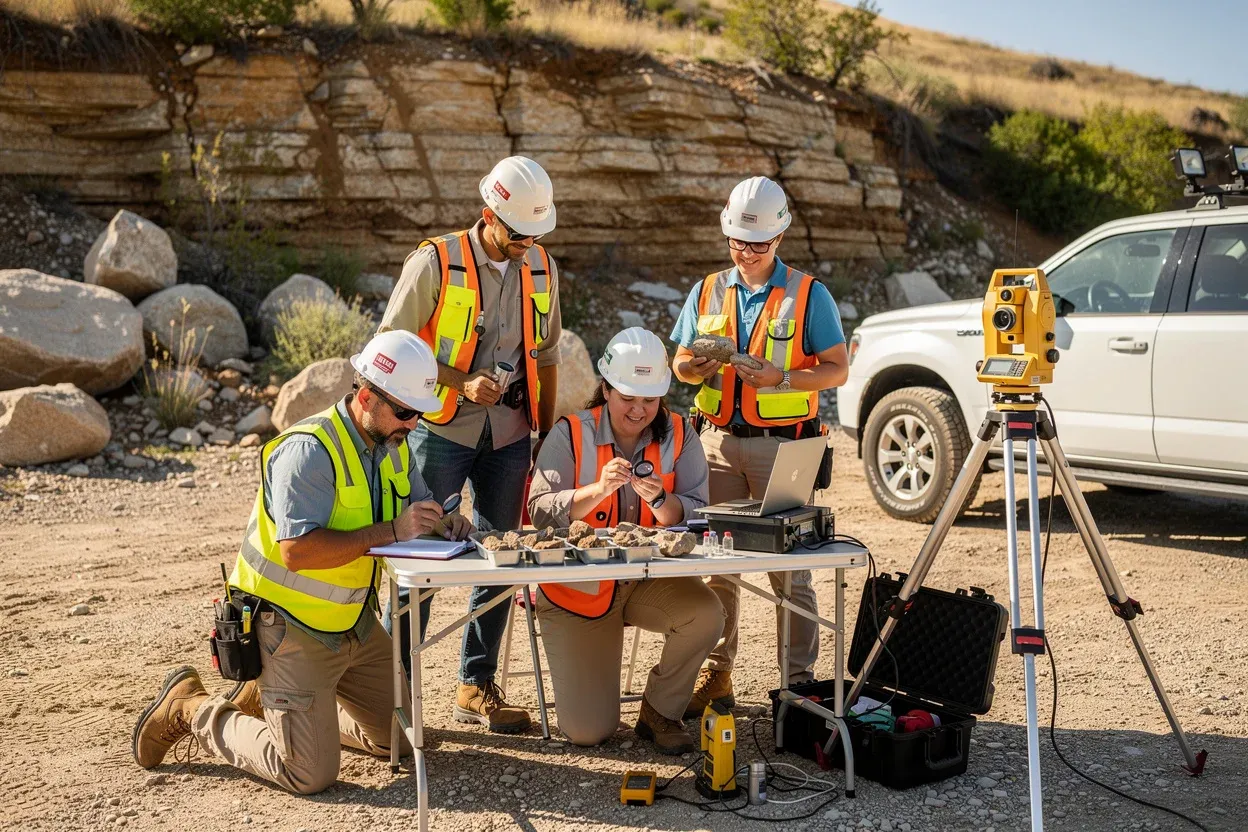
2026 Materials Science & Engineering Degree Programs That Accept Transfer Credits

Co-Founder and Chief Data Scientist
Students seeking to transfer credits into materials science & engineering degree programs face complex hurdles: minimum GPA requirements, limits on how old transferred courses can be, restrictions based on concentration, and stringent documentation rules all influence credit acceptance.
A transferred course meeting one institution's criteria might be rejected or discounted at another, impacting time to degree and cost. Notably, materials science & engineering graduates earn a median annual salary of $85,000, highlighting the financial stakes tied to efficient degree completion.
This article unpacks these variables, GPA thresholds, recency rules, concentration limits, and necessary paperwork, to guide prospective transfer students through realistic expectations and strategic planning.
Key Things to Know About Materials Science & Engineering Degree Programs That Accept Transfer Credits
- Programs often require a GPA of 2.5 or higher on transfer credits. Many institutions enforce this threshold to ensure academic rigor and relevance to materials science fundamentals.
- Course recency rules generally limit acceptance to classes completed within the last five to seven years. This maintains alignment with evolving industry standards and technological advances.
- Documentation requirements, such as official transcripts, course syllabi, and lab work descriptions, are critical to verify content equivalence and determine credit applicability toward degree concentrations.
Which Materials Science & Engineering Degree Programs That Accept Transfer Credits Are Available at the Undergraduate Level?
Undergraduate materials science and engineering programs accepting transfer credits are available in several formats designed to meet diverse student needs.
Institutions with clearly stated transfer credit policies often highlight regional accreditation as the standard that supports smooth credit transferability, helping students plan smarter before enrolling.
- Associate-to-Bachelor Pathways: Many community colleges collaborate with four-year institutions to offer structured programs allowing graduates to transfer credits seamlessly into bachelor's degrees in materials science and engineering. These pathways frequently guarantee admission to partner universities after earning an associate degree, supported by articulation agreements that specify which courses transfer.
- Bachelor's Completion Programs: Targeted at working adults, military veterans, or those resuming education, these programs enable students with existing college credits, including military and technical training, to complete upper-level coursework either online or on campus. Transfer policies commonly require minimum GPAs and course equivalency assessments for core engineering and science classes.
- Traditional Four-Year Degrees: Accredited universities offering a bachelor of science in materials science and engineering generally accept transfer credits from regionally accredited colleges if courses meet degree criteria. However, restrictions such as credit caps, age of courses, and concentration-specific rules can limit accepted credits.
- Transfer Credit Evaluation Factors: Schools assess transfer credits based on:
- Minimum GPA thresholds in relevant courses
- Time limits on credit validity, especially for fast-evolving STEM subjects
- Documentation such as official transcripts and detailed course descriptions
Choosing among the best transfer-friendly materials science and engineering bachelor's degree programs early is crucial to maximize credit acceptance, shorten time to degree completion, and reduce costs.
For those exploring flexible options, comparing transfer policies is as vital as the curriculum itself. Additionally, students might also consider related fields or pathways highlighted in resources like the cheapest SLP master's programs for potential academic transitions.
Table of contents
What Are the Most Common Transfer Credit Policies Among Accredited Materials Science & Engineering Programs?
Transfer credit acceptance policies for materials science & engineering programs typically involve a set of well-established institutional guidelines that determine how prior coursework can apply toward degree completion.
Prospective students should consider these common frameworks to understand how many credits can actually transfer when changing schools or entering a new program.
- Transfer Credit Caps: Most accredited programs limit transferable credits to between 50% and 75% of the total required for graduation. Community colleges and two-year programs usually impose stricter caps compared to four-year universities, which affects how much prior coursework counts.
- Course Equivalency Reviews: Transferring credits generally demands a close match to the receiving institution's curriculum. This requires thorough course-by-course evaluations that verify learning outcomes align and that academic rigor is comparable.
- Grade Thresholds: A minimum grade, often a C or higher, is necessary for credits to qualify for transfer. Some materials science & engineering programs apply higher standards for major-specific courses to maintain technical competency.
- Institution Type Variations: Public universities frequently participate in statewide articulation agreements that simplify transfers within the system, especially from two-year to four-year institutions. Private colleges tend to exercise more individualized policies and sometimes stricter credit assessments.
- Recency and Documentation Requirements: Credits usually must be recent, often earned within 5 to 10 years, and require official transcripts supported by detailed course descriptions or syllabi to demonstrate relevancy.
- Concentration or Major Restrictions: Specialized or advanced courses within materials science & engineering fields may have restricted transferability, with schools encouraging completion on-site to uphold academic standards.
Because of the variability in these factors, comparing specific institutional transfer credit acceptance policies is crucial before applying. Students seeking a bachelor degree online in 2 years or on-campus should carefully evaluate how policies affect graduation progress and credit recognition in accredited materials science & engineering degrees.

How Many Transfer Credits Can Students Typically Apply Toward a Materials Science & Engineering Degree?
Accredited materials science & engineering programs typically allow transfer of a substantial portion of total credits toward degree completion, frequently up to 60 semester hours or about two-thirds of the bachelor's degree.
However, the number of credits accepted specifically for major requirements tends to be lower, commonly ranging between 20 and 40 credits. This gap highlights the distinction between total transferable credits and those counted toward core materials science & engineering coursework.
- Total Credit Limits: Institutions set caps on transferable credits to ensure students complete significant coursework within their own programs or campuses.
- Major-Specific Acceptance: Only a fraction of transferred credits apply to specialized materials science & engineering courses due to rigorous curriculum standards.
- Accreditation and Quality: Credits from regionally accredited schools with a STEM emphasis and acceptable GPA, often a minimum of 2.5 to 3.0, are preferred during evaluation.
- Course Relevance and Timing: Courses must generally be recent and closely aligned in content and credit value; outdated or divergent courses may be credited as electives.
- Time and Cost Benefits: Strategically transferring credits from reputable institutions can accelerate degree completion and decrease tuition expenses, especially advantageous for community college transfers, veterans, and returning adult learners.
Prospective students should request a preliminary transfer credit assessment from programs of interest to clarify acceptance policies and better plan their academic trajectory.
One professional who earned a materials science & engineering degree shared that navigating transfer credits felt "like piecing together a puzzle." He recalled the initial uncertainty about which credits would count toward his major and the relief when a thorough evaluation highlighted many of his community college courses as applicable.
"It wasn't just about counting hours. It mattered that the material matched program standards," he reflected. He emphasized how early inquiries and persistent follow-ups with academic advisors helped him efficiently map out his path, saving both time and money while keeping his career goals in sharp focus.
Which Materials Science & Engineering Programs Accept Credits From Community Colleges and Two-Year Institutions?
Many four-year institutions offering materials science and engineering bachelor completion programs accepting community college credits rely on formal or informal collaborations with two-year schools. These partnerships help clarify which courses align with bachelor's degree requirements, expediting transfer credit evaluation and minimizing repeated coursework for transfer students.
- Partnerships: Universities often develop articulation agreements or joint advising systems with local community colleges to coordinate curricula. This cooperation aligns lower-division classes with bachelor's degree standards and guides students on transferable courses.
- Transfer Associate Degrees: Specialized Transfer Associate or Transfer Pathway degrees increasingly enable smoother transitions. Created to replicate the first two years of a materials science and engineering bachelor's, these associate degrees allow students to complete foundational courses that will effectively transfer to four-year institutions.
- State Transfer Guarantee Programs: Programs in states such as California, Florida, and New York promote streamlined credit acceptance across public colleges and universities. For instance, California's Associate Degree for Transfer provides guaranteed admission and credit transfer for eligible students, though materials science and engineering majors may face specific GPA or course eligibility conditions impacting transferability.
- Credit Acceptance Variables: The number of permitted transfer credits often hinges on factors like minimum course GPA, how recently coursework was completed, relevance to the specialization within materials science and engineering, and thoroughness of provided transcripts or course details.
Prospective students should verify early whether their community college holds articulation agreements with four-year materials science and engineering programs to avoid losing credits during transfer evaluation. This due diligence supports a more efficient path to degree completion.
Working adults or military veterans considering returning to school may also explore accelerated options or alternative credits, such as those highlighted in cybersecurity online degree offerings, to broaden their academic pathways within engineering disciplines.
What Is the Minimum GPA Requirement for Materials Science & Engineering Transfer Credit Acceptance?
Minimum GPA requirements for transfer credit acceptance in materials science & engineering programs can vary by institution and academic policy. Schools often establish specific thresholds to determine whether previously earned coursework qualifies for transfer.
- Admission vs. Credit: Transfer students often face separate GPA criteria—one for gaining admission to the materials science & engineering program and a stricter GPA for each transferred course to qualify as credit toward the degree. Admission with a modest GPA does not ensure all previous classes will be accepted for the major.
- Sliding-Scale Approach: Some programs offer a tiered system where students with higher GPAs can transfer more credits. For instance, a 3.5 GPA could unlock acceptance of a larger portion of prior coursework compared to a student with a 2.8 GPA who still meets minimum standards.
- Official Policies Matter: Transfer credit eligibility hinges on detailed institutional policies issued by academic departments or registrars, which typically differ from generalized or promotional information found in admissions materials.
- Retaking Courses: Students whose transfer credits fall below thresholds due to GPA restrictions may retake equivalent classes at their new school, allowing them to progress toward their degree without penalty or wasted time.
A professional who built a career after graduating with a materials science & engineering degree recalled how navigating GPA requirements felt "intimidating at first," especially needing to decipher different policies at each institution. She explained, "It wasn't just about meeting a number. Some of my credits were accepted right away, others required me to provide extra transcripts or syllabi."
The ability to retake certain courses gave her peace of mind; "Knowing I could improve my standing by retaking classes helped me stay motivated." Her experience highlights the importance of persistence and detailed planning when transferring credits into this demanding field.

How Do Materials Science & Engineering Programs Evaluate Non-Traditional or Professional Transfer Credits?
Accredited materials science & engineering programs commonly apply established frameworks to evaluate credits earned beyond traditional college courses, including military training, professional development, workforce education, and employer-sponsored programs.
These methods ensure that relevant learning translates into degree progress while maintaining academic standards.
- ACE Credit Recommendations: Many programs accept guidance from the American Council on Education, which assesses military and professional training as college-level learning relevant to materials science & engineering.
- Standardized Exams: Credit can be earned through tests like CLEP, which assess knowledge gained outside formal classrooms, often granting credit for key technical and foundational subjects.
- Portfolio Review: Several institutions invite students to submit professional portfolios, featuring projects, certifications, or licenses, to validate competencies tied to degree outcomes.
- Recognized Learning: Military service schools, accredited apprenticeships, and industry certifications are frequently considered when they align with program requirements.
- Documentation Quality: Detailed syllabi, certificates, performance records, and professional licenses significantly impact acceptance chances and should be collected carefully.
- Consortium Membership: Prospective students should confirm whether their institution participates in networks like the National College Credit Recommendation Service to facilitate non-traditional credit transfers.
A 2023 survey found that over 65% of engineering programs have expanded policies to acknowledge some form of non-traditional credit, reflecting growing recognition of diverse educational pathways.
Which Online Materials Science & Engineering Degree Programs Offer the Most Flexible Transfer Credit Policies?
Online materials science & engineering degree programs with flexible transfer credit policies generally come from regionally accredited institutions that limit residency requirements to 30 credits or fewer.
These programs often accept a broad range of equivalent coursework, including community college classes, military training, and previously completed STEM courses, helping students accelerate degree completion without repeating content.
- Residency Limits: Programs with lower residency credit rules enable students to transfer more credits toward their degrees, with many competitive online programs capping residency at 30 or fewer credits to maximize credit application.
- Wide Course Acceptance: Flexibility is increased when institutions evaluate transfer credits comprehensively, not only for general education but also for core materials science & engineering courses such as thermodynamics, materials characterization, and metallurgy.
- Adult Learner Focus: Online materials science & engineering programs often cater to adult learners balancing career and family, which drives schools to adopt more adaptable transfer policies than typical on-campus programs known for stricter residency and quality control standards.
- Program Quality Considerations: While flexible credit acceptance improves access, students should ensure programs maintain recognized regional accreditation and relevant programmatic accreditation to protect educational quality and employer recognition.
- Transfer Policy Nuances: Beyond published credit caps, prospective students must consider GPA minimums, course recency rules, and major-specific restrictions that impact how many credits actually count toward the materials science & engineering degree.
Carefully verify institutional accreditation and detailed transfer credit policies, especially residency and major course limits, -before enrollment to avoid unexpected delays in degree progress.
What Role Does Regional Versus National Accreditation Play in Materials Science & Engineering Transfer Credit Decisions?
The U.S. Department of Education and the Council for Higher Education Accreditation (CHEA) distinguish regional accreditation, applied to most traditional public and private universities, from national accreditation, which often covers specialized, vocational, or career-oriented institutions.
This difference plays a critical role for students seeking seamless transfer credit acceptance in materials science & engineering degree programs.
- Reciprocity: Regionally accredited schools typically share robust reciprocal transfer agreements, making it easier for students' materials science & engineering coursework to transfer intact between these institutions. These agreements often consider factors such as GPA thresholds and course recency rules to determine credit applicability.
- Transfer Challenges: Credits earned at nationally accredited institutions frequently encounter higher scrutiny and restricted acceptance at regionally accredited universities. Because many regionally accredited schools view national accreditation as less rigorous or differently focused, students risk partial credit loss or outright rejection.
- Employer and Graduate Recognition: Degrees from regionally accredited programs tend to align better with employer expectations and graduate admissions standards. Transfer credits from nationally accredited schools may not fully meet these standards, potentially affecting career advancement or acceptance into graduate materials science & engineering tracks.
- Enrollment Risks: Students enrolling in nationally accredited programs who plan to transfer to regionally accredited institutions should obtain explicit, written policies on transfer credit acceptance. Without clear documentation, unexpected hurdles could delay degree completion.
- Policy Verification: Confirming transfer credit policies in writing, particularly regarding specialized or technical materials science & engineering courses, is essential before enrollment. This reduces uncertainties related to articulation agreements and credit recognition within regional or state transfer frameworks.
Prospective students, including community college graduates, working adults, veterans translating service training into academia, and career changers, benefit from understanding these accreditation distinctions to navigate system complexities effectively.
Awareness of regional accreditation impact on transfer credits in materials science & engineering helps students plan paths that align with their academic and professional goals. Similarly, examining national versus regional accreditation transfer policies for materials science & engineering programs aids in setting realistic expectations for credit acceptance and degree progression.
For those interested in interdisciplinary options, exploring a social media marketing degree can also complement STEM education in emerging industry sectors.
How Do Articulation Agreements Facilitate Transfer Credit Acceptance in Materials Science & Engineering Programs?
Articulation agreements are formal, negotiated contracts between two educational institutions that guarantee the transferability of specific materials science & engineering courses or entire degree sequences.
These agreements reduce the uncertainty students face when changing schools, especially important for transfer credit articulation agreements for materials science & engineering programs. They ensure that credits earned at one institution will be accepted by another, minimizing credit loss and streamlining the transfer process.
Common structures of articulation agreements include:
- Bilateral Agreements: Formal contracts between two schools outlining which materials science & engineering courses transfer directly and how they apply to degree requirements.
- Statewide Articulation Systems: Coordination of credit transfer policies across multiple public colleges and universities within a state, supporting smoother student transfers between institutions and aligning with statewide articulation frameworks supporting materials science & engineering transfer.
- National Transfer Frameworks: Broader agreements establishing credit recognition standards nationwide for students relocating or attending specialized programs.
Students should research whether their current sending institution maintains an active articulation agreement with the materials science & engineering program they plan to join. Reading these agreements carefully is crucial.
Pay close attention to which courses transfer, any restrictions on transferability, required grades, course recency, and concentration-specific limitations. Confirm that the agreement is current, as these documents are renegotiated periodically.
Working proactively with academic advisors at both sending and receiving institutions enables students to use articulation agreements as a degree-planning roadmap beginning as early as the first semester. Those looking for flexible options might consider an online college with no GPA requirements, which may also honor transfer credits under articulation agreements.
What Prior Learning Assessment Options Are Available for Prospective Materials Science & Engineering Transfer Students?
Prospective materials science & engineering transfer students may have access to several prior learning assessment options depending on institutional policies. These pathways can help evaluate previous academic, professional, or experiential learning for potential credit.
- Prior Learning Assessment (PLA): This formal process lets students earn credit for competencies gained outside traditional studies, such as work experience, military service, or self-directed learning, supporting faster completion of materials science & engineering degrees.
- CLEP and DSST Exams: Widely accepted standardized tests that validate college-level knowledge in foundational topics relevant to materials science & engineering.
- Institutional Challenge Exams: Custom assessments offered by colleges enabling students to demonstrate subject mastery without enrolling in the full course.
- Portfolio Assessment: Submission of evidence like work samples, certifications, and reflective essays that faculty or PLA specialists carefully evaluate to confirm learning outcomes.
- ACE-Evaluated Training: Credit recommendations from the American Council on Education (ACE) cover military and workforce programs often recognized by materials science & engineering programs.
- PLA vs. Transfer Credit: Unlike transfer credit, which involves accepted coursework from other accredited institutions, PLA requires direct evaluation of experiential learning and detailed documentation. PLA credits typically appear on transcripts as examination or portfolio credit rather than course transfer.
- Accreditation and Employer Factors: PLA acceptance varies among accrediting agencies and institutions; students should verify that credits earned meet both academic standards and employer expectations in technical fields.
- Time and Cost Savings: Research from the Council for Adult and Experiential Learning highlights PLA's potential to lower tuition costs and shorten degree completion time, especially benefiting adult learners.
Prospective students should proactively inquire about PLA policies within target programs, as assessment acceptance and credit application differ widely.
Which Materials Science & Engineering Graduate Programs Accept Undergraduate Transfer Credits or Prior Graduate Coursework?
Graduate programs in Materials Science & Engineering differ considerably in their acceptance of transfer credits from undergraduate or prior graduate coursework.
Programs such as master's degree completion, bridge programs, and post-baccalaureate certificates are typically more open to awarding credit for previously earned relevant courses. These flexible options often target working professionals, career changers, or students seeking streamlined paths, where transfer credit acceptance is a vital feature.
Key factors influencing transfer credit decisions include:
- Academic Level Equivalency: Transfer credits must match the level of rigor required by the receiving program, with undergraduate credits usually accepted only if they stem from upper-division technical courses, and graduate credits needing to meet or surpass program standards.
- Course Recency: Programs often limit accepted transfer credits to coursework completed within the past five to seven years to ensure relevance.
- Accreditation: Preference is given to courses from regionally accredited institutions; those from non-accredited or foreign schools require extensive review.
- Course Content: Foundational courses are more readily transferable, whereas advanced or specialized subjects must closely align with the current program's curriculum.
Programs designed with flexibility, such as professional master's degrees, hybrid MBAs with materials science concentrations, or accelerated tracks, usually have formal transfer credit policies allowing partial fulfillment of degree requirements.
By contrast, research-intensive master's or PhD programs often require students to complete most or all coursework on campus to uphold academic rigor and program integrity.
Applicants should be prepared to submit detailed syllabi, official transcripts, and occasionally instructor qualifications. Initiating a graduate credit evaluation early in the admissions process helps clarify eligibility and aids efficient academic planning.
What Graduates Say About Materials Science & Engineering Degree Programs That Accept Transfer Credits
- Hallie : "When I started my materials science & engineering degree online, I was pleasantly surprised by the manageable GPA thresholds for accepting transfer credits. This flexibility really motivated me to keep my grades up without feeling overwhelmed. However, I quickly learned that course recency rules can be strict, especially for core subjects. Older credits might not count, which encouraged me to plan my course timeline carefully. Navigating these requirements was challenging but rewarding, and it gave me a real sense of ownership over my education."
- Jakob : "Reflecting on my experience with my materials science & engineering program, I found the documentation requirements for transfer credits to be more intensive than I expected. Precise transcripts and course descriptions were essential to get credits approved. The concentration-specific restrictions were another eye-opener, as I realized not all transfer courses applied equally, often requiring me to take additional electives for my focus area. Though at times frustrating, this process deepened my appreciation for the program's thoroughness and its aim to maintain academic integrity."
- Omar : "From a professional standpoint, understanding how GPA thresholds impact transfer credit acceptance in materials science & engineering was crucial for me. Programs often have minimum GPA requirements that directly affect credit transferability. The course recency rules also made me reevaluate the relevance of my past coursework, prompting me to retake some classes to stay current in the field. I recommend future students prepare meticulous documentation early on, as it streamlines the credit evaluation process and saves valuable time."
Other Things You Should Know About Materials Science & Engineering Degrees
Transferred credits typically remain eligible for application toward a materials science & engineering degree for up to 5 to 7 years. Beyond this period, many programs enforce recency limits to ensure that knowledge and skills meet current industry and academic standards. Students should verify specific institutional policies, as some schools may allow older credits if supplemented by recent coursework or professional experience.
Applicants must provide official transcripts from prior institutions along with detailed course descriptions or syllabi. Some programs also request proof of course outcomes and accreditation status of the sending institution. This documentation helps program evaluators determine equivalency and relevance to materials science & engineering degree requirements.
Materials science & engineering programs generally require international transcripts to be evaluated by certified credential evaluation services. This process translates foreign academic credits into the equivalent U.S. credits and grades. Programs may impose additional review for content alignment, especially for core courses, ensuring transfer credits meet program standards and accreditation guidelines.
Common concentrations open to transfer students include nanomaterials, biomaterials, electronic materials, and polymer science. These areas often have more standardized foundational coursework, which facilitates credit transfer. However, specialized or advanced topics may require completion in residency due to their technical complexity and lab-intensive components.
References
- Transfer Guide https://coursetransfer.northcarolina.edu/guide/2024-2025/1478
- 4 Ways Transfer Students Can Maximize College Credits for Prior Experience https://www.umassglobal.edu/blog-news/4-ways-transfer-students-can-maximize-college-credits-prior-experience
- Credit Articulation Agreements Act - American Legislative Exchange Council https://alec.org/model-policy/credit-articulation-agreements-act/
- National vs. Regional Accreditation: Why Does it Matter? https://www.tesu.edu/about/blog/2016/national-vs-regional-accreditation-why-does-it-matter.php
- Transferring from Another Faculty https://www.ualberta.ca/en/engineering/admissions-programs/undergraduate/admissions/transfer-options/from-another-faculty.html
- Criteria for Accrediting Engineering Programs, 2025 - 2026 - ABET https://www.abet.org/accreditation/accreditation-criteria/criteria-for-accrediting-engineering-programs-2025-2026/
- Transfer Articulation Agreements: 5 Essential Insights https://www.sparkadmissions.com/blog/transfer-articulation-agreements/
- Materials Science and Engineering Transfer Pathway https://admission.universityofcalifornia.edu/admission-requirements/transfer-requirements/uc-transfer-programs/transfer-pathways/materials-science-and-engineering.html
- Prior Learning Assessment and Recognition (PLAR) https://www.sait.ca/admissions/transfer-options/prior-learning-assessment-and-recognition