2027 Nursing Orientation Progress Meetings: Preparing Questions and Documenting Learning Needs
Audited and Verified:
Our Editorial and Data Verification Process
Research.com uses government datasets, official education statistics and primary institutional information to support its career and degree guides. Our review process checks factual accuracy, occupational definitions, source dates and the requirements associated with the credentials discussed.
How This Article Was Fact-Checked
Our editorial team verifies salary estimates, employment projections, education requirements and program information against original data providers and official organizations. Salary figures are checked against the relevant occupational definitions and reporting periods. Information about licensure, accreditation and required in-person training is reviewed separately.
Fact-checked and verified on:

Co-Founder and Chief Data Scientist
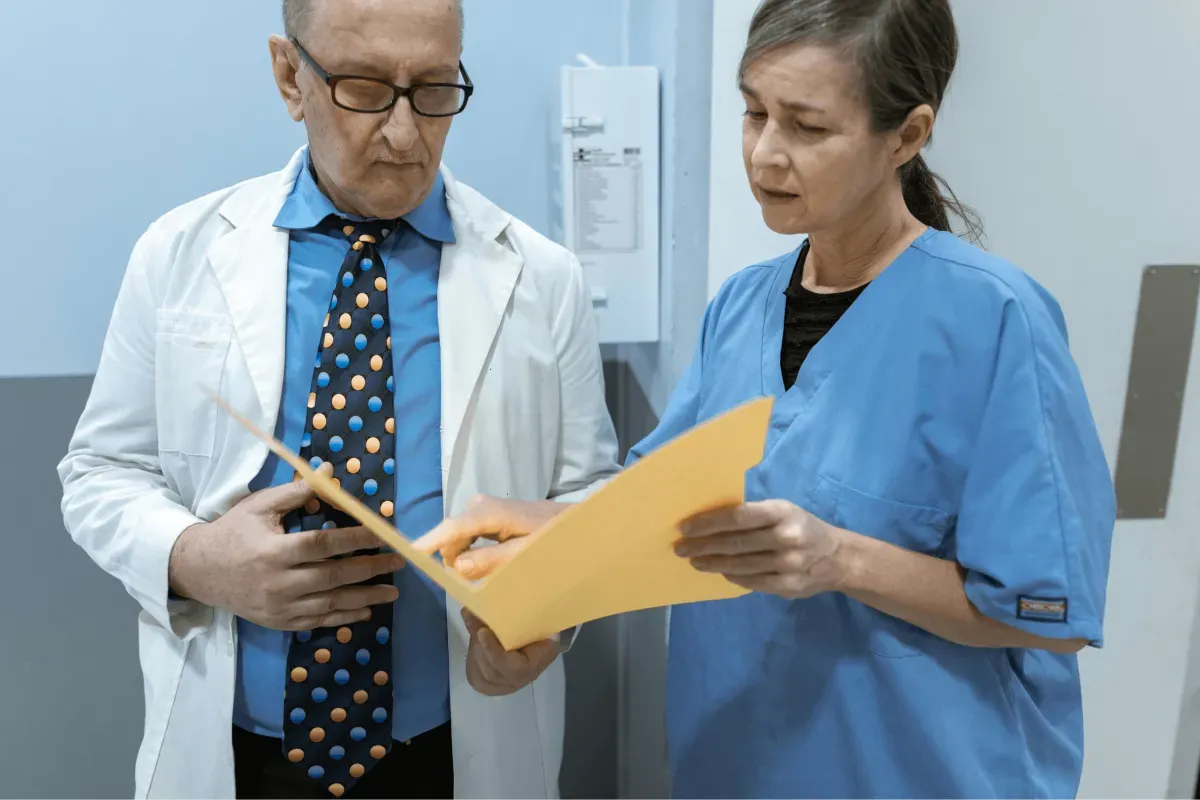
A nursing orientation progress meeting should do more than confirm that you attended training. It should show which skills you can perform under the required supervision, where you need more practice, and what evidence will demonstrate progress. For nursing students, new graduates, and nurses entering a new setting, that distinction affects patient safety and readiness for the next assignment. This guide explains how to prepare questions, document learning needs, and leave each meeting with a specific follow-up plan.
Key Things You Should Know
- Bring evidence, not just impressions: record an observed example, the competency it relates to, the feedback received, and the next practice opportunity.
- Ask who will assess each skill, what standard they will use, what supervision remains necessary, and when progress will be reviewed again.
- Use a learning plan with a specific goal, an approved practice activity, an evaluator, and a review date; completing orientation activities alone does not establish independent clinical competence.
What Are Nursing Orientation Progress Meetings and Why Do They Matter?
A nursing orientation progress meeting is a scheduled discussion about a learner's or new employee's development against defined expectations. In a nursing program, it may involve a student and clinical instructor reviewing course outcomes and supervised performance. In a new-hire orientation, an RN orientee, preceptor, and educator or manager may review unit competencies and the level of support still needed. The people who evaluate performance and approve progression differ by setting.
The meeting matters because attendance, confidence, and observed competence are not the same thing. A useful review identifies what the nurse has demonstrated, what has not yet been observed, and whether the current assignment and supervision are appropriate. A nurse entering from another pathway should ask for expectations that match their starting credential: entry-level MSN options for career changers, for example, concern initial nursing preparation, not an experienced RN's orientation or authorization to practice.
What Questions Should You Ask During a Nursing Progress Meeting?
Before the meeting, compare the orientation checklist or clinical objectives with your recent feedback. Select the questions that will clarify your next assignment and how progress will be evaluated, rather than asking only whether you are "doing well."
- Which competencies have I demonstrated through observation, and which still need an assessment?
- What specific example supports your feedback about my clinical judgment, communication, or documentation?
- Which tasks can I undertake at my current level of supervision, and when must I seek help or escalate a concern?
- What practice opportunity, simulation, or supervised patient-care experience would best address my priority gap?
- Who will observe the next attempt, what criteria will they use, and when will we review the result?
- If the expected opportunity is unavailable on this unit or rotation, who can arrange an approved alternative?
Ask about the standard for the role you are actually entering. An LPN/LVN moving toward RN preparation, for instance, can use practical nurse to registered nurse study options to frame pathway questions, but prior practical-nursing experience does not replace RN-program evaluations or expand a current license's scope.
How Can Nursing Students Document Their Learning Needs Effectively?
Keep a brief, dated learning-needs record aligned with your school's objectives or employer's competency tool. Write observable facts rather than a judgment such as "I am bad at prioritizing." For example: "During a supervised simulation, I identified a change in condition but needed a prompt to communicate my concern promptly." That wording gives an instructor or preceptor something specific to assess next time.
A practical record has five fields: competency, observed example, feedback, planned practice, and reassessment date. Add the name or role of the evaluator when your program or employer requires it. Mark an activity "practiced" rather than "competent" until the authorized evaluator has completed the required assessment. If you disagree with feedback, record the specific observation you want to discuss and request another observed opportunity; do not rewrite an evaluator's finding as a pass.
Use only approved school or employer systems. Do not put patient names, record numbers, identifiable case details, screenshots, or confidential employer material in a personal notebook or portfolio. This distinction also matters in advanced study: a nurse considering leadership DNP education after a nursing master's should keep evidence of leadership learning separate from claims of validated bedside competency.
The agenda depends on the learner's role, patient population, and setting. A prelicensure student may be reviewed against course objectives and supervised clinical expectations; a newly hired RN may be reviewed against unit policies, assigned responsibilities, and employer competency criteria. Common topics include assessment and escalation, medication and infection-prevention practices, documentation, patient and team communication, prioritization, and recognizing when to request assistance.
Progress reviews should also address the conditions needed to learn safely: access to an appropriate preceptor, patient or case exposure, scheduling, simulation where approved, and timely feedback. If an expected competency has not been observed because the opportunity never occurred, document that separately from an unsuccessful assessment.
Specialty goals require specialty-specific questions. An RN exploring comparing shorter family NP training pathways should not treat RN orientation or unit experience as a substitute for a program's required advanced practice education, supervised clinical experiences, or certification eligibility.
Nursing programs typically combine course assessments with direct observation of skills, simulation, clinical evaluations, and checks against stated learning outcomes. The program determines its progression standards, while faculty and approved clinical evaluators apply the relevant assessment process. A student may know the rationale for an action on an exam yet still need supervised practice to perform it consistently in clinical care.
Ask whether a finding is formative feedback, a required competency check, or a progression decision; those have different consequences. Request the applicable rubric, the evidence behind an unmet criterion, and the school's process for remediation or appeal. Admission selectivity is a separate issue: less competitive accelerated nursing programs still require students to meet their clinical and academic progression standards.
If you are selecting a program, verify three distinct matters before relying on its orientation or clinical-support promises: the institution's accreditation, the nursing program's applicable accreditation, and the state board's approval or recognition for the intended prelicensure pathway. ACEN and CCNE are nursing program accreditors, but their accreditation does not itself issue a license; state boards determine licensure eligibility under their rules.
Check the exact degree, campus or delivery option, entry term, and jurisdiction covered by each claim. Then ask how the program assigns clinical sites, evaluates competencies, handles missed placements, and supports students who need remediation. When reviewing nursing school eligibility comparisons, use them to identify questions for the program - not as proof of approval, accreditation scope, admission, or future NCLEX eligibility.
Prelicensure RN pathways can include an approved associate degree, diploma, or bachelor's degree program; some accelerated or direct-entry programs also prepare people with prior non-nursing education for initial RN licensure. An RN-to-BSN program, by contrast, is generally designed for someone who is already an RN. The relevant question for an orientation plan is whether the learner is preparing for an initial RN license or building on one they already hold.
Program completion, authorization to take the NCLEX-RN, passing the examination, and receiving a state RN license are separate steps. The state board determines individual licensure eligibility. A prospective student considering nursing education pathways without prior licensure should confirm that the exact program prepares graduates for initial RN licensure in the intended state and provides the required supervised clinical education.
Online delivery can make some lectures and advising easier to access, but it does not make skills labs, simulation, competency checks, or supervised clinical placements optional. Campus-based programs may make in-person support easier to reach, while either format can require students to travel or follow fixed clinical schedules.
Ask for the actual orientation calendar: live sessions, campus visits, simulation dates, clinical shift expectations, and the process for contacting faculty when a learning need arises at a site. Students balancing work or caregiving should also ask what happens when a placement schedule changes. Even when researching fast-track practical nursing application planning, verify the program's in-person requirements and whether it prepares graduates for LPN/LVN - not RN - licensure.
Requirements that influence orientation also affect the feasibility of completing a program. Prerequisite sciences, minimum grades, course sequencing, clinical-site availability, background or health requirements, and required on-site sessions may determine when a student can start or progress. A published program length may assume full-time enrollment and a placement available on schedule.
For a realistic cost estimate, request a term-by-term plan covering tuition and fees, books and equipment, screening and health requirements, travel to labs or clinical sites, examination expenses, and potential lost work hours. Ask which charges recur if a course or clinical experience must be repeated. For an already licensed RN, comparing online BSN-to-MSN program costs is a different financial decision from paying for initial RN preparation; confirm the track's admission and clinical requirements before comparing prices.
How Can Nursing Orientation Help Plan RN Careers, Salaries, and Job Outlook?
Orientation offers early evidence about career fit. Keep track of the patient populations, schedules, team support, and clinical responsibilities you encounter, along with the skills you still need to develop. Use progress meetings to ask what competence is expected for your current role and what additional supervised experience a desired specialty position would require.
When evaluating offers, compare the actual wage, shift differentials, hours, staffing support, orientation length, and benefits - not just an occupation-wide salary figure. U.S. Bureau of Labor Statistics RN wage and employment projections describe the occupation nationally; they do not predict a new graduate's pay, a particular unit's openings, or the return on an additional degree. An RN considering affordable online nurse practitioner programs should first verify the intended advanced practice population focus, supervised clinical requirements, certification route, and state authorization; RN orientation alone does not qualify someone for an NP role.
Other Things You Should Know About Nursing
Ask for the specific observed behavior and the criterion used. Share relevant evidence respectfully, then request another observation or use the school's or employer's review process if the disagreement remains.
Ask how your completed assessments and outstanding learning needs will be handed over. Keep your approved competency record up to date so the next evaluator can distinguish documented progress from skills that still need observation.
Yes. Contact the school's accessibility office or the employer's designated accommodations process rather than relying solely on an informal arrangement with a preceptor. The responsible organization can explain its process and how essential requirements will be assessed.
Follow your program's or employer's policy. Share learning plans through approved channels with the people responsible for supervision and evaluation, and keep patient information and confidential personnel details out of personal records.
- Step 10 - Onboarding Plan and Schedule https://humanresources.vermont.gov/talent-acquisition/onboarding-and-retention/onboarding-guide/ONB-onboarding-plan-and-schedule
- Best Practice Strategies for Effective Use of Questions as a Teaching Tool - PMC https://pmc.ncbi.nlm.nih.gov/articles/PMC3776909/
- Ensuring Patient and Workforce Safety Culture in Healthcare | ahrq.gov https://psnet.ahrq.gov/perspective/ensuring-patient-and-workforce-safety-culture-healthcare
- New Graduate Orientation Evaluation - DUNE https://dune.une.edu/cgi/viewcontent.cgi
- Nurse Orientation and Onboarding: A Make or Break! | AMSN https://amsn.org/Practice-Resources/Medical-Surgical-Monitor/Article/nurse-orientation-and-onboarding-a-make-or-break
- QSEN Competencies https://www.qsen.org/competencies-pre-licensure-ksas
- Components of an Effective Nurse Orientation Pathway | American Association of Critical-Care Nurses https://solutions.aacn.org/blog/components-of-an-effective-nurse-orientation-pathway
- Ways Nurses Can Improve Patient Care | ANA https://www.nursingworld.org/content-hub/resources/nursing-leadership/ways-nurses-can-improve-patient-care/
- Domain 5: Quality and Safety | aacnnursing.org https://www.aacnnursing.org/essentials/tool-kit/domains-concepts/quality-and-safety
- The Four Primary Roles of the Preceptor | Aorn.org https://www.aorn.org/article/the-four-primary-roles-of-the-preceptor