2027 Online BS in Business Administration vs. a BS in Insurance and Risk Management: Which Route Fits Your Career Plan?
Audited and Verified:
Our Editorial and Data Verification Process
Research.com uses government datasets, official education statistics and primary institutional information to support its career and degree guides. Our review process checks factual accuracy, occupational definitions, source dates and the requirements associated with the credentials discussed.
How This Article Was Fact-Checked
Our editorial team verifies salary estimates, employment projections, education requirements and program information against original data providers and official organizations. Salary figures are checked against the relevant occupational definitions and reporting periods. Information about licensure, accreditation and required in-person training is reviewed separately.
Fact-checked and verified on:

Co-Founder and Chief Data Scientist
An online business degree can prepare you for many functions, while an insurance and risk management degree concentrates on how organizations identify, finance, and respond to losses. That difference matters if you are choosing a first career direction or returning to college with experience you want to build on.
This comparison explains where the degrees overlap, where specialization changes your options, and what to verify about online delivery, transfer credits, costs, and credentials before enrolling. The aim is to choose a route that fits your target work - not simply the broader- or narrower-sounding degree title.
Key Things You Should Know
- Choose business administration if you want room to explore functions such as operations, marketing, or finance; choose insurance and risk management if insurance, brokerage, underwriting, claims, or organizational risk is already your target.
- Neither degree guarantees a specialist job or license. Compare required courses, applied experience, and state licensing rules - not just degree titles.
- Use occupation data cautiously: the U.S. median annual wage for market research analysts was $78,760 in May 2025, but that occupation-wide figure is not a new graduate's expected salary.
What is the difference between a BS in Business Administration and a BS in Insurance and Risk Management?
A BS in Business Administration generally builds a broad foundation in accounting, finance, marketing, management, and operations. A BS in Insurance and Risk Management typically combines some of that foundation with deeper study of insurance contracts, coverage, claims, underwriting, and ways to manage financial exposure. Exact requirements depend on the school.
The distinction is about where you spend your limited course and project time. Business administration leaves more space to test different functions. The specialized degree offers a clearer starting vocabulary for insurer, broker, and risk-team work, but may leave less room for unrelated business electives.
Risk management is broader than buying insurance: organizations also assess operational, financial, and other risks that may not be insurable. Conversely, an insurance-focused curriculum is not necessarily a full preparation for every enterprise risk role. If your goal is primarily supervising people rather than evaluating risk, compare the actual management coursework with leadership bachelor's degrees with accelerated pacing rather than treating those degrees as interchangeable.
Which degree offers better career opportunities in business and insurance?
Neither offers better opportunities for everyone. Business administration is usually the more adaptable choice when your target function is unsettled or your existing experience spans several business tasks. Insurance and risk management is the more focused choice when you want to enter or advance within an insurer, brokerage, agency, or corporate risk function.
For a career changer, the distance between your current work and your target role matters more than breadth alone. Customer service experience may support a move into insurance service or claims support; accounting or analytical experience may support risk analysis.
In either case, seek relevant projects, internships, or employer training that demonstrate the missing skills. Experienced employees comparing business administration programs for advancement while working should check whether required assignments can build evidence for their specific next role.
The recommendation reverses if a broad-degree student can take substantial insurance electives and gain industry experience - or if a specialized-degree student later wants a role far outside insurance. Compare the courses you would actually complete, not assumptions about either title's portability.
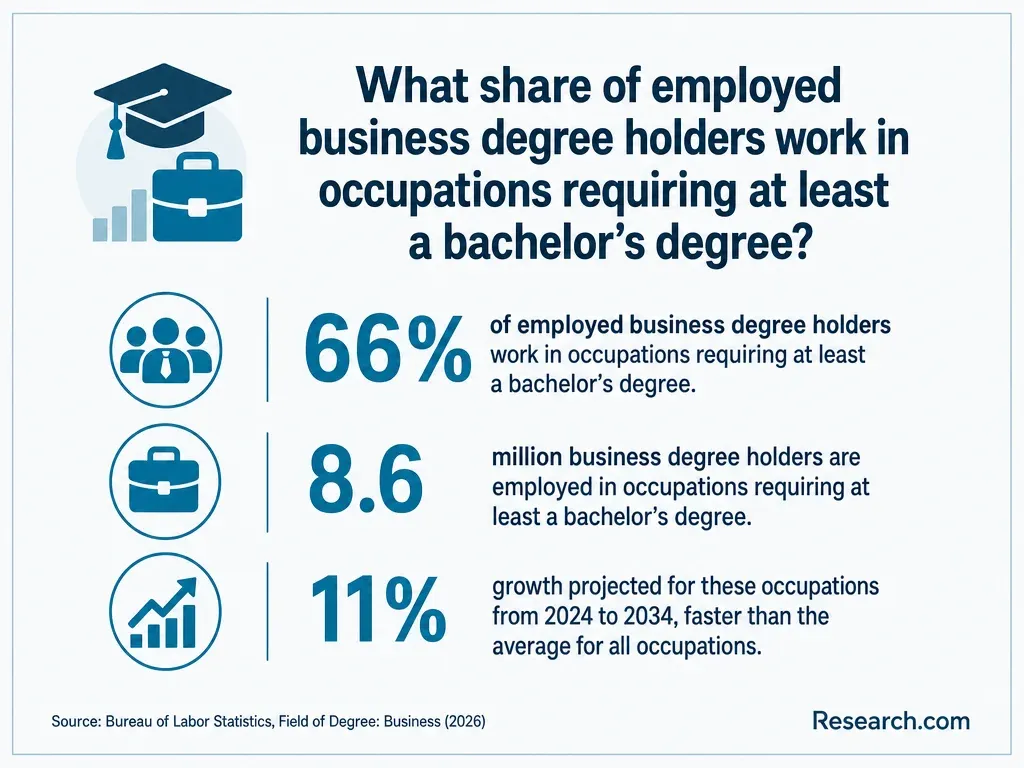
How do online business administration and insurance degrees compare?
Both degrees can be delivered online, but online does not necessarily mean self-paced. The more useful comparison is whether each program's required courses, assessments, and applied work fit your schedule and career goal. When reviewing quick online bachelor's pathways, confirm that the advertised pace applies to the courses you still need.
The table shows the delivery questions most likely to affect your choice; individual schools may handle each differently.
| Feature to verify | Business administration | Insurance and risk management |
| Required course availability | Check whether your chosen concentration courses run in the terms you need. | Check how often specialized insurance courses run; a missed sequence may delay completion. |
| Applied work | May use business cases, team projects, or a capstone. | May use coverage analyses, risk assessments, industry projects, or an internship. |
| Scheduling | Confirm live meetings, group work, and exam rules. | Confirm the same obligations, plus any industry-site or internship requirements. |
Ask for sample schedules covering your remaining courses, including evening or weekend commitments. If you work full time or provide care, also check part-time enrollment, leave policies, and whether workplace projects require faculty and employer approval.
Both programs may require general education and a business core. Business administration students might then take additional work in management, marketing, finance, analytics, or operations. Insurance and risk management students are more likely to study property and liability insurance, life and health insurance, underwriting, claims, insurance law, and methods for identifying and financing risk. Those are examples, not a universal curriculum.
Compare required courses with electives. A general business program offering one risk elective may not provide the depth of a specialized major; an insurance program with a business core may still permit useful electives outside the industry. If your intended work is HR rather than insurance, compare the relevant coursework with transfer-friendly human resources bachelor's degrees before committing to either route.
For either program, look for assignments that let you explain a decision using financial information, data, and ethical judgment. Exposure to a topic in one course is not the same as demonstrated professional competence.
Schools commonly request evidence of secondary-school completion or prior college study and official transcripts. Some admit students directly to the major; others have separate business-school admission or prerequisite rules. Mathematics, accounting, economics, or statistics preparation may matter, but no single prerequisite list applies to both degrees everywhere.
If you have college credits, ask for an evaluation showing which courses satisfy general education, the business core, the specialized major, and electives. Accepted credit is not necessarily credit applied to a requirement.
A student changing from business administration to insurance and risk management may find that previous business courses transfer well but do not replace specialized insurance courses. Review the college coursework required for business administration entry, then obtain the prospective school's own admission decision and degree audit.
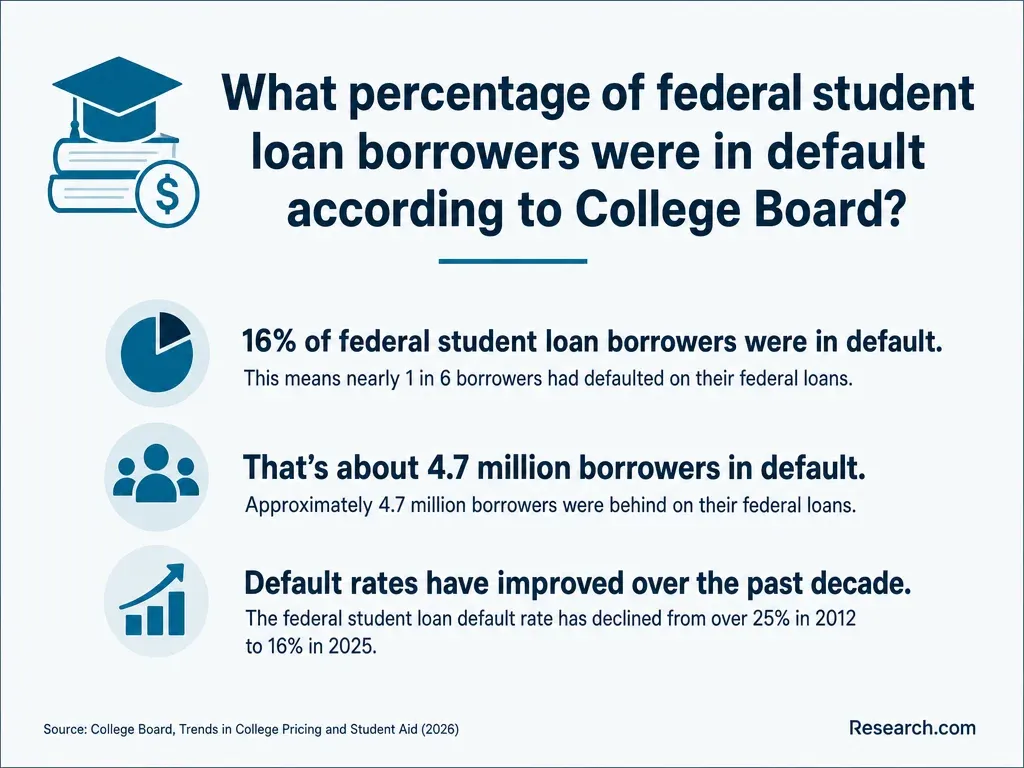
Completion time depends on credits that apply to the degree, enrollment pace, prerequisites, and when required courses are offered. Neither degree is inherently faster. A student with substantial applicable business credits could finish a general business program sooner, while another student may already have insurance coursework that makes the specialized route more direct.
Ask each school for a term-by-term plan using its evaluation of your transcripts. Include courses offered only in certain terms, internship or capstone timing, and the school's minimum credits-in-residence rule. Compare fast-paced online business degrees on that remaining-course plan: a short advertised calendar is not useful if a required course is unavailable when you need it.
There is no reliable degree-wide price difference: tuition and fees are set by institutions, while your total depends on remaining required credits. Compare each school's current tuition basis - per credit, course, or term - alongside mandatory fees, books, software, proctoring, and any internship-related travel. Business administration online programs with competitive tuition can be a starting point, not a substitute for a personalized cost estimate.
Request a written remaining-course plan and price those courses under the enrollment pace you can sustain. Then ask financial aid about eligibility and loan implications, and ask your employer whether either major qualifies for education assistance. A lower tuition rate can cost more overall if fewer credits apply or required courses extend your enrollment.
Graduates of either program can seek business roles, but their coursework and experience will make different applications more credible. Business administration can support applications for operations, sales support, marketing coordination, or administrative roles. Insurance and risk management can support applications for insurance service, underwriting support, claims support, brokerage operations, or entry-level risk-team work. Employers set their own experience and skill requirements.
Look past job titles to the work involved. An insurance account role may emphasize client communication and coverage documentation; underwriting support may call for careful review of applications and exposure data. A business operations role may instead emphasize budgets, processes, and cross-team coordination. Neither degree makes a new graduate a manager, underwriter, or risk director automatically.
If coordinating projects appeals more than either degree's main emphasis, compare relevant courses and experience requirements - and, for returning students, compare project management bachelor's credit transfer rules. The most direct route is the one that develops evidence for the tasks in your target job postings.
Degree titles do not have a single salary or growth rate. U.S. Bureau of Labor Statistics figures describe occupations across experience levels, not starting pay or outcomes for graduates of either major. The following May 2025 median wages and 2025-2035 employment projections provide context for selected roles a graduate might pursue with suitable skills and experience.
| Occupation | Median annual wage, May 2025 | Projected employment growth, 2025-2035 | How to interpret it |
| Market research analyst | $78,760 | 7% | Relevant to business graduates with research and data skills; not a general business starting salary. |
| Financial and investment analyst | $102,740 | 7% | A possible comparison for analytical career goals, but the occupation is not a proxy for every insurance risk job. |
| Management analyst | $101,860 | 10% | Relevant to organizational analysis; many positions require substantial experience. |
These figures do not isolate insurance graduates, and none predicts an individual offer. For a practical salary comparison, examine local postings for your intended entry-level role and their stated experience requirements. If time to completion is central to your return-on-investment decision, weigh shorter business administration study options and career prospects against the experience you would still need to reach your target occupation.
Which accreditation, licenses, and certifications should students consider?
First, verify the institution's accreditation with the accreditor and confirm that the school is eligible for the financial aid you expect to use. Business-school accreditation - such as AACSB, ACBSP, or IACBE - has a different scope; check whether it covers the school or program you are considering rather than assuming every degree shares that status.
Listings of American business schools offering online degree study can help you identify options, but the accreditor and institution should confirm current coverage.
An academic degree is separate from permission to perform regulated work. Insurance producer or adjuster licensing, where required, is governed by the relevant state and role; a BS does not award a license. Professional designations and certifications may also have their own coursework, exams, experience, and renewal conditions. Before choosing a program for a particular credential, check the issuing organization's current eligibility rules and whether the curriculum meets any of them.
Other Things You Should Know About Business Administration
Not by itself. Actuarial work typically calls for substantial mathematics and statistics preparation and progress through professional exams. Compare the program's quantitative courses with actuarial employers' and exam organizations' expectations.
Often, but the change may add specialized requirements. Ask the school for an updated degree audit before switching so you can see which completed courses still satisfy the new major.
Possibly, if the school offers approved prior-learning credit or allows a current job to meet an applied requirement. Employment alone does not award credit; ask what documentation and approvals are required.
No. A concentration is a defined component of a degree, while a specialized BS has its own degree title and requirements. Compare transcripts and required courses if the distinction matters for your target employer.
- Program Eligibility, Written Arrangements, and Distance Education | 2024-2025 Federal Student Aid Handbook https://fsapartners.ed.gov/knowledge-center/fsa-handbook/2024-2025/vol2/ch2-program-eligibility-written-arrangements-and-distance-education
- Accreditation in the U.S. | ed.gov http://www.ed.gov/laws-and-policy/higher-education-laws-and-policy/college-accreditation/accreditation-in-the-us
- Asynchronous Learning: An overview and benefits - UIC Online https://onlineprograms.uic.edu/news-stories/asynchronous-learning-an-overview-and-benefits/
- RMI Licenses and Designations | Herbert Wertheim College of Business https://wertheim.fsu.edu/departments/rmi/dr-hold-program/designations-licenses
- Online Bachelor's Degree in Business Administration | Purdue Global https://www.purdueglobal.edu/degree-programs/business/bachelor-business-administration/
- Business Administration: Risk Management and Insurance | Bowling Green State University https://www.bgsu.edu/academics/insurance-and-risk-management.html
- New Pathways to a College Degree: How Transfer Credits Save Time | University of Arkansas Grantham https://www.uagrantham.edu/blog/transfer-college-credits-online-pathways-degree/
- The Major Payoff: Evaluating Earnings and Employment Outcomes Across Bachelor's Degrees - CEW Georgetown https://cew.georgetown.edu/cew-reports/major-payoff/
- Careers in Risk Management and Insurance | CU Denver Business School https://business.ucdenver.edu/centers-programs/risk-management-and-insurance/careers-risk-management-and-insurance
- BS BA - Risk Management and Insurance Technology - OSIM | Naveen Jindal School of Management https://osim.utdallas.edu/bs-ba/risk-management-insurance-technology/