
2027 Most Valuable Online Education Degree Programs Ranking in California

Co-Founder and Chief Data Scientist
Choosing the right online education degree program can be challenging, especially with so many options available. This article features the 2027 Most Valuable Online Education Degree Programs Ranking in California, created by the Research.com team of data scientists to help you make an informed decision.
By exploring this ranking, you'll discover which programs offer the best value and opportunities. Pursuing an education degree opens doors to meaningful careers and personal growth. Let this guide support your journey toward a rewarding future.
Key benefits of getting online education degree in California
- Salary for education degree graduates: Graduates can earn competitive salaries such as $76,000 annually for Special Education Teachers or $77,200 for Instructional Designers, highlighting strong financial potential in education careers.
- Career paths: A California education graduate from a university like UCLA can pursue diverse roles including Early Childhood Educator or ESL Teacher, enabling rewarding opportunities to impact student lives in many settings.
- Online degree benefits: Earning a degree online from institutions such as California State University offers flexible schedules and cost savings, helping students balance work, life, and school effectively while advancing their careers.
- Key benefits of getting online education degree in California
- What can I expect from online education degree in California?
- Where can I work with online education degree in California?
- How much can I make with online education degree in California?
- 2027 Most Valuable Online Education Degree Programs Ranking in California
- Key Findings
- How long does it take to complete online education degree in California?
- Emerging Trends and Future Insights in Online Education
- What's the difference between online and on-campus education degree?
- Teacher Certification and Licensure Requirements in California
- What is the average cost of online education degree in California?
- Accreditation and Teacher Credentialing in California
- What financial aid is available to online education degree students in California?
- Most Affordable Options for Online Education Degrees in California
- What are the prerequisites for enrolling in online education degree program in California?
- Return on Investment for Online Education Degrees in California
- What courses are typically in online education degree programs in California?
- What types of specializations are available in online education degree programs in California?
- How do you choose the best online education degree in California?
- What career paths are available for online education degree students in California?
- What is the job market for online education degree in California?
- Related Education Rankings for Nearby States
- Top Trending Education Rankings
- See What Experts Have To Say About Studying Education
What can I expect from online education degree in California?
The average cost of an online education degree in California typically ranges under $7,000 per year for in-state students, especially within the California State University system. Graduates often recall balancing their coursework alongside jobs or family, appreciating how affordable tuition eased their path to certification without overwhelming debt.
For example, many online education students at popular public universities find that these programs offer a practical blend of synchronous live sessions and flexible asynchronous classes, which fit easily into varied schedules. This balance is crucial for working professionals aiming to complete their degrees without sacrificing income.
Fieldwork like student teaching is arranged locally, allowing students in urban or rural areas to gain essential hands-on experience without relocating. This real-world component connects theory with practice, which graduates often describe as rewarding and confidence-building.
Costs can vary depending on private versus public institutions, but even private colleges inspired graduates by providing targeted programs and scholarships that helped offset tuition. Knowing these financial realities allows prospective students to plan realistically for their education journey in California.
Where can I work with online education degree in California?
Graduates with an online education degree in California can expect to find job opportunities as K-12 teachers in public schools, where districts often accept online credentials once state certification exams are passed. For example, many graduates from California State University campuses have secured teaching positions in local districts, feeling confident in their preparation and ready to contribute right away.
Beyond teaching, a degree can lead to roles in educational administration-such as becoming a school principal or curriculum coordinator-that graduates from institutions like UCLA's Graduate School of Education often pursue. These roles offer the chance to influence school programs and policies directly.
Charter schools and private institutions across California also provide openings due to their flexible hiring policies, making them attractive options for online education grads. Some graduates find fulfilling careers working as preschool teachers or early education specialists, especially in growing communities around San Diego or the Bay Area.
Community colleges and universities hire education graduates for academic advising and instructional coordination, roles that many from University of California campuses have taken up. Additionally, California's booming educational technology companies offer paths to combine education expertise with digital innovation, creating dynamic and vibrant work environments.
How much can I make with online education degree in California?
Graduates with an online education degree in California can typically expect starting salaries around $65,000 to $77,000, depending on their chosen career path. For instance, elementary school teachers earn a mean annual wage of about $70,740, while special education teachers see higher averages near $76,000. Graduates who focus on teaching English as a Second Language can expect around $65,430 yearly, reflecting the growing demand in diverse California communities.
Those moving into roles like instructional designers, who develop educational materials and digital courses, often start with salaries near $77,200. Many graduates from well-known California institutions such as California State University or University of California's online education programs have shared positive experiences transitioning smoothly into these roles with strong earning potential.
Graduates appreciate that their online programs allow balancing work and study, making these salary outcomes feel achievable and motivating. With the high demand in California's education sector, especially in specialized fields, graduates often report confidence in steadily increasing their income as they gain experience and certifications.
2027 Most Valuable Online Education Degree Programs Ranking in California
How do we rank schools?
Investing in your education is a significant decision that can profoundly impact your future, and the Research.com team fully recognizes the importance of making well-informed choices. To support students seeking the best opportunities in California, we have carefully developed the "2027 Most Valuable Online Education Degree Programs Ranking in California." Our dedication to quality, credibility, and accuracy is demonstrated through the thorough research and analysis behind this ranking.
We utilized the following reputable data sources to ensure a comprehensive evaluation of online education degree programs:
By exploring this ranking, readers will access valuable insights to identify the most valuable online education degree programs in California, empowering them to make confident decisions about their educational journeys. For more information on how this ranking was created, please visit our Research.com methodology page.


# 3 position
University of Massachusetts Global
Master of Educational Administration


# 5 position
National University
Master of Education in Inspired Teaching and Learning with Preliminary Multiple or Single Subject Teaching Credential and Internship Option (CA)

# 6 position
University of Massachusetts Global
Bachelor of Early Childhood Education
# 7 position
University of Southern California
Master of Teaching of English to Speakers of Other Languages (TESOL)

# 9 position
National University
Bachelor of English with an Inspired Teaching and Learning and a Preliminary Single Subject Teaching Credential (California)


# 13 position
Azusa Pacific University
Master of Teaching English to Speakers of Other Languages (TESOL)


# 15 position
California State University, San Bernardino
Master of Education, Instructional Technology (ETEC)

# 16 position
Anaheim University
Doctor of Teaching English to Speakers of Other Languages (TESOL)

# 17 position
Anaheim University
Master of Teaching English to Speakers of Other Languages (TESOL)


Key Findings
- California offers many accredited online education degree programs, including bachelor's and master's degrees that meet academic and licensing standards.
- The cost ranges from under $5,000 annually at community colleges to $7,000-$15,000 for public universities and over $20,000 at private institutions.
- Starting salaries for education graduates typically range from $48,000 to $55,000 per year, with experienced professionals earning median wages near $75,000 annually.
- There is strong demand for teachers in California, especially in special education, bilingual education, and STEM fields, driven by population growth and teacher shortages.
- Licensing requires passing the California Basic Educational Skills Test (CBEST) and subject exams, with many online programs including preparation and practical teaching experience.
How long does it take to complete online education degree in California?
Completing an online education degree in California typically depends on your pace and program choice. For example, many graduates from California State University's online bachelor's programs report finishing in about four years when studying full-time. However, balancing work and family often leads students to choose part-time options, stretching their studies beyond four years without feeling overwhelmed.
Graduate learners, such as those enrolled in the University of California's online M.Ed. programs, often finish within one to two years full-time. Some take advantage of accelerated tracks, wrapping up in as little as 12 months, though this demands strong time management and focus. Other students prefer part-time schedules, which can extend completion to three years, fitting smoothly around busy lives.
Key factors shaping your timeline include how many courses you take each term, transfer credits you bring in, and whether you attend summer or year-round sessions. Many online students find that flexible pacing at CSU and UC systems allows them to tailor their experience, maintaining motivation as they steadily achieve their goals.
Emerging Trends and Future Insights in Online Education
As the online education landscape continues to evolve rapidly, prospective students benefit from understanding emerging trends that could shape the future of their educational journeys. Recent developments point to the increased integration of adaptive learning technologies, micro-credentialing, and competency-based education, all of which are designed to better meet the demands of modern learners and employers. Institutions are now emphasizing the importance of digital literacy and adaptive curriculum designs to equip graduates with skills that directly match future workforce needs. Furthermore, affordability remains a key consideration; innovative programs are emerging that combine quality education with economic value-learn more about what are the most affordable online education degrees to find a program that balances cost with excellence. This forward-thinking approach not only enhances academic outcomes but also improves job readiness and long-term career satisfaction, ensuring that online education remains a viable and attractive option in an increasingly competitive market.
What's the difference between online and on-campus education degree?
When deciding between an online and an on-campus education degree in California, the key difference lies in how and where you engage with your studies. Online learners enjoy the flexibility to attend lectures and complete assignments from home, fitting education around jobs or family duties. Graduates from programs at schools like CSU Sacramento often share how this freedom allowed them to maintain full-time work while progressing steadily toward their degree.
On-campus students at universities such as UCLA benefit from face-to-face interactions with professors and peers, which can enhance understanding through immediate feedback and group discussions. They also have access to campus resources like libraries and career services that some find invaluable.
Cost-wise, online students save on housing and commuting expenses, making this format more budget-friendly. Those attending on-campus frequently face additional costs like room and board, pushing total yearly expenses beyond $30,000 at California State University campuses.
Both pathways require accredited programs-verified through agencies like WASC-ensuring your degree is respected by employers and transferable across institutions.
Teacher Certification and Licensure Requirements in California
After earning your online education degree, the next critical step is securing a California teaching credential. The California Commission on Teacher Credentialing (CTC) oversees the process, which includes: 1. Subject Matter Competence • Pass the California Subject Examinations for Teachers (CSET) in your intended teaching field. • Alternatively, complete a CTC–approved subject‐matter preparation program. 2. Basic Skills Requirement • Satisfy the California Basic Educational Skills Test (CBEST) or meet alternative requirements through SAT/ACT scores or approved coursework. 3. Professional Preparation Program • Enroll in a CTC–accredited teacher preparation program-many online master’s degrees incorporate this. • Complete student teaching (typically 12–16 weeks) under mentor supervision. 4. Character and Fitness • Submit fingerprints and undergo a background check via Live Scan. • Disclose any criminal history; rehabilitation plans may be required. 5. Reading Instruction Competence Assessment (RICA) • Required for multiple‐subject and education specialist credentials. • Demonstrate proficiency in teaching reading and literacy. 6. Credential Application • File an application with the CTC, including official transcripts and proof of exam passage. • Pay the application fee and monitor status through the CTC online portal. After receiving a Preliminary Credential, you’ll have five years to complete an induction program and any additional clear credential requirements. If you’re comparing program costs or seeking the most budget-friendly pathway to licensure, explore our Cheapest Online Master’s in Education Degree Programs Ranking in California, which highlights affordable options designed to meet all CTC standards.
What is the average cost of online education degree in California?
The average cost of an online education degree in California depends heavily on the type of institution and residency status. For many students attending California State University (CSU) campuses, in-state tuition for undergraduate education programs typically ranges from about $4,000 to $7,000 per year, making these institutions popular choices among budget-conscious learners. Graduate programs at CSU schools often fall between $7,000 and $12,000 annually. Graduates from such affordable programs often describe feeling motivated by how manageable their tuition was, which allowed them to focus on their studies without overwhelming financial stress. These experiences reflect the practical advantages of selecting public universities for your degree.
Private universities, meanwhile, generally charge more, with yearly tuition stretching from $15,000 to $40,000. However, many private schools offer robust financial aid options and scholarships. Students who successfully navigate these supports often find the investment worthwhile, citing personalized attention and reputation as valuable. Exploring all costs beyond tuition is essential, since additional expenses like textbooks, digital resources, and technology fees can have a meaningful impact on the total outlay. Keeping track of these helps prevent budget surprises, especially when aiming for complete online programs. For direct insights into the most accessible options, consider reviewing the most affordable education schools in California.
Understanding the median total cost gives a clearer financial picture: on average, completing an online education degree can total around $40,268, with in-state residents typically paying approximately $32,656. Out-of-state students often face higher expenses, near $25,328 on average, which underscores the value of residency advantages. Many graduates from California community colleges who transferred to CSU online programs remark on how this pathway helped them manage costs while progressing steadily toward their bachelor's degrees. Choosing the right institution aligned with your budget and goals can turn this significant educational investment into a fulfilling and practical journey.

Accreditation and Teacher Credentialing in California
Ensuring your online education degree is recognized by both federal and state authorities is critical for career readiness. In California, accredited programs typically hold regional approval from the Western Association of Schools and Colleges (WASC) and specialized accreditation from bodies such as the Council for the Accreditation of Educator Preparation (CAEP). Additionally, the California Commission on Teacher Credentialing (CTC) must approve any program designed to lead to a teaching credential. When evaluating programs, verify that coursework aligns with CTC standards for subject matter competence, teaching performance expectations, and fieldwork requirements. Accreditation not only validates program quality but also impacts eligibility for federal financial aid and state-specific grants. Graduates from WASC-accredited institutions benefit from seamless credit transfers if they pursue advanced degrees or professional development courses. Moreover, those aiming for K–12 certification should confirm that their online program includes supervised student teaching placements in California public schools, a non-negotiable CTC mandate. Prospective students can compare accredited and budget-friendly options in our Cheapest Online Master's in Education Degree Programs Ranking in California to balance cost with credentialing requirements. Finally, once you complete an accredited online program, the next step is applying for a preliminary or clear teaching credential through the CTC website. This process involves submitting transcripts, passing required subject exams (such as the California Subject Examinations for Teachers), and fulfilling a background clearance. Understanding these credentialing pathways upfront accelerates your transition from graduate to fully certified educator in California’s dynamic K–12 environment.
What financial aid is available to online education degree students in California?
If you're pursuing an online education degree in California, start by completing the FAFSA to access federal aid like Pell Grants, which can provide up to $7,395 in non-repayable funds. Graduates from California State University's online programs often praise how this aid lightened their tuition burden. Beyond federal sources, check your eligibility for the Cal Grant, which can cover up to $12,570 annually for qualifying public or private schools. Many students at University of California extension programs have found the Cal Grant critical in making their education affordable.
Don't overlook institutional scholarships-many California colleges offer targeted grants for education majors, particularly for those committed to teaching in state public schools. For example, some have reported receiving merit-based scholarships that made a real difference in managing costs.
Finally, consider federal work-study or military benefits if applicable; several online learners report that work-study positions helped offset living expenses while they studied. Early applications and careful planning are key to maximizing these resources.
Most Affordable Options for Online Education Degrees in California
Pursuing an online education degree in California can be a strategic move, especially when considering the cost. For those looking to invest in their future without breaking the bank, exploring the most affordable education schools in California can be a crucial step. Many of these institutions offer high-quality programs at competitive prices, making them an attractive option for aspiring educators. By choosing an affordable online education degree, students can position themselves for success in California's vibrant educational landscape without accumulating overwhelming debt. This financial prudence allows graduates to focus on their careers and make meaningful contributions to their communities, rather than being burdened by financial obligations. As the demand for qualified educators continues to grow, opting for an affordable online education degree can be a wise decision, offering a competitive edge in the job market while aligning with personal financial goals.
What are the prerequisites for enrolling in online education degree program in California?
To enroll in an online education degree in California, you first need a high school diploma or GED, which is the baseline for most programs at institutions like California State University or University of California campuses. Graduates often share how securing this foundational credential gave them confidence to take the next step toward their degree.
If you're aiming for graduate-level programs, a bachelor's degree from an accredited college is essential. Many students at well-known colleges recall that having a solid undergraduate record opened doors to advanced online study with flexibility to balance work and family life.
Standardized tests like the SAT or ACT used to be mandatory, but many schools now offer test-optional policies, easing entry for those juggling multiple responsibilities. For credential programs, passing the CBEST exam is often required, ensuring you meet California's state standards before teaching.
Work experience or prior coursework in education is a plus, especially for advanced degrees. Reliable internet and basic tech skills are also critical to succeed, just as graduates often recommend preparing thoroughly for online platforms through orientation sessions offered by institutions like UCLA Extension or San Diego State University.
Return on Investment for Online Education Degrees in California
When evaluating the value of an online education degree, understanding the return on investment (ROI) is essential. On average, California students invest between $7,000 and $15,000 per year in public in-state tuition for online bachelor’s programs, and approximately $30,000 to $60,000 total for a master’s degree. Considering the mean annual salaries-$63,130 for ESL teachers, $73,080 for instructional designers, and $76,920 for postsecondary educators-the typical payback period for a master’s in education can be as short as 3 to 5 years. Calculating ROI involves comparing total program costs (tuition, fees, technology, and materials) against expected salary increases. For example, if a graduate pays $45,000 for a master’s degree and secures an instructional designer position at $73,080, the net gain of $28,080 per year yields a payback period of just 1.6 years. Even accounting for living expenses and loan interest, long-term earnings potential remains strong. Prospective students should also consider total cost variances. To explore cost-effective alternatives, see our Cheapest Online Master’s in Education Degree Programs Ranking in California. By selecting programs with lower tuition and robust career services, graduates can minimize debt and maximize earning potential, ensuring that their online education degree delivers optimal financial and professional returns.
What courses are typically in online education degree programs in California?
When pursuing an online education degree in California, expect courses designed to provide practical teaching skills combined with strong theoretical foundations. Graduates from well-known schools like California State University report that core classes cover essential areas such as Foundational Education, where they explored how historical and social dynamics shape teaching in California classrooms. This knowledge helped them connect with diverse student backgrounds effectively.
Educational Psychology is another key course, teaching how students learn and stay motivated-which proved invaluable during virtual student teaching experiences. Instructional Design and Technology classes train you to use digital tools confidently, a must-have skill as many schools now rely heavily on tech integration. Courses on Classroom Management equip you with strategies to maintain a positive learning environment, even when teaching remotely.
- Assessment and Evaluation methods helped graduates accurately measure student progress and adjust plans to boost learning
- Special Education courses prepared them to support students with individualized needs and inclusion practices
- Multicultural Education emphasized equity, preparing learners to celebrate and respect California's diverse classrooms
Hands-on practica arranged locally allowed many to apply these lessons in real settings, reinforcing confidence and readiness to teach. This blend of theory with practical application makes California's online education degrees especially effective in preparing future educators for immediate classroom success.
What types of specializations are available in online education degree programs in California?
Students pursuing an online education degree in California often explore a variety of practical specializations that align with the state's educational demands. Popular options include Elementary and Secondary Education, where graduates can prepare to teach K-12 with subject-focused tracks like mathematics or English language arts at universities known for their strong education departments. Special Education is a key area, given California's need for qualified teachers who support diverse learners with disabilities.
Others opt for Educational Leadership and Administration, aiming for roles such as school principals or district managers, equipping themselves through focused coursework found in many California colleges. Early Childhood Education is also common, perfect for those aspiring to lead in pre-K to third-grade settings. Graduates often highlight the value of specializing in Curriculum and Instruction, especially when designing innovative teaching strategies. For those inspired to support English language learners, TESOL offers a timely specialization reflecting California's multilingual communities.
If cost is a concern, explore what are the most affordable online education degrees to find practical pathways across these common specializations. Overall, understanding California online education program options helps streamline your choices and supports steady career growth.
How do you choose the best online education degree in California?
Start by verifying accreditation from recognized California regional bodies like WSCUC to ensure your degree holds value with employers and qualifies for federal aid. Graduates from well-known programs such as those in the University of California system often praise how accreditation simplified transferring credits when continuing education.
Next, carefully evaluate cost factors. While in-state public universities average $7,500 yearly tuition, private institutions can exceed $25,000. Many students successfully reduce expenses by choosing affordable online education degree programs California options and factoring in extra fees for technology or materials. You can explore detailed cost comparisons in the Cheapest Online Master's in Education Degree Programs Ranking in California.
Flexibility is key for working adults balancing family or jobs. Look for programs that allow asynchronous learning and occasional live sessions, as many graduates from California State University appreciate this setup for managing their schedules. Lastly, assess available student support like career counseling, which former students report as valuable for job placement in California's competitive education job market.
What career paths are available for online education degree students in California?
Graduates of an online education degree in California often find practical career paths in teaching roles across various levels, including elementary and secondary schools. Licensing as a public school teacher opens doors to subjects like math, science, English, or social studies. Many graduates from well-known California institutions share success stories about starting as special education teachers or working with English language learners, reflecting the state's diverse student population.
For those seeking advancement, opportunities exist beyond classroom roles to positions such as school counselors, instructional coordinators, or curriculum developers. These roles typically require additional certification but provide rewarding, higher-paying options within California's educational system. Several graduates from major universities in California leverage their degrees to enter adult education or corporate training, teaching GED preparation or workforce skill-building.
When weighing financial considerations, students often explore options to manage tuition effectively. Those interested can explore Cheapest Online Master's in Education Degree Programs Ranking in California to find affordable programs that align with their career goals in California education degree job opportunities.
What is the job market for online education degree in California?
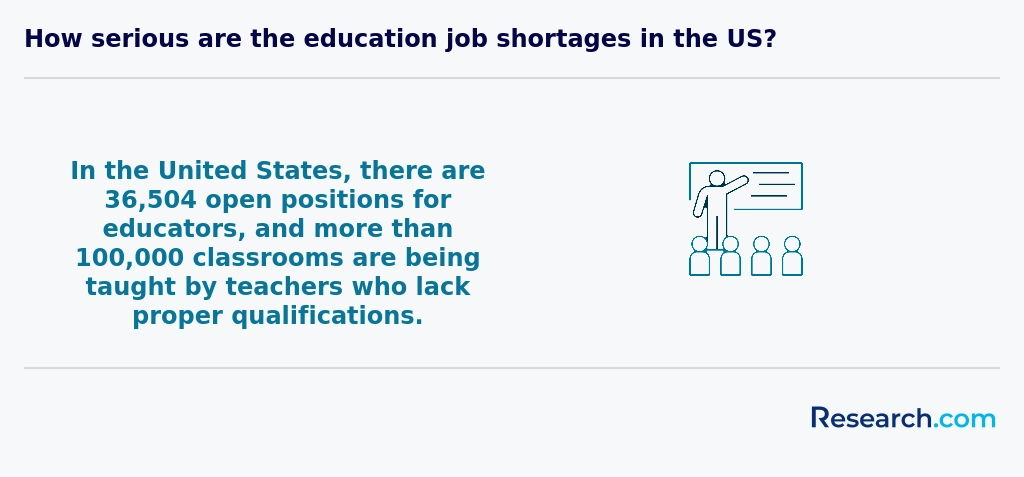
The job market for graduates holding an online education degree in California remains strong, especially as the state faces ongoing teacher shortages in specialties like special education, math, and science. Graduates from accredited California programs often find they have a competitive edge when applying for positions in public and private schools across the state. Many students from popular universities report that their online degrees allowed them to balance work and study while gaining skills that meet state credentialing requirements.
For candidates planning their careers, it's important to focus on obtaining the California Teaching Credential through programs that align closely with the Commission on Teacher Credentialing standards. This ensures smoother entry into roles such as classroom teacher or instructional coordinator. Many graduates who have leveraged online education have successfully transitioned into various education roles, benefiting from the flexibility these programs offer while meeting local demands. Exploring top ranked online schools in California can highlight options tailored to state licensure processes and specific career goals.
Considering the projected 10% growth in teaching jobs, focusing on these pathways can make the outlook for California teaching jobs with online degree holders notably positive.
Frequently Asked Questions About education
Students pursuing online education degrees in California can enhance their learning experience by actively engaging with course materials and participating in virtual discussions. Research from the California State University system indicates that students who consistently contribute to forums tend to perform 15% better academically. Utilizing campus resources, such as online tutoring and academic advising, also supports success. Time management is crucial; setting a dedicated study schedule helps students balance their education with personal and professional commitments. Additionally, verifying that the program is accredited by agencies recognized by the U.S. Department of Education ensures the degree's value and transferability within California and beyond.
Emerging niches within the education field reflect California's evolving demands for specialized skills and innovative learning methods. One rapidly growing area is educational technology (EdTech), which integrates digital tools to enhance teaching and learning. California's strong tech ecosystem supports this niche, with many programs focusing on how to design and implement technology in classrooms.
Another key area is special education, where the need for trained professionals is rising due to increasing awareness and legal mandates. Programs addressing diverse learning needs are expanding, including those specializing in autism and emotional support.
Additionally, bilingual and multicultural education is gaining importance to serve California's diverse student population, supported by state policies promoting inclusiveness.
The California Department of Education highlights that online degrees in these areas are becoming more accessible and affordable, making them attractive pathways for future educators.
Preparing for the job market after completing an online education degree in California involves strategic planning. Begin by gaining relevant experience through student teaching or internships, which local districts often require for certification. The California Commission on Teacher Credentialing reports that practical experience significantly improves employment chances.
Next, obtaining appropriate credentials is vital. California requires teachers to earn state certification, which online programs often align with. Verify that your degree meets these requirements to ensure eligibility for teaching positions across California public schools.
Networking also plays a critical role. Join professional organizations such as the California Teachers Association to connect with educators and learn about job openings. According to the California Employment Development Department, active networking increases hire likelihood by up to 30%.
Continuing professional development is important as well. Engaging in workshops or additional coursework shows commitment and keeps skills current, boosting employability in a competitive market.
Employers in California increasingly seek education degree graduates with strong communication and classroom management skills. According to the California Department of Education, the ability to create inclusive learning environments is essential, especially given the state's diverse student population. Critical thinking and adaptability are also highly valued, as teachers must plan and adjust lessons for various learning needs.
Technology proficiency ranks high on employer wish lists, reflecting the rise of digital teaching tools in California's classrooms. A 2023 report from EdSource highlights that 78% of school districts prioritize candidates with blended learning experience. Collaboration skills and cultural competency remain key, supporting effective partnerships with families and communities statewide.
Finding internships in California relevant to an education degree requires a strategic approach aligned with the state's robust education sector. Many California institutions, including the California Department of Education, provide internship listings that focus on K-12 teaching and administration.
Additionally, public school districts such as Los Angeles Unified and San Diego Unified often offer internship programs designed for education students, providing practical classroom experience. Utilizing university career centers and online platforms like Handshake can connect students with localized internship opportunities.
According to the California Community Colleges Chancellor's Office, approximately 75% of education interns secure positions through formal partnerships between colleges and school districts, emphasizing the importance of networking. Prospective interns should also explore nonprofit organizations focused on education, which frequently look for motivated interns.
Online education degrees in California significantly impact career mobility and advancement. According to the California Employment Development Department, education-related jobs are expected to grow by 10% between 2022 and 2032, faster than many other fields. Completing an online degree enables professionals to gain credentials while maintaining their current employment, thus facilitating upward movement without career interruption.
Employers in California increasingly recognize online degrees from regionally accredited universities, valuing flexibility and continued learning. Graduates often report higher salaries and expanded job opportunities. For example, California teachers with a master's degree, which can be earned online, earn on average 20% more than those with a bachelor's, based on data from the California Department of Education.
The availability of specialized online programs in California, such as educational leadership or curriculum development, supports advancement into administrative roles. This flexibility helps candidates tailor their studies to evolving career goals, strengthening their qualifications for promotions or transitions within the competitive California education sector.
Studying for an education degree in California offers students broad training to engage in interdisciplinary roles effectively. Many California institutions integrate courses in psychology, sociology, technology, and curriculum design, reflecting the diverse demands of modern education careers. According to the California Department of Education, programs emphasize collaboration across disciplines to prepare graduates for roles beyond traditional teaching, including counseling, educational technology, and administration.
Online degrees often include practical projects that require applying knowledge from multiple fields, enhancing problem-solving skills. With California's diverse population, cultural competency and adaptability also receive strong focus, equipping students to work in varied environments.
Such interdisciplinary preparation aligns with workforce trends showing 22% growth in multidisciplinary education careers statewide through 2028.
Choosing between a thesis and a non-thesis education degree in California depends largely on your career goals and learning preferences. Thesis programs require students to conduct original research and write a substantial paper, which benefits those interested in academic or research careers. Non-thesis programs focus more on coursework and practical experience, ideal for professionals aiming for leadership or administrative roles in schools.
In California, many accredited online education programs offer both options. According to the California State University system, about 40% of education master's programs include a thesis track. Consider your time commitment, as thesis paths typically demand more months of research and writing.
Additionally, check if your prospective employer values research skills, as some districts prioritize candidates with strong analytical backgrounds. Reviewing program specifics from sources like the California Department of Education can help clarify which path aligns best with your professional plan.
Students based in California seeking to study education abroad have several online options that combine international curricula with U.S. accreditation. Many California universities partner with global institutions to offer joint or dual online degrees, allowing learners to gain credentials recognized both in the U.S. and abroad. According to the California Department of Education, over 25% of graduate education students enroll in fully remote or hybrid programs, reflecting growing demand.
Popular choices include programs that emphasize comparative education, international teaching methods, and global educational leadership. California residents can also access MOOCs and certificate programs from overseas universities, facilitating flexible learning without relocation. It is essential to verify program accreditation and credit transfer policies to ensure compatibility with California teaching credentials.
In California, students pursuing online education degrees often seek part-time jobs that enhance their skills and align with their academic goals. Common roles include teaching assistants, tutors, and childcare aides. These positions provide practical experience with diverse student populations, crucial for future educators.
According to the California Employment Development Department, tutoring jobs have seen steady growth, reflecting the state's emphasis on personalized learning support. Additionally, many school districts hire substitute teachers, offering flexible work schedules compatible with study routines.
Working in after-school programs or educational nonprofits also allows students to develop classroom management and curriculum planning skills before graduation.
Online education students in California have growing networking opportunities supported by universities and state-wide organizations. Many institutions offer virtual career fairs and alumni events, connecting students with professionals and peers across the state. For example, the California State University system promotes LinkedIn groups and webinars tailored for online learners.
Additionally, organizations like the California Association for Career and Technical Education provide access to industry-specific networks, helping students find internships and job leads. According to the National Center for Education Statistics, California leads the US in online enrollment, boosting chances to connect with diverse professionals.
Students are encouraged to join specialized online forums and local chapter meetups to enhance their professional network beyond virtual classrooms.
Alumni networks play a significant role in supporting students pursuing online education degrees in California. These networks connect current students with graduates who share similar academic and professional interests, creating opportunities for mentorship and career guidance. According to the California Postsecondary Education Commission, over 70% of online students benefit from alumni-led internships and job referrals.
Strong alumni networks also facilitate access to exclusive job fairs and professional development events tailored for California's education sector. This can be especially helpful in industries with strong local demand, fostering connections that enhance employability.
Moreover, alumni groups often provide assistance in navigating California's credentialing processes for educators, contributing to smoother transitions into the workforce.
California offers numerous accredited online education degree programs that allow students to tailor their studies to specific career goals. Many universities provide options to choose concentrations such as special education, curriculum development, or educational technology.
Students can often select electives that align with interests, helping them develop skills relevant to various roles in education. For example, the California Department of Education supports pathways for careers in administration or counseling through specialized course tracks.
Additionally, programs may include opportunities for fieldwork or internships in California school districts, offering practical experience.
Customizing your degree increases job market readiness, as tailored programs reflect current regional education needs reported by California's Postsecondary Education Commission.
Online education students in California face several notable challenges. A significant issue is maintaining motivation and time management while balancing studies with work or family obligations. According to the California Community Colleges Chancellor's Office, nearly 60% of online learners juggle employment alongside their coursework, which can lead to burnout.
Technology access and reliable internet remain critical hurdles, especially in rural areas where broadband coverage is limited. The California Public Utilities Commission reports that about 10% of households in certain counties still lack high-speed internet, affecting students' ability to participate fully.
Another challenge is reduced engagement and limited interaction with instructors and peers. This can hinder learning and decrease satisfaction, as found in surveys by the California State University system. Such barriers often require enhanced support services to improve retention.
With an online education degree in California, you can pursue several professional certifications that enhance your career prospects. One common path is obtaining a California Clear Teaching Credential, enabling you to teach in K-12 public schools. This credential often requires completing a program approved by the California Commission on Teacher Credentialing.
Another valuable certification is the Reading Specialist Credential, which prepares educators to support literacy development in students. Additionally, you might pursue certifications in special education or administrative services, such as becoming a school principal or counselor.
Many certification programs require passing state exams like the California Basic Educational Skills Test (CBEST) or the California Subject Examinations for Teachers (CSET). According to the California Department of Education, over 250,000 credentialed teachers work in the state, indicating strong demand for certified professionals.
Applying to an online education program in California requires clarity and preparation. Start by carefully reviewing the specific admission requirements of your chosen school, as they may vary across the California State University and University of California systems. According to the California Postsecondary Education Commission, highlighting relevant teaching experience and clear career goals can strengthen your application.
Write a compelling personal statement that explains your motivation for pursuing an education degree online and how it aligns with California's diverse student population. Include any volunteer work or leadership roles in educational settings. Be sure to proofread thoroughly and follow formatting instructions precisely.
Submit official transcripts from previous institutions and prepare for any required standardized tests explicitly requested. Finally, obtaining strong letters of recommendation from academic or professional mentors familiar with your potential as an educator can improve your chances markedly.
Global perspectives on a career in education highlight its growing importance in fostering social and economic development worldwide. In the United States, including California, teaching remains a stable and respected profession, with the Bureau of Labor Statistics projecting an 8% growth for education-related jobs through 2031. California, as the most populous state, plays a significant role, employing over 400,000 educators across K-12 and higher education institutions (California Department of Education, 2023).
Internationally, many countries value U.S. education degrees for their rigorous standards and practical applicability. California's diverse student population also encourages educators to adopt culturally responsive teaching methods, aligning with global education trends.
Online education degrees in California offer flexible pathways to meet both local and international teaching demands, preparing graduates to contribute effectively in varied learning environments.
Gaining practical experience while pursuing an online education degree in California is essential for career readiness. Many programs incorporate student teaching or fieldwork components, allowing candidates to work directly in California classrooms under licensed supervisors. According to the California Commission on Teacher Credentialing, these teaching placements provide hands-on experience aligned with state standards.
Additionally, some universities partner with local schools to offer internships or practicum opportunities. These activities help develop classroom management and instructional skills. Online students can also engage in virtual simulations and interactive workshops designed to mimic real teaching scenarios.
Utilizing these options supports skill development while meeting California's certification requirements.
Choosing the right concentration within an online education degree in California depends on your career goals and interests. Popular options include curriculum development, administration, special education, and educational technology. California's diverse K-12 population boosts demand for special education experts, reflecting a statewide need supported by the California Department of Education.
Consider programs aligned with California's teaching credentials if you aim to become a licensed educator. According to the California Commission on Teacher Credentialing, over 250,000 teachers work statewide, many seeking further specialization. Review course offerings and portfolio opportunities to match practical skills with your ambitions.
Employment data from the U.S. Bureau of Labor Statistics highlights steady growth in education roles, especially in administration and technology integration. Online degree programs from California institutions often provide flexible formats and connections to local districts, enhancing real-world experience.
Related Education Rankings for Nearby States
- 2027 Most Valuable Online Education Degree Programs Ranking in Arizona
- 2027 Most Valuable Online Education Degree Programs Ranking in Idaho
- 2027 Most Valuable Online Education Degree Programs Ranking in Colorado
- 2027 Most Valuable Online Education Degree Programs Ranking in Kansas
- 2027 Most Valuable Online Education Degree Programs Ranking in Nebraska
- 2027 Most Valuable Online Education Degree Programs Ranking in South Dakota
- 2027 Most Valuable Online Education Degree Programs Ranking in Minnesota
- 2027 Most Valuable Online Education Degree Programs Ranking in Iowa
- 2027 Most Valuable Online Education Degree Programs Ranking in Missouri
- 2027 Most Valuable Online Education Degree Programs Ranking in Arkansas
Top Trending Education Rankings
See What Experts Have To Say About Studying Education
Read our interview with Education experts

Alan J. Singer
Education Expert
Professor of Teaching, Learning and Technology
Hofstra University

Nooshan Ashtari
Education Expert
Professor & Book Author
University of Southern California

References
- California Coast University - Online Degree Programs https://www.calcoast.edu/
- Tips for Choosing Your Graduate Concentration - Graduate Programs for Educators https://www.graduateprogram.org/blog/tips-for-choosing-your-graduate-concentration/
- Know more about thesis vs non- thesis: what is the difference? https://studyfans.com/en/blogs/816
- Home https://www.teachercertificationdegrees.com/
- 12+ Online Masters in Education Programs in California https://californiadegrees.org/education/online-masters-in-education/
- Networking Tips and Advice for Students https://schoolshouldbe.com/post/networking-tips-and-advice-for-students/
- Types of Financial Aid for Online Colleges https://www.umassglobal.edu/blog-news/types-financial-aid-online-colleges
- Create the Conditions for Learning Acceleration - CCEE K12 Playbooks https://k12playbook.ccee-ca.org/pal-learning/create-the-conditions-for-learning-acceleration/
- Online Degrees & Colleges in California (CA)|OnlineDegrees.com https://www.onlinedegrees.com/california/
- The Advantages of Studying an Online Degree https://www.falmouth.ac.uk/news/advantages-studying-online-degree


