
2027 Most Affordable Online Logistics Degree Programs Ranking in the Midwest

Co-Founder and Chief Data Scientist
Choosing the right logistics degree program can be overwhelming, especially when considering cost and quality. This article introduces the 2027 Most Affordable Online Logistics Degree Programs Ranking in the Midwest, crafted by the Research.com team of data scientists to guide you in making an informed decision.
By exploring this ranking, you'll discover affordable options that balance value and educational excellence. Earning a logistics degree can open doors to exciting career opportunities, and this guide helps you take the first step with confidence.
Key benefits of getting online logistics degree in the Midwest
- Graduates with a logistics degree in the Midwest can earn strong salaries, with roles like Logistics Coordinator and Logistics Specialist offering mean annual wages around $84,640.
- Typical career paths include Transportation Planner and Customs Broker, giving graduates a variety of opportunities to work in supply chain management, transportation, or customs operations after studying at institutions such as Michigan State University.
- Online logistics degrees provide flexibility and convenience, allowing students from the Midwest to balance work and study effectively, as shown by successful graduates from Ball State University's online program.
- Key benefits of getting online logistics degree in the Midwest
- What can I expect from online logistics degree in the Midwest?
- Where can I work with online logistics degree in the Midwest?
- How much can I make with online logistics degree in the Midwest?
- 2027 Most Affordable Online Logistics Degree Programs Ranking in the Midwest
- Key Findings
- How long does it take to complete online logistics degree in the Midwest?
- Student Support Services and Resources
- What's the difference between online and on-campus logistics degree?
- Return on Investment (ROI) and Career Outcomes
- What is the average cost of online logistics degree in the Midwest?
- What financial aid is available to online logistics degree students in the Midwest?
- What are the prerequisites for enrolling in online logistics degree program in the Midwest?
- Industry Trends Shaping the Future of Online Logistics
- What courses are typically in online logistics degree programs in the Midwest?
- What types of specializations are available in online logistics degree programs in the Midwest?
- How do you choose the best online logistics degree in the Midwest?
- What career paths are available for online logistics degree students in the Midwest?
- What is the job market for online logistics degree in the Midwest?
- Top Trending Logistics Rankings
What can I expect from online logistics degree in the Midwest?
The average cost of an online logistics degree in the Midwest is notably affordable compared to national averages, often ranging between $10,000 and $20,000 for a full bachelor's program. For example, graduates from well-regarded public universities widely recognized in the region report that competitive tuition rates make completing their degrees manageable alongside work commitments. This affordability is complemented by financial aid and scholarships tailored specifically for Midwest residents, significantly easing the financial burden.
Many students pursuing these degrees appreciate the balance of cost and quality, citing the value of accredited programs that incorporate practical, region-specific logistics training. One graduate from a major Midwestern institution noted that the low tuition allowed them to invest more in supplemental resources like software training, essential for mastering data analysis and route optimization.
Moreover, the cost-effectiveness of these programs aligns with steady job prospects in logistics hubs across Ohio, Illinois, and Indiana, providing graduates with a strong return on investment as they transition into roles such as supply chain analysts or transportation managers.
Where can I work with online logistics degree in the Midwest?
Graduates with an online logistics degree in the Midwest find diverse career paths in industries such as warehousing, freight shipping, manufacturing, retail distribution, and third-party logistics providers. For instance, students from prominent programs at universities like Indiana University or Michigan State University often secure roles as supply chain analysts and transportation managers in key regional hubs like Chicago and Minneapolis.
Employment projections support this trend, with Illinois forecasting an 8% growth in logisticians from 2022 to 2032, outpacing the national average (BLS). Manufacturing firms in Ohio and Michigan also heavily recruit graduates to optimize production and distribution, especially within automotive sectors.
Retail giants like Walmart and Target, operating Midwest warehouses, highly value graduates skilled in transportation planning and data analytics, attracting many alumni from Illinois State's logistics programs. Additionally, the rise of e-commerce has created expanding opportunities in last-mile delivery roles.
Graduates often describe satisfaction working in dynamic environments where data-driven decision-making improves supply chain efficiency, making their education at Midwest institutions practically applicable and rewarding in real-world logistics operations.
How much can I make with online logistics degree in the Midwest?
Graduates with an online logistics degree in the Midwest can expect competitive earnings that align with regional industry demands. For instance, logistics coordinators and specialists typically earn a mean annual wage around $84,640, reflecting strong opportunities in cities with major manufacturing and distribution centers. Transportation planners and supply chain coordinators earn approximately $46,690 annually, providing stable entry points into the field. Customs brokers in the region earn about $63,130 on average.
Many graduates from well-regarded Midwest colleges report starting salaries between $50,000 and $60,000, which often rise with experience and certifications. These earnings are especially appealing given the Midwest's lower cost of living compared to coastal states. Students find that applying their degree in practical scenarios-like managing real-world supply chains in Chicago or Indianapolis-enhances their career prospects.
Graduates feel optimistic about their future as the expanding logistics sector in the Midwest offers roles with salaries surpassing $90,000 in senior positions, often paired with bonuses and flexible work options that improve work-life balance.
2027 Most Affordable Online Logistics Degree Programs Ranking in the Midwest
How do we rank schools?
Investing in your education is a significant decision that can shape your future, and the Research.com team understands the importance of making informed choices. To assist prospective students seeking affordable logistics degrees in the Midwest, we have meticulously crafted the "2027 Most Affordable Online Logistics Degree Programs Ranking in the Midwest." Our commitment to quality, credibility, and accuracy is reflected in the extensive research and analysis conducted to compile this ranking.
We utilized the following reputable data sources to ensure a comprehensive evaluation of logistics programs:
By exploring this ranking, readers will gain valuable insights into the most cost-effective and quality online logistics degree programs available in the Midwest, enabling well-informed decisions about their educational investment. For more details on our methodology, please visit our Research.com methodology page.


Key Findings
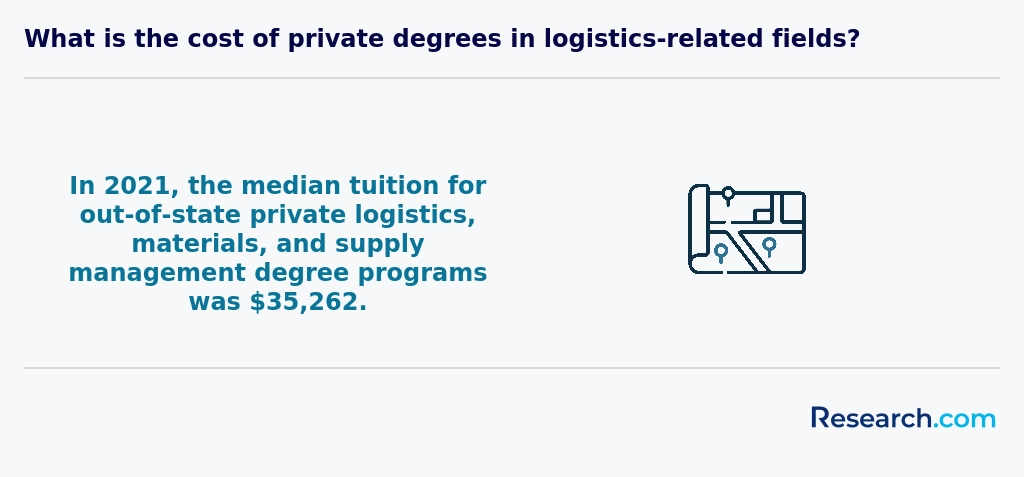
- Annual tuition for a bachelor's in logistics at public Midwestern universities ranges from $9,000 to $15,000 for in-state students, while private universities often charge over $20,000.
- Online programs usually have similar tuition costs but help save money on commuting and housing expenses.
- Midwest states like Illinois, Ohio, Michigan, and Indiana have logistics job markets with employment rates above the national average.
- Starting salaries for entry-level logistics graduates in the Midwest range from $50,000 to $60,000 per year, with experienced professionals earning over $100,000.
- Many online logistics programs include hands-on learning, internships, and partnerships with local companies to boost job opportunities.
- Accreditation from AACSB or ACBSP is common among reputable online logistics degree programs in the Midwest.
How long does it take to complete online logistics degree in the Midwest?
Completing an online logistics degree in the Midwest typically takes between two and four years, depending on the program and enrollment status. Graduates from well-known institutions like Michigan State University or Indiana University often report that associate degrees require about two years, ideal for those eager to enter the workforce quickly or transfer credits to a bachelor's program.
Bachelor's degrees generally take around four years for full-time students, combining general education and specialized logistics courses. Students at universities such as Ohio State University appreciate the flexible scheduling and accelerated summer sessions, which can shorten this timeline.
Part-time study extends completion times, sometimes doubling the duration but allowing students to balance work and family. Accelerated bachelor's completion programs, popular at schools like the University of Wisconsin, reduce total time to 18-24 months for those with prior credentials or experience, offering an efficient path forward.
For those pursuing graduate degrees in logistics online, a typical completion time is one to two years, aligning with professional advancement goals in Midwestern logistics hubs like Chicago and Indianapolis.
Student Support Services and Resources
Pursuing an online logistics degree in the Midwest is more than just coursework-it’s about the support network that empowers you to succeed. Accredited programs often provide dedicated academic advising, ensuring each student has a personalized roadmap through core subjects like supply chain management and transportation logistics. From day one, advisors guide you on course sequencing, prerequisite waivers, and capstone project planning, so you stay on track for timely graduation. Robust career services are another hallmark of top-ranked programs. You’ll have access to virtual career fairs, resume workshops, and mock interviews tailored specifically for logistics roles. Many institutions partner with regional employers-think major distribution centers operated by Amazon or Walmart-to secure internship placements that translate into full-time opportunities. These industry connections not only bolster your resume but also expand your professional network. Library and research support is equally critical. Online students gain 24/7 access to digital databases, journals, and e-books covering logistics technology, global trade compliance, and inventory control. Librarians and research specialists are available via live chat to help with literature reviews, data sourcing, and citation formatting. Technical support ensures seamless class participation: dedicated help desks address LMS login issues, video conferencing glitches, and software installation queries. In addition, peer-to-peer tutoring and study groups foster collaboration, replicating the in-person camaraderie found on campus. For an in-depth look at program structures and additional resources, explore our comprehensive guide to earning a logistics bachelor degree, where you’ll find recommendations for balancing work, study, and practical application in this dynamic field.
What's the difference between online and on-campus logistics degree?
On-campus logistics degrees in the Midwest typically provide direct interaction with faculty and peers, beneficial for students who prefer structured classrooms and immediate feedback. For example, graduates from Ohio State University highlight the value of face-to-face discussions and easy access to campus resources like career centers and physical labs. These programs also offer hands-on experiences, networking events, and local internships that require in-person attendance, enhancing real-world skills.
In contrast, online logistics programs offer flexibility crucial for working adults or those balancing family life. At institutions like the University of Wisconsin, online supply chain management degrees cost around $8,000 per year, noticeably less than the $10,000 to $12,000 typical for on-campus study at public Midwest universities. Students appreciate asynchronous coursework that fits their schedules, enabling steady progression toward their degree without sacrificing personal commitments.
While online students may have fewer immediate local internship options, many schools arrange remote placements in logistics hubs such as Chicago and Indianapolis. Ohio State University reports comparable graduation rates for both formats, reflecting strong support systems that keep students engaged and successful regardless of delivery method.
Return on Investment (ROI) and Career Outcomes
Investing in an online logistics degree requires evaluating both the upfront costs and the long-term career benefits to ensure a strong return on investment. On average, Midwest programs offer total tuition and fees of $24,540, while graduates report starting salaries between $55,000 and $65,000-resulting in a typical payback period of just three to four years. Key ROI considerations include:
- Debt-to-Salary Ratio: With median debt levels around $20,000, graduates can expect an annual salary-to-debt ratio exceeding 3:1, one of the highest among online business and supply chain programs.
- Job Placement Rates: Accredited Midwest institutions boast placement rates above 85% within six months of graduation, reflecting strong industry connections and career support services.
- Salary Growth Trajectory: Logistics managers in the region see salary increases of 4–6% annually, with mid-career professionals earning upwards of $90,000.
- Cost Comparison: When compared regionally, Midwest programs remain more affordable than many coastal alternatives. For a side-by-side analysis of Western institutions’ affordability and earning potential, explore the 2025 Most Most Affordable Online Bachelor's in Logistics Degree Programs Ranking in the West. By balancing tuition costs, financing options, and projected earnings, prospective students can make data-driven decisions that maximize ROI and accelerate career advancement in the logistics field.
What is the average cost of online logistics degree in the Midwest?
The average cost of an online logistics degree in the Midwest is shaped significantly by residency status and type of institution. Data shows the median total cost for such programs is approximately $39,222, with in-state students benefiting from lower median totals near $34,800. Out-of-state students, conversely, face a substantially higher median total cost around $61,200. These figures reflect the broader trend of Midwest public universities offering more affordable tuition for residents compared to private options.
Graduates of online logistics programs from renowned Midwest universities often cite affordability and value as key factors in their decision to enroll. For instance, students pursuing degrees at well-known institutions such as Ohio State University or the University of Illinois Urbana-Champaign experience tuition rates closer to $10,000-$12,000 annually for in-state residents, making the logistics degree accessible and appealing for career-oriented learners. Such affordable pathways enhance emotional confidence in investing in education that leads to strong employment prospects in manufacturing and supply chain sectors.
Those researching Midwest affordable online logistics degree tuition will find that many programs include bundled fees for books and technology, reducing unexpected expenses. Numerous graduates mention financial aid opportunities and scholarships that further lower net costs, especially for public university students. To understand more about where to find competitively priced online logistics programs, prospective students may consider the best online logistics schools in illinois as a useful resource to start their search.

What financial aid is available to online logistics degree students in the Midwest?
Students enrolled in online logistics programs in the Midwest, such as those at popular institutions like Michigan State University or Iowa State University, often benefit from a variety of financial aid sources designed to ease the burden of tuition costs, which typically range from $8,000 to $15,000 annually. Many graduates recall applying for federal aid through the FAFSA, unlocking access to grants like the Pell Grant and Federal Supplemental Educational Opportunity Grant (FSEOG), which do not require repayment and are awarded based on financial need.
Loans with relatively low-interest rates, such as Federal Direct Subsidized and Unsubsidized Loans, also help students cover remaining expenses. Beyond federal aid, targeted scholarships-such as those provided by the Midwest Transportation Scholarship Fund-offer up to $3,000 annually, reinforcing students' motivation to complete their degrees. Veterans turning to programs like the GI Bill find robust support at many Midwestern colleges, where military-friendly policies and flexible schedules accommodate service obligations.
Employer tuition assistance represents an additional funding avenue, especially within the region's thriving warehousing and transportation sectors, where employees pursuing logistics degrees often receive generous reimbursement offers, greatly reducing financial stress and enabling them to advance professionally.
What are the prerequisites for enrolling in online logistics degree program in the Midwest?
Enrolling in an online logistics degree program in the Midwest generally requires a high school diploma or GED, a baseline met by most applicants seeking associate or bachelor's degrees. Graduates from popular Midwest universities often recount straightforward admissions for associate programs, which primarily verify high school completion. For bachelor's programs, some schools ask for SAT or ACT scores, although nearly 40% of institutions now offer test-optional admissions to increase accessibility.
Applicants must submit official transcripts that verify academic performance, with competitive programs typically expecting a minimum GPA around 2.5. Many graduates reflect on this transparency, appreciating clear standards that helped them forecast their chances early in the process. Basic computer skills, especially familiarity with Excel, project management tools, or ERP systems, are either recommended or required to navigate the digital course format effectively.
Flexible options like part-time enrollment or accelerated tracks at Midwest colleges cater to working adults, often replacing traditional prerequisites with relevant work experience in logistics. This adaptability has been a relief for many pursuing careers while studying, highlighting the region's supportive approach to diverse student needs.

Industry Trends Shaping the Future of Online Logistics
The dynamic landscape of logistics is evolving rapidly thanks to technological advancements, sustainability initiatives, and data-driven decision-making. Today's online logistics programs are increasingly integrating emerging tools like artificial intelligence, Internet of Things (IoT) devices, and blockchain to optimize supply chain operations. This trend not only enhances students' learning experiences but also prepares them for a future where digital transformation is at the core of business strategies. Innovative curricula now focus on real-world applications that incorporate predictive analytics and automation, critical skills for overcoming challenges such as fluctuating market demands and environmental concerns. Additionally, the industry's push for sustainability is reshaping course content significantly, ensuring graduates are well-equipped to implement green supply chain practices. For prospective students keen on exploring high-quality educational options, consulting resources such as the best online logistics schools in illinois can provide deeper insights into programs that effectively merge traditional logistics fundamentals with forward-thinking technological expertise. Building on these trends, online logistics education continues to evolve, offering a robust platform for graduates to thrive in a competitive and ever-changing field.
What courses are typically in online logistics degree programs in the Midwest?
Online logistics degrees in the Midwest generally encompass core courses that equip students for the region's robust supply chain ecosystem. Graduates from recognized Midwestern universities often highlight courses like Introduction to Supply Chain Management, which outlines processes from planning to delivery, essential for understanding regional distribution hubs.
Other key subjects include Operations Management and Logistics and Transportation Management, both critical for navigating Midwestern industries reliant on efficient production and an extensive interstate network.
Students appreciate courses such as Inventory Control and Warehousing and Procurement and Supplier Management for teaching practical skills tied directly to local sectors like automotive manufacturing in Michigan or agriculture in Iowa.
Business Analytics and Data Management is often praised for its focus on using modern software to drive decisions, reflecting the data-centric shift in logistics.
Finally, Global Logistics prepares students for the Midwest's expanding export roles through studies of customs and international trade. This targeted curriculum, offered at notable institutions, supports students' confidence in entering a growing field with hands-on, regionally relevant expertise.
What types of specializations are available in online logistics degree programs in the Midwest?
Online logistics degree specializations Midwest programs often include focused tracks such as Supply Chain Management, Transportation and Distribution, Logistics and Operations Management, Global Logistics, and Logistics Analytics and Technology. These concentrations reflect the region's strategic role as a transportation hub and its evolving industry needs. Graduates from notable Midwestern colleges report that Supply Chain Management coursework-covering procurement, inventory, and production-equips them to optimize local and regional supply flows effectively.
Many students appreciate Transportation and Distribution majors, which emphasize freight optimization and modal choices aligned with the Midwest's extensive infrastructure. Those pursuing Logistics Analytics and Technology find opportunities to apply data analysis and automation, critical skills as the industry integrates more technology-driven processes. The variety of Midwest logistics management concentrations online allows students to align studies closely with their career goals.
Those exploring options often consider a logistics bachelor degree from leading universities, benefiting from flexible online formats that support working professionals balancing education with employment.
How do you choose the best online logistics degree in the Midwest?
Choosing the best online logistics degree programs Midwest involves evaluating accreditation, curriculum, and affordability. Graduates from universities recognized for their strong logistics departments often praise programs that balance theoretical knowledge with practical applications like inventory management and transportation. For instance, students from Midwest colleges benefit from flexible online formats tailored to working professionals, allowing them to juggle career and studies effectively.
Cost plays a significant role; public institutions in the region tend to charge between $7,000 and $15,000 annually, with private schools typically higher. Several students report relief upon discovering financial aid options targeted to logistics degrees. Comparing affordable logistics degrees Midwest online can help narrow choices without sacrificing quality or opportunities.
Employer partnerships are crucial. Programs in Illinois or Ohio stand out for their connections with major distributors and manufacturers, facilitating internships and job placements. Strong graduation and employment rates reflect positive student experiences and effective career support. Prospective students should also examine rankings such as the 2025 Most Most Affordable Online Bachelor's in Logistics Degree Programs Ranking in the West to find cost-effective options.
What career paths are available for online logistics degree students in the Midwest?
Graduates earning an online logistics degree career opportunities Midwest often pursue supply chain management, a field centered on overseeing production flows from raw materials to delivery. This role is especially prominent in the Midwest, where cities like Chicago and regions along the Ohio River serve as key transportation corridors. Logistics graduates from popular institutions in the region frequently report satisfaction managing supply chains with median salaries ranging from $75,000 to $95,000 annually, reflecting rewarding growth potential.
Other common pathways include transportation management positions, such as logistics analysts and freight coordinators, leveraging the Midwest's strategic location as a distribution hub. Graduates often find themselves coordinating trucking, rail, and air freight operations, roles that demand analytical skills and offer diverse daily challenges. Additionally, warehouse and distribution center management is growing rapidly due to e-commerce expansion, with opportunities available in states like Indiana and Michigan.
Many Midwest logistics graduates also excel in procurement and purchasing, negotiating contracts crucial to maintaining efficient supply chains. For students considering flexibility, programs at institutions known for logistics education help reduce tuition costs and student debt, particularly when opting for online degrees. Prospective students can explore the best associate degree in 6 months accredited to accelerate their entry into these high-demand roles.
What is the job market for online logistics degree in the Midwest?
The job market for graduates with an online logistics degree in the Midwest is steady and promising, supported by the region's importance as a transportation hub. States such as Illinois, Indiana, and Ohio offer significant Midwest logistics degree employment opportunities, with growth projected near the national average of 6% through 2030. Graduates from universities popular in the Midwest report securing roles like supply chain analysts and logistics coordinators in cities like Chicago and Indianapolis, where warehouse and distribution investments are robust.
Many logistics students from Midwestern institutions appreciate the affordability and flexibility of online programs, which align well with working professionals' needs. This brings a distinct advantage in entering the workforce prepared for real-world logistics challenges. Competitive salaries averaging around $75,000 annually reflect employer demand for skilled workers, especially those holding relevant certifications. Students eager to increase their prospects often explore best online degree programs for seniors to continue advancing their knowledge while balancing other commitments.
Frequently Asked Questions About logistics
Students pursuing online logistics degrees in the Midwest can enhance their learning by engaging actively with industry-specific resources. The Midwest is a major logistics hub, accounting for about 30% of U.S. freight movement, according to the Regional Economic Development Institute. Taking advantage of this, learners should connect with local logistics companies for virtual internships or project collaborations. Participating in relevant online forums and joining associations like the Council of Supply Chain Management Professionals can provide networking opportunities that complement coursework.
Utilizing university career services and attending virtual job fairs focused on logistics also help students stay informed about regional market trends and employment prospects. Consistent communication with professors and using university-provided digital libraries ensures access to up-to-date research and data essential for mastering this field.
The logistics field is rapidly evolving, especially in the Midwest, which remains a critical hub for transportation and distribution. Emerging niches include supply chain analytics, which uses big data to improve efficiency and reduce costs. According to the Council of Supply Chain Management Professionals, Midwest firms are increasingly investing in analytical tools to manage complex networks.
Another growing area is sustainable logistics, focusing on environmentally friendly practices like green warehousing and electric transportation. The Illinois Department of Commerce reports a 15% rise in regional companies adopting sustainable initiatives since 2020.
Lastly, e-commerce logistics is booming due to rising online shopping demands. The Midwest's central location makes it ideal for last-mile delivery innovations, supported by digital platforms streamlining shipments. These niches represent promising fields for students pursuing logistics degrees online.
Preparing for the job market after earning an online logistics degree in the Midwest involves several strategic steps. First, gaining practical experience through internships or cooperative education programs is essential. Many Midwestern logistics hubs, such as Chicago and Indianapolis, offer opportunities in transportation, warehousing, and supply chain management.
Networking is also vital. Joining professional organizations like the Council of Supply Chain Management Professionals (CSCMP) can connect graduates with industry leaders. According to the U.S. Bureau of Labor Statistics, logistics jobs in the Midwest are projected to grow by 5% through 2031, highlighting steady demand.
Additionally, obtaining certifications like the Certified Supply Chain Professional (CSCP) can enhance job prospects by demonstrating specialized skills to employers.
Employers in the Midwest highly value logistics degree graduates with strong analytical and problem-solving skills. The region's complex supply chains require professionals who can optimize routes, reduce costs, and improve efficiency.
Communication is also key, as logistics specialists must coordinate between suppliers, warehouses, and transport teams. According to the Council of Supply Chain Management Professionals (CSCMP), nearly 70% of Midwest logistics employers prioritize candidates with effective interpersonal abilities.
Additionally, proficiency in logistics software and data analysis tools is essential. The adoption of technologies like warehouse management systems (WMS) and transportation management systems (TMS) continues to grow throughout the Midwest, making tech-savvy graduates more competitive.
Lastly, understanding regulatory compliance and inventory management remains critical, as Midwestern logistics hubs adapt to evolving industry standards and regulations.
Finding internships in the Midwest relevant to a logistics degree involves strategic use of regional resources and industry connections. The Midwest is home to major transportation hubs such as Chicago and Indianapolis, where logistics companies and distribution centers frequently offer internship programs. Students should utilize their school's career services, which often maintain partner relationships with local firms. According to the Council of Supply Chain Management Professionals (CSCMP), internships in logistics provide critical hands-on experience and increase job placement rates by over 60% in the region.
Networking through Midwest logistics associations and attending virtual career fairs specifically targeting transportation and supply chain sectors can also help secure internships. Websites like the Illinois Manufacturers' Association and Ohio Logistics Council list internship openings periodically. Additionally, applying to warehouses, freight companies, and third-party logistics providers near one's location can widen opportunities. The U.S. Bureau of Labor Statistics notes that the Midwest sees steady demand for logistics professionals, highlighting the value of internships for gaining practical skills and industry insights.
Obtaining an online logistics degree in the Midwest significantly enhances career mobility and advancement opportunities. This region is a major hub for transportation and warehousing, employing over 800,000 logistics professionals as of 2023, according to the Bureau of Labor Statistics (BLS).
Employers value the specialized skills taught in accredited online programs, such as supply chain management and data analytics, which are critical for operations in Midwest industries like manufacturing and retail distribution.
Graduates with an online logistics degree often qualify for higher-level roles, including logistics managers and operations analysts. The BLS projects a 10% growth in these positions through 2030 nationwide, reflecting strong demand.
Moreover, flexible online study allows working professionals in states like Illinois, Indiana, and Ohio to acquire credentials without relocating or pausing their careers, supporting continuous advancement within regional companies.
Studying for an online logistics degree in the Midwest prepares students for interdisciplinary roles by combining core logistics concepts with skills from business, technology, and supply chain management. Many Midwest programs emphasize practical applications, reflecting the region's strong manufacturing and transportation sectors, which employ over 1.3 million workers according to the U.S. Bureau of Labor Statistics (2023).
These degrees often include coursework in data analytics, project management, and operations research, equipping students to collaborate across diverse departments. For instance, integrating technology with logistics aids in optimizing inventory and transportation, a key demand in Midwest industries.
Online platforms also encourage communication and teamwork skills critical in cross-functional roles, while partnerships with local businesses provide experiential learning opportunities.
When choosing between a thesis and a non-thesis logistics degree program in the Midwest, consider your career goals first. Thesis programs focus on research and are ideal for students planning to pursue a PhD or work in research-oriented roles. Non-thesis programs emphasize practical skills, preparing graduates for immediate workforce entry.
Midwestern schools often tailor online logistics degrees to meet regional industry demands, such as manufacturing and transportation hubs in Illinois and Ohio. According to the Bureau of Labor Statistics, these states have projected logistics job growth rates of 7-10% through 2030.
Thesis options may require more time and independent study, while non-thesis tracks commonly involve internships or applied projects relevant to Midwestern supply chains. Consider the workload, your interest in research, and professional licensing needs when deciding.
Students in the Midwest interested in studying logistics abroad have limited direct options for fully online international logistics degrees. Most students pursue study abroad programs through their Midwest universities, partnering with institutions in Europe or Asia known for strong logistics curricula.
Alternatively, many choose to enroll in Midwest online logistics degrees that include international business or global supply chain modules, rather than fully overseas degrees. According to the National Center for Education Statistics, midwestern schools like Michigan State and Indiana University support global logistics studies through exchange programs and internships abroad.
Students can also consider virtual global classrooms offered by some programs, blending online education with short-term residencies overseas.
Part-time job opportunities in the Midwest that complement logistics degree education often include roles in warehousing, transportation, and supply chain support. Students can find positions as inventory clerks, warehouse associates, or delivery coordinators, which provide hands-on experience with inventory management and distribution processes.
The Midwest houses several major logistics hubs, such as Chicago and Indianapolis, accounting for significant freight movement. According to the Council of Supply Chain Management Professionals, the region contributes substantially to U.S. logistics employment, employing over 1.6 million workers statewide. This abundance of logistics-related roles benefits students seeking relevant part-time experience.
Additionally, roles in customer service for freight companies or administrative positions in logistics firms offer practical insights into operational flow and data management. These jobs help students apply coursework in real-world settings while earning income and building professional networks essential for careers in logistics.
Online logistics students in the Midwest benefit from strong networking opportunities through regional professional organizations such as the Council of Supply Chain Management Professionals (CSCMP) Chicago Roundtable and the Midwest Logistics Association. These groups host regular virtual and in-person events, enabling students to connect with industry leaders and peers.
Many Midwestern universities offering online logistics degrees also provide access to alumni networks and career services tailored for remote learners. According to CSCMP, the Midwest hosts over 15,000 supply chain businesses, enhancing internship and job prospects for students building their networks.
Additionally, virtual career fairs and LinkedIn groups focused on Midwest logistics further expand professional connections.
Alumni networks play a crucial role for students pursuing online logistics degrees in the Midwest by providing valuable career support and industry connections. Midwest logistics hubs, such as Chicago and Indianapolis, offer alumni access to thriving professional communities. According to the Council of Supply Chain Management Professionals, nearly 40% of logistics jobs in the Midwest are filled through networking.
These networks facilitate mentorship, internships, and job placements, which are especially important for remote learners seeking local opportunities. Alumni can also share insights about regional industry trends, including Midwest-specific challenges like seasonal shipping fluctuations.
Moreover, many Midwest institutions host virtual and in-person alumni events, enhancing engagement beyond geographical limits. This connectivity helps students build long-term professional relationships essential for career advancement in logistics.
Customizing an online logistics degree program in the Midwest allows students to align their studies with specific career ambitions. Many universities offer elective courses focused on areas like supply chain management, transportation, or warehouse operations, enabling tailored learning paths.
Students can often choose internships or capstone projects related to industries prevalent in the Midwest, such as manufacturing and agriculture, which support approximately 1.5 million logistics jobs regionally (Bureau of Labor Statistics, 2023).
Additionally, some programs provide options for professional certifications like APICS CPIM, enhancing job readiness for logistics professionals in this competitive market.
Regional partnerships with firms in Chicago, Minneapolis, and Detroit also offer networking and practical experience opportunities.
Online logistics students in the Midwest often face challenges related to maintaining work-life balance. Many students juggle full-time jobs in transportation or supply chain roles while studying, which can strain their time and energy.
Connectivity issues in rural areas are also a concern. According to the Federal Communications Commission, approximately 22% of Midwestern residents still lack access to high-speed internet, impacting students' ability to participate in live sessions or complete assignments efficiently.
Additionally, networking opportunities may be limited online compared to on-campus programs, making it harder for students to build professional connections critical in logistics careers.
With an online logistics degree, professionals can pursue several key certifications to enhance their careers. One widely recognized option is the Certified Supply Chain Professional (CSCP) by APICS, which validates expertise in supply chain management and is valued by Midwest employers in manufacturing and distribution sectors.
The Certified in Logistics, Transportation and Distribution (CLTD) certification also suits logistics graduates aiming to specialize in Midwest transportation hubs like Chicago and Indianapolis.
Additionally, the Certified Professional in Supply Management (CPSM) is offered by the Institute for Supply Management and is relevant for procurement roles common in the region.
These credentials typically require a combination of education and experience, with many Midwest logistics professionals reporting salary increases post-certification, according to the Council of Supply Chain Management Professionals.
Writing a winning application for an online logistics program in the Midwest starts with demonstrating a clear understanding of the region's strong manufacturing and transportation sectors. Highlight any relevant work or academic experience related to supply chain management, as Midwestern logistics centers like Chicago and Indianapolis play critical roles nationally. According to the Council of Supply Chain Management Professionals, demand for logistics professionals in the Midwest is projected to grow steadily through 2027.
Applicants should emphasize their problem-solving skills and familiarity with technology used in logistics operations. Including concrete examples of leadership or teamwork in previous jobs strengthens the application. Additionally, meeting all technical requirements for online learning and providing a well-structured personal statement tailored to the program's mission can set an application apart.
Logistics careers have a broad global outlook, reflecting the increasing importance of international supply chains. For students in the Midwest, understanding global logistics trends is crucial, as this region hosts major transportation hubs like Chicago, one of the world's busiest freight gateways.
According to the Council of Supply Chain Management Professionals (CSCMP), demand for skilled logistics professionals is growing worldwide, driven by e-commerce and globalization. The U.S. Bureau of Labor Statistics projects a 23% job growth for logisticians from 2022 to 2032, faster than average.
Midwestern online logistics degree programs prepare students to manage global operations, considering challenges such as cross-border regulations and sustainability, which are priorities in global markets.
Gaining practical experience while studying for an online logistics degree in the Midwest can be achieved through internships, cooperative education (co-op) programs, and hands-on projects offered by many universities. Midwestern states like Illinois, Indiana, and Ohio have a strong concentration of logistics hubs, such as the Chicago metropolitan area-the nation's busiest freight hub-which provides ample internship opportunities.
Many online programs collaborate with regional companies, allowing students to work remotely or on-site part-time. According to the Council of Supply Chain Management Professionals, nearly 40% of supply chain jobs in the Midwest require prior practical experience, so internships are valuable for employment.
Additionally, industry certifications such as the APICS Certified Supply Chain Professional (CSCP) can supplement hands-on learning and increase employability. Participation in virtual simulations and case studies also helps develop real-world problem-solving skills relevant to Midwestern logistics networks.
Choosing the right concentration within an online logistics degree program in the Midwest requires considering regional industry demands and personal career goals. The Midwest is a major logistics hub, with states like Illinois and Indiana hosting large distribution centers and transportation networks, as noted by the Council of Supply Chain Management Professionals (CSCMP) 2023 report.
Popular concentrations include supply chain management, transportation logistics, and inventory control. Research job market data from the U.S. Bureau of Labor Statistics to identify which specializations have higher demand and growth potential in your state.
Furthermore, look for programs offering courses aligned with Midwest logistics trends such as agricultural supply chains or manufacturing logistics.
Top Trending Logistics Rankings
References
- Career Goals: 17 Inspirational Examples for you in 2026 https://www.imd.org/blog/learning-and-development/career-goals/
- Jobs in transport and logistics: skills you need to get started https://www.rwmgroup.com.au/jobs-in-transport-and-logistics-skills-you-need-to-get-started
- Top Soft Skills Employers Look for in Logistics & Supply Chain Graduates https://imsgroupofinstitutions.com/top-soft-skills-employers-look-for-in-logistics-supply-chain-graduates/
- 5 Reasons Why Choose to Study Sustainable Mobility & Logistics https://www.mynoa.com/en/post/5-reasons-why-choose-to-study-logistics
- Master's Degree in Logistics in Spain: Key Factors for Choosing a Leading Program https://www.enae.com/blog/masters-degree-logistics-spain-key-factors-choosing-leading-program
- Top 4 Supply Chain Certifications to Boost Your Career - MANCOSA https://www.mancosa.co.za/blog/top-4-supply-chain-certifications-to-boost-your-career/
- Logistics Manager Certifications: Best Credentials to Advance Your Career | Teal https://www.tealhq.com/career-paths/logistics-manager-certifications
- 12 Logistics Courses & Certifications To Pick in 2025 https://www.upes.ac.in/blog/advanced-engineering/logistics-courses-for-beginners-and-professionals
- 14 Logistics Support Specialist Cover Letter Examples: Plus Recruiter Insights (Updated for 2026) https://resumeworded.com/cover-letter-samples/logistics-support-specialist
- Trends Driving Growth in Logistics and Supply Chain Roles https://www.jusdaglobal.com/en/article/trends-in-logistics-occupations-careers/


