
2027 Most Valuable Online Master's in Psychology Degree Programs Ranking in the USA

Co-Founder and Chief Data Scientist
Are you considering advancing your career with a psychology degree? Choosing the right online master's program can feel overwhelming, but we're here to help.
This article features the 2027 Most Valuable Online Master's in Psychology Degree Programs Ranking in the USA, crafted by the Research.com team of data scientists. It's designed to guide you toward programs that offer strong value, quality education, and career opportunities.
Reading this will empower you to make informed decisions and take confident steps toward a rewarding future in psychology.
Key benefits of getting online psychology degree in America
- Earning a psychology degree can lead to rewarding careers like School Psychologist, with a mean annual wage of $91,990, or Industrial-Organizational Psychologist, earning up to $154,380 per year.
- Graduates from popular universities often find diverse roles in counseling, therapy, or organizational psychology, offering flexibility and meaningful impact in their communities.
- Online psychology degrees provide convenience and affordability, allowing students from anywhere to balance studies and life, just like many successful graduates from well-known online programs.
- Key benefits of getting online psychology degree in America
- What can I expect from online psychology degree in America?
- Where can I work with online psychology degree in America?
- How much can I make with online psychology degree in America?
- 2027 Most Valuable Online Master's in Psychology Degree Programs Ranking in the USA
- Key Findings
- How long does it take to complete online psychology degree in America?
- Related Certifications: Board Certified Behavior Analyst (BCBA)
- What's the difference between online and on-campus psychology degree?
- Accreditation and Licensure Requirements
- What is the average cost of online psychology degree in America?
- Expert Advice for Navigating Your Online Psychology Journey
- What financial aid is available to online psychology degree students in America?
- Accreditation and Licensure Considerations for Online Psychology Master’s Programs
- What are the prerequisites for enrolling in online psychology degree program in America?
- Financial Considerations for Online Psychology Degree Programs
- What courses are typically in online psychology degree programs in America?
- What types of specializations are available in online psychology degree programs in America?
- How do you choose the best online psychology degree in America?
- What career paths are available for online psychology degree students in America?
- What is the job market for online psychology degree in America?
- Top Trending Psychology Rankings
- See What Experts Have To Say About Studying Psychology
What can I expect from online psychology degree in America?
The average cost of an online psychology degree in America varies widely, creating accessible options for many students. Graduates from popular universities like Arizona State and University of Florida often share how public institutions offer programs under $10,000 per year, making advanced education achievable without overwhelming debt. Meanwhile, private university programs can exceed $30,000 annually, but many students find that the quality of specialized resources and connections enhances their learning experience.
Students discover that investing in accredited online programs provides not only flexibility but also a strong foundation in psychology, crucial for future careers. One graduate from a well-known college spoke about balancing her studies with family life, appreciating how affordable tuition helped her confidently advance toward becoming a licensed counselor. These personal journeys highlight that cost, aligned with accreditation and support, empowers students across America to pursue their psychological passion while managing finances thoughtfully.
Where can I work with online psychology degree in America?
Graduates of online psychology programs from well-known American universities often find themselves stepping into rewarding careers across healthcare, education, business, and social services. Imagine starting as a behavioral health specialist in a bustling hospital or helping individuals navigate life's challenges as a case manager-these roles bring daily fulfillment and growth.
Many alumni from reputable institutions like Arizona State University or the University of Florida celebrate the confidence gained when working as licensed professional counselors or school advisors, making meaningful impacts on families and students. Their master's degrees open doors to positions where they can directly support mental well-being and academic success.
In vibrant corporate settings, psychology graduates use their insights to boost workplace morale or lead employee development programs, turning human behavior knowledge into practical success stories. Social service agencies and nonprofits also welcome these graduates warmly, where they provide crisis intervention and community support, fueling a deep sense of purpose.
With dedication and passion, an online psychology degree from respected American colleges genuinely transforms lives-including your own future journey.
How much can I make with online psychology degree in America?
Graduates of online psychology degree programs in America can anticipate exciting earning opportunities that grow with experience and specialization. For example, many graduates from popular schools such as Arizona State University or the University of Florida find entry-level roles as rehabilitation counselors earning an average of $48,430 annually. This initial step often fuels their passion while providing a solid financial foundation.
As skills and credentials advance, mental health counselors typically see average salaries around $60,080 per year, with marriage and family therapists earning approximately $68,730. Graduates from well-known institutions like the University of Southern California experience these career steps firsthand, combining their studies with licensure to boost their income.
For those aiming higher, industrial-organizational psychologists command impressive salaries averaging $154,380 annually. This specialization offers a dynamic pathway to careers in corporate consulting or human resources, often pursued by graduates of top psychology programs from universities such as the University of Michigan.
Such figures demonstrate the vibrant potential of an online psychology degree in America-where dedication meets rewarding financial outcomes and personal fulfillment.
2027 Most Valuable Online Master's in Psychology Degree Programs Ranking in the USA
How do we rank schools?
Investing in your education is a significant decision that can shape your future, and the Research.com team understands the importance of making informed choices. To assist prospective students in selecting the best online master's in psychology programs, we have meticulously crafted the "2027 Most Valuable Online Master's in Psychology Degree Programs Ranking in the USA." Our commitment to quality, credibility, and accuracy is reflected in the extensive research and analysis conducted to compile this ranking.
We utilized the following reputable data sources to ensure a comprehensive evaluation of psychology programs:
By exploring this ranking, readers will gain valuable insights into the most valuable programs available online for psychology master's degrees, empowering them to make well-informed decisions about their educational investments. For more details on how the ranking was created, please visit our Research.com methodology page.

# 2 position
Cameron University
Master of Behavioral Science

# 3 position
University of Wisconsin-Madison
Master of Educational Psychology: Professional Educators


# 6 position
Walden University
Master of Psychology





# 14 position
Kansas State University
Master of Psychology with an emphasis in Industrial and Organizational Psychology

# 15 position
Amridge University
Master of Professional Counseling

# 16 position
Augustana University
M.Ed. SPED-ABA Master of Education in Special Education-Applied Behavior Analysis


# 19 position
Penn State University Park
Master of Psychology of Leadership


Key Findings
- The cost for an online psychology master's degree ranges from $15,000 to $30,000, with public universities generally being more affordable than private schools.
- Entry-level psychologists earn between $55,000 and $65,000 annually, while the median wage for psychologists in 2023 was about $81,000.
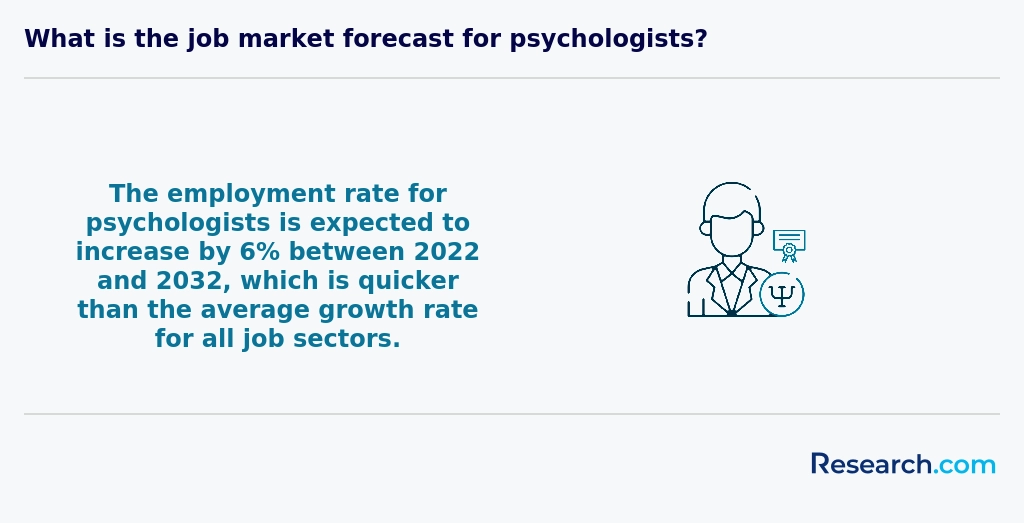
- Psychologist jobs are expected to grow by 6% from 2022 to 2032, reflecting steady demand in the mental health and healthcare sectors.
- Accreditation from agencies like the American Psychological Association (APA) is essential for quality education and licensure eligibility, especially for doctoral programs.
- Online programs offer the same curriculum as on-campus options and often include concentrations such as clinical, counseling, industrial-organizational, and forensic psychology.
How long does it take to complete online psychology degree in America?
Completing an online psychology degree in America can be an empowering journey tailored to fit your life. Many graduates from universities like the University of Florida or Arizona State University share how their associate degrees took about two years, balancing work and study with newfound confidence in foundational psychology knowledge.
Bachelor's degrees typically take around four years, but flexible online formats often allow students to accelerate their timeline by transferring credits or increasing course loads each term. This flexibility has helped countless learners at institutions such as Penn State World Campus complete their degree while managing personal and professional goals.
For master's programs, ranging from Clinical to Industrial-Organizational Psychology, many find completing the degree in 2 to 3 years both achievable and rewarding. Graduates from online programs often highlight how asynchronous classes let them dive deep into learning during their own best hours, fueling passion and career growth.
Doctorate students embrace a longer, enriching path of 4 to 7 years, combining research, internships, and mentorship that build expertise and self-confidence on a profound level. These timelines reflect individual pacing, dedication, and the joy of mastering psychology at top American colleges online.
Related Certifications: Board Certified Behavior Analyst (BCBA)
The Board Certified Behavior Analyst (BCBA) credential can be a valuable add-on for psychology graduates interested in applied behavior analysis. BCBA work focuses on assessing behavior, designing intervention plans, measuring outcomes, and using evidence-based strategies to support behavior change.
This credential is especially relevant for professionals working with children, individuals with autism spectrum disorder, schools, healthcare organizations, and behavioral service providers. It is different from general psychology training because it requires specific preparation in behavior analysis, supervised fieldwork, and eligibility to sit for the BCBA exam.
Admission prerequisites typically include coursework in behavior analysis, supervised fieldwork hours, and a master’s degree in psychology or a related field. Students should confirm that any program they choose meets current certification requirements before enrolling. If affordability is a priority, our guide to the cheapest aba master's programs online can help you compare options that may support accredited training and supervised practicum preparation for BCBA exam eligibility.
Graduates often report that BCBA certification can increase earning potential-often between $65,000 and $85,000 annually-while also strengthening professional credibility. For psychology students, the best fit is usually a program that clearly integrates behavior analysis coursework, fieldwork planning, ethics, and measurable intervention methods.
What's the difference between online and on-campus psychology degree?
Choosing between an online and on-campus psychology degree in America opens exciting paths tailored to your lifestyle and goals. Graduates from universities like Arizona State and University of Florida share how online programs allowed them to study on their own time, balancing family and work while accessing top-tier coursework from anywhere. The freedom to learn evenings or weekends creates a flexible environment that nurtures persistence and growth.
On-campus programs at institutions such as UCLA or Boston University offer vibrant face-to-face interactions. Graduates often speak fondly of engaging directly with professors, participating in hands-on labs, and joining psychology clubs, which foster deep connections and unforgettable campus experiences. These moments boost confidence and create lifelong professional networks.
Both formats adhere to strong academic standards, but the choice depends on how you envision your journey. Whether embracing the adaptability of online classes or the dynamic energy of on-campus life, each avenue empowers you to pursue your passion for psychology with enthusiasm and commitment.
Accreditation and Licensure Requirements
Accreditation is one of the first filters to use when evaluating an online psychology master’s program. It helps show that a school meets recognized academic standards and may affect federal financial aid, transfer credit, doctoral admission, and employer acceptance.
At minimum, look for regional accreditation, such as from the Higher Learning Commission or WASC. If you plan to pursue clinical, counseling, or psychology licensure, also review programmatic expectations carefully. American Psychological Association (APA) accreditation is especially important in many doctoral-level psychology pathways, while some master’s programs may instead describe APA alignment or preparation for later doctoral study.
Licensure requirements vary by state but typically include completion of an approved program, supervised practicum or internship experience, often 1,500–2,000 hours, and passing the Examination for Professional Practice in Psychology (EPPP). Some states also require jurisprudence, ethics, or state-specific exams. Because requirements can change, students should rely on state board guidance rather than general marketing language.
| Requirement | What it means for students | Question to ask the program |
| Institutional accreditation | Supports academic legitimacy, aid eligibility, and transfer options. | Which agency accredits the institution? |
| Program fit for licensure | Determines whether coursework and fieldwork support your target credential. | Does this program meet requirements in my state? |
| Supervised hours | Many pathways require documented practicum, internship, or post-graduation supervision. | How are placements arranged and verified? |
| Exams | Licensure may require the EPPP and additional state exams. | How does the curriculum prepare students for required exams? |
To balance quality and cost, compare accredited programs that align with your licensure goals and budget. For example, the Affordable Online Master's in Psychology Degree Programs Ranking in the South can help you identify regionally accredited options that may also provide licensure support, practicum placement assistance, and career counseling tailored to future psychologists.
What is the average cost of online psychology degree in America?
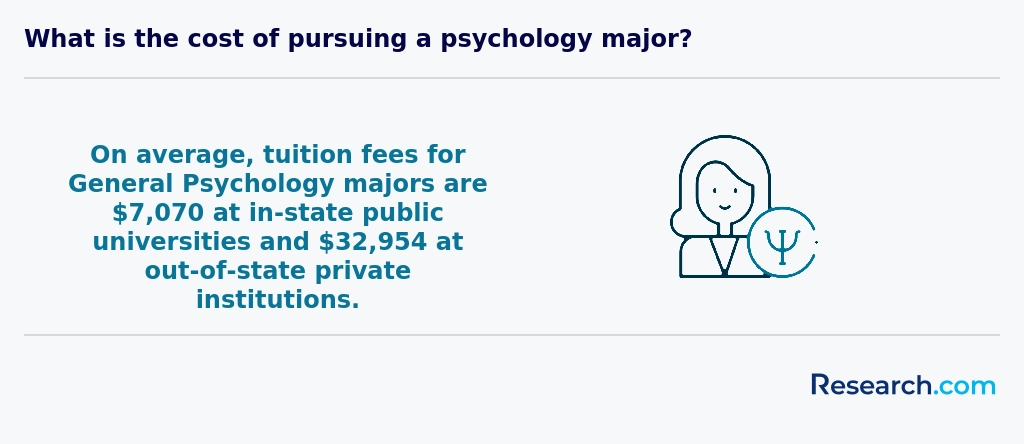
The average cost of an online psychology degree in America typically centers around $23,400, reflecting a balanced investment toward a fulfilling career in mental health and human behavior. Many graduates share that while the upfront cost can seem significant, the journey toward their degree was empowering, with institutions offering flexible payment options and financial aid programs that ease the load. For students pursuing online psychology master's degrees, total expenses often fall within a median range where in-state costs hover near $15,774, and out-of-state programs around $22,392, making quality education accessible depending on your residency.
Imagine studying from the comfort of home while engaging with peers in dynamic online environments at popular schools such as Arizona State University or the University of Southern California. These institutions provide programs with tuition costs that align closely with the national averages, helping students stay motivated knowing their investment is valued. Many online learners appreciate how this balance of affordability and expert faculty turns ambitions into achievements without sacrificing financial stability.
Factors like tuition per credit hour, typically between $400 to over $1,200 depending on the institution, and the total credit requirement shape overall expenses. Yet, numerous students report that scholarships, employer tuition assistance, and financial aid help significantly manage these costs. Exploring details on affordable psychology colleges can open doors to even more opportunities for an affordable psychology education in America.
Students often find the total expenses for online psychology master's degrees in the USA manageable when paired with the promise of career growth and personal development. Every dollar invested becomes a stepping stone toward a rewarding profession in psychology, inspiring students to pursue their goals with confidence and hope.
Expert Advice for Navigating Your Online Psychology Journey
The best online psychology program for you is the one that matches your career target, learning style, schedule, and state requirements. Do not choose based only on brand recognition or convenience. Graduate psychology study requires sustained reading, research, writing, discussion, and, for some tracks, supervised practice.
- Start with accreditation. Confirm that the institution is properly accredited and that the program’s curriculum fits your intended professional pathway.
- Study the faculty roster. Look for faculty whose teaching, research, or clinical interests match your goals. Faculty access matters in online programs because mentorship can affect research opportunities, recommendation letters, and career direction.
- Check student support before you need it. Ask about advising, writing support, library access, technology help, mental health resources, and career counseling for online learners.
- Attend virtual information sessions. Open houses, webinars, and discussion forums can reveal how responsive the program is and whether current students feel supported.
- Compare cost and outcomes together. Resources such as our ranking of affordable online masters degrees in psychology can help you review tuition, graduation rates, and career outcomes in one place.
- Ask how feedback works. Strong programs provide detailed feedback on writing, research design, ethics, and applied skills rather than relying only on exams and discussion posts.
- Prioritize career services. Look for internship guidance, networking events, alumni access, resume support, and professional development tied to psychology careers.
A common mistake is assuming that all online psychology master’s programs lead to the same jobs. Some are designed for research, human services, education, business, or doctoral preparation, while others may support counseling-related goals depending on state rules. Read the curriculum closely before committing.
What financial aid is available to online psychology degree students in America?
Many students pursuing online psychology degrees in America find encouragement through a variety of financial aid options that make their dreams more attainable. Graduates from schools like the University of Florida and Arizona State University often share how completing the FAFSA unlocked access to federal grants, loans, and work-study programs, easing financial burdens while studying.
Institutional scholarships specifically for psychology students frequently reward academic dedication and passion for the field. For instance, those enrolled at the University of Southern California or the University of California system benefit from targeted awards recognizing research interests or financial need, boosting confidence and motivation.
State grants and tuition waivers provide additional relief, especially for residents of states with strong support for online learners. Many have successfully balanced work and studies thanks to employer tuition assistance programs, which several major companies offer, encouraging professionals to advance their psychology careers without stress.
Private scholarships found on platforms like Fastweb further brighten the path, showing that opportunities truly abound for dedicated online psychology students in America.
Accreditation and Licensure Considerations for Online Psychology Master’s Programs
Accreditation and licensure should be reviewed before you apply, not after you graduate. An online psychology master’s program may be academically strong but still not meet the requirements for a particular license in your state. Licensure rules vary, and the burden is usually on the student to verify eligibility.
First, confirm regional accreditation, such as by the Higher Learning Commission or WASC, because it can affect transferability of credits, employer recognition, and federal aid eligibility. Next, review whether the program has American Psychological Association (APA) accreditation where applicable or whether it aligns with APA-related guidelines and professional expectations. APA accreditation is most commonly associated with doctoral programs, internships, and postdoctoral residencies, so master’s students should ask direct questions about how the program supports their intended licensure or doctoral pathway.
For clinical or counseling goals, visit your state board of psychology website and check requirements for approved coursework, supervised practicum hours, internship settings, examinations, and post-graduation experience. Many states require 1,500–3,000 hours of supervised experience post-graduation, and some require the Examination for Professional Practice in Psychology (EPPP).
Students in the South seeking cost-conscious pathways can compare programs in our Affordable Online Master’s in Psychology Degree Programs Ranking in the South. When reviewing any program, ask whether it provides practicum placement support, state authorization information, and written confirmation of how the curriculum maps to licensure-related requirements.
What are the prerequisites for enrolling in online psychology degree program in America?
Enrolling in an online psychology degree in America is an exciting step filled with clear prerequisites that help you prepare for success. For bachelor's programs, many students from schools like Arizona State University or the University of Florida share how having a high school diploma and a GPA around 2.5 to 3.0 opened their doors to learning at their own pace and from their own homes. This foundation builds confidence and readiness for engaging coursework.
When aiming for a master's degree, graduates often highlight how their bachelor's degree-whether in psychology or related fields-combined with supportive letters of recommendation and transcripts, strengthened their applications. Institutions such as Purdue University Global embrace learners bringing diverse academic backgrounds, making the journey more inclusive and inspiring.
Doctoral candidates remind us that showcasing research experience and a strong academic record truly stands out, especially at renowned programs offered by universities like Capella University. These requirements are designed to empower you, reflecting your dedication and readiness to advance in this meaningful field.

Financial Considerations for Online Psychology Degree Programs
The cost of an online psychology degree can vary widely by school type, residency status, degree level, and program format. Before applying, build a full cost estimate that includes tuition, fees, books, technology requirements, residency or internship travel, and any supervised field placement expenses. Tuition alone does not show the full financial commitment.
Students trying to reduce costs should compare public universities, employer-supported programs, and schools with transparent online tuition. Reviewing affordable psychology colleges can help you identify programs that may offer a lower tuition path without assuming that the cheapest option is automatically the best fit.
Financial aid can include federal grants, federal loans, institutional scholarships, graduate assistantships, employer tuition reimbursement, and state-based support. To make a sound decision, compare aid after you receive award letters rather than relying only on advertised tuition.
| Cost factor | Why it matters | What to check before enrolling |
| Tuition and fees | Online programs may charge per credit, per term, or by residency status. | Ask for the total estimated program cost, not only the per-credit rate. |
| Accreditation | Accreditation affects federal aid eligibility, credit transfer, employer recognition, and some licensure pathways. | Verify institutional accreditation and any program-specific standards tied to your goal. |
| Fieldwork and residency costs | Some psychology programs require practicum, internship, or campus-based sessions. | Confirm whether placements can be completed near your location. |
| Career alignment | A lower-cost degree may still be a poor value if it does not support your intended role. | Compare curriculum, outcomes, licensure support, and career services. |
What courses are typically in online psychology degree programs in America?
Online psychology degree programs in America offer a rich and inspiring curriculum designed to empower students with deep knowledge and practical skills. Core courses often include Introduction to Psychology, which opens your eyes to the fascinating world of human behavior, and Research Methods and Statistics, where students from top universities like Arizona State University learn to confidently design studies and interpret data. Imagine understanding how your own mind processes memories through Cognitive Psychology or exploring the biological roots of behavior in Biopsychology classes offered by schools such as the University of Florida.
Graduates often share how courses like Abnormal Psychology and Social Psychology help them connect theory to real life, inspiring empathy and a passion to make a difference. Many online programs also encourage electives in areas like clinical or forensic psychology, allowing personalization of learning paths. This blend of research, theory, and practical insights prepares students to thrive-whether pursuing licensure, counseling, or organizational roles-making the journey fulfilling and motivating.
What types of specializations are available in online psychology degree programs in America?
Online psychology degrees in America open doors to a variety of inspiring specializations, empowering students to pursue their passions and make a real difference. Popular tracks include clinical psychology, where graduates from renowned universities confidently assess and treat mental health disorders, gaining skills that lead to licensure and impactful careers. Counseling psychology prepares many to support individuals through life's challenges with empathy and expert guidance, reflecting the rewarding journey of those who have trained in top American colleges. For those drawn to the intersection of mind and law, forensic psychology offers an exciting path, equipping students to work alongside criminal justice professionals.
Within the realm of psychology master's program tracks in America, industrial-organizational psychology stands out for those eager to enhance workplace dynamics and leadership. Graduates from prestigious programs feel proud knowing their expertise drives employee motivation and productivity across industries. School psychology inspires students to champion children's development while collaborating with educators and families in meaningful ways. Emerging fields like health psychology and neuropsychology add even more options, supported by flexible electives that let students personalize their education.
Many are encouraged by the competitive tuition rates, reflected in a ranking of affordable online masters degrees in psychology that highlights practical paths to success across America's best online programs.
How do you choose the best online psychology degree in America?
Choosing the best online psychology degree in America begins with verifying accreditation to ensure your education opens doors nationwide. Graduates from well-known universities like University of Florida or Arizona State often highlight how accredited programs boosted their confidence and career prospects. Look for programs with a curriculum that balances developmental psychology, research methods, and real-world applications. Many students appreciate courses that integrate supervised internships, helping them grow skills while providing hands-on experience.
Cost and flexibility also play a huge role. Affordable accredited online psychology degrees America offer a perfect fit for working professionals seeking growth without sacrificing their schedules. Programs with asynchronous classes let students manage study and life smoothly. Graduates frequently share how these options helped them stay motivated and engaged. When considering expenses, compare tuition alongside financial aid or employer tuition reimbursements.
Career support matters too. Successful alumni often credit strong networks and internship connections at colleges like Penn State. Aligning your degree with in-demand areas ensures brighter job prospects. For practical choices, explore the cheapest aba master's programs online to find cost-effective pathways tailored to your ambitions in psychology.
What career paths are available for online psychology degree students in America?
Graduates with an online psychology degree in America are stepping into a world filled with inspiring career paths that make a real difference. From clinical psychologist roles helping individuals overcome challenges to school psychologists supporting students' mental well-being in vibrant K-12 settings, the opportunities are diverse and rewarding. Many graduates from well-known universities like the University of California or Ohio State University share how their studies opened doors to meaningful roles in human services and social work, where compassion meets impact every day.
Others find their passion in dynamic corporate environments as industrial-organizational psychologists, boosting employee satisfaction and workplace productivity-careers growing rapidly across America. For those drawn to academia and discovery, research assistant roles at leading institutions provide exciting chances to contribute to groundbreaking psychological studies.
For anyone curious about affordable paths to these fulfilling careers, exploring the Affordable Online Master's in Psychology Degree Programs Ranking in the South can be a great first step. With so many options for online psychology degree careers USA, your future is full of promise and possibilities.
Psychology degree job opportunities America offers truly reflect the versatile and impactful nature of this field, inviting every graduate to find their unique way to contribute to healthier communities and stronger organizations.
What is the job market for online psychology degree in America?
The online psychology degree job outlook USA is bright, filled with growing opportunities as mental health awareness rises nationwide. Graduates from renowned institutions like the University of Florida or Arizona State University often find rewarding careers in clinical psychology, counseling, or organizational roles, where they apply their skills to positively impact individuals and communities. Their journeys reflect a blend of rigorous education and real-world experience, making each graduate ready to thrive in various settings such as schools, hospitals, and corporate wellness programs.
Many graduates find entry-level roles as behavioral health counselors or research assistants, where they hone their expertise. The demand for these roles is supported by strong employment growth, fueled by increased societal emphasis on mental well-being. Students balancing work and studies appreciate that online programs offer flexibility without sacrificing quality, making degrees accessible and achievable.
For those seeking affordability alongside quality, programs featured in the Affordable Online Master's in Psychology Degree Programs Ranking in the South provide excellent value, blending cost-efficiency with strong career prospects in psychology career opportunities in America.
Frequently Asked Questions About psychology
Students pursuing online psychology degrees in America can maximize their learning experience by actively engaging with course materials and participating in virtual discussions. Research from the American Psychological Association highlights that interaction with peers and instructors enhances comprehension and retention. Time management is crucial; setting a consistent study schedule helps balance coursework with personal and professional responsibilities. Utilizing university resources, such as online libraries and tutoring centers, supports deeper understanding. Additionally, applying theoretical knowledge to real-life situations through internships or practicum opportunities strengthens practical skills, which are vital in psychology careers. Staying updated on APA guidelines ensures academic and professional alignment.
The psychology field in the United States is expanding into several specialized niches, reflecting growing societal and technological changes. One of the fastest-growing areas is forensic psychology, where professionals apply psychological principles within the legal and criminal justice systems. According to the U.S. Bureau of Labor Statistics, employment in this area is expected to grow 14% from 2022 to 2032, faster than average for other psychology roles.
Another emerging niche is health psychology, focusing on how psychological factors influence physical health and chronic disease management. Online psychology programs are increasingly offering concentrations in this specialty.
Additionally, neuropsychology is gaining attention as brain research advances. Specialists analyze brain-behavior relationships, addressing conditions like traumatic brain injury and neurodegenerative diseases.
Technology-driven fields such as telepsychology and digital mental health are newly important. These focus on delivering psychological services remotely, responding to the rise in telehealth since the COVID-19 pandemic.
After completing an online psychology degree in America, preparing for the job market involves several key steps. First, gaining relevant experience through internships or volunteer work can improve employability. According to the American Psychological Association (APA), practical experience is critical for career advancement.
Next, obtaining licensure is essential for many psychology careers. Requirements vary by state but often include supervised hours and passing the Examination for Professional Practice in Psychology (EPPP).
Networking is another important factor. Joining professional organizations, such as the APA or state psychological associations, can help graduates connect with employers and stay updated on job openings.
Additionally, continuing education and specialization in areas like clinical, counseling, or industrial-organizational psychology enhance job prospects in a competitive market.
Employers in the American psychology field prioritize several key skills in graduates to meet professional demands. Strong analytical abilities are essential, enabling graduates to interpret complex data and apply psychological principles effectively. Communication skills rank highly, as psychologists must clearly explain findings and collaborate with clients and colleagues.
Critical thinking is another top skill, helping graduates evaluate research and solve problems efficiently. According to the American Psychological Association, adaptability and ethical judgment are increasingly valued due to evolving healthcare standards and diverse client needs. Technical proficiency with statistical software like SPSS also improves employability.
Overall, mastering these skills enhances job readiness in psychology careers across the USA.
Finding internships relevant to a psychology degree in America involves several strategic steps. First, students should leverage their university's career services, which often maintain partnerships with local clinics, hospitals, and counseling centers.
Professional organizations such as the American Psychological Association (APA) offer internship listings and guidance tailored to psychology students. According to the APA, about 60% of psychology internships occur in clinical or counseling settings.
Additionally, networking with faculty and attending psychology conferences can open doors to unpublished internship opportunities. Online platforms like Handshake and internships.com also list positions specifically for psychology majors.
It's essential for students to begin searching early, ideally six to twelve months before graduation, to access the most competitive internships.
Online psychology degrees in America significantly impact career mobility by providing flexible access to advanced education. According to the Bureau of Labor Statistics (BLS), psychology-related jobs are expected to grow 8% from 2021 to 2031, faster than average for all occupations. Graduates with a master's or doctoral degree, often attainable online, qualify for higher-level positions and licensure opportunities.
Employers increasingly recognize accredited online psychology degrees, which can lead to roles in counseling, research, or human services. Online programs often feature the same curriculum as traditional ones, ensuring competitive skills for promotion and career advancement.
Additionally, online degrees allow working professionals to upskill without interrupting employment, facilitating smoother career transitions within the psychology field.
Studying for a psychology degree in America equips students with skills applicable across multiple disciplines. The curriculum often integrates knowledge from biology, sociology, and statistics, reflecting psychology's broad scientific base. According to the American Psychological Association (APA), a typical program includes research methods, cognitive science, and social psychology, preparing graduates to collaborate in healthcare, education, business, and technology sectors.
Online programs further enhance this interdisciplinary readiness by offering courses that emphasize data analysis and evidence-based practices. In 2023, the Bureau of Labor Statistics reported that psychology-related jobs are growing by 8%, especially in healthcare and human resources, fields requiring diverse expertise. This broad foundation allows graduates to work effectively in teams where psychology intersects with other disciplines.
Choosing between a thesis and a non-thesis online psychology degree in America depends on your career goals and learning preferences. Thesis programs usually require original research, suitable for those aiming for doctoral studies or research roles. According to the American Psychological Association (APA), approximately 40% of psychology master's graduates pursue further study, making thesis experience valuable.
Non-thesis programs focus on coursework and practical skills, ideal for students seeking clinical or applied psychology careers. These programs often allow faster completion, appealing to working professionals. The National Center for Education Statistics notes that about 60% of psychology master's students in the US choose coursework-only paths for this reason.
Consider your interest in research and time commitment before selecting either option, as this decision shapes your academic and professional trajectory in psychology.
American students interested in studying psychology abroad through online programs have several options, primarily through partnerships between US institutions and international universities. These programs often allow students to earn degrees accredited both in the US and another country, providing a global perspective while retaining American educational standards. According to the National Center for Education Statistics, approximately 14% of psychology graduate students in the US explore study-abroad opportunities, often opting for blended or fully online formats.
Many schools in the US now offer joint or dual degrees with European or Australian universities, emphasizing global mental health trends. These arrangements enhance cultural competence, a valuable skill in psychology careers. Accreditation remains a key factor; students should confirm programs comply with the American Psychological Association (APA) guidelines to ensure degree recognition in the US job market.
Part-time job opportunities that align well with psychology degree education in America often involve roles in mental health support, research assistance, and human services. Positions like behavioral health technician or psychiatric aide provide practical experience working directly with clients under supervision, developing communication and observational skills.
Many psychology students also find work as research assistants at universities or private firms, helping to collect and analyze data. According to the Bureau of Labor Statistics, such research positions can enhance understanding of experimental psychology and statistical methods.
Other complementary roles include case management assistant or crisis hotline counselor, offering insights into social services and crisis intervention, which are valuable for clinical psychology careers. These opportunities not only strengthen practical skills but also improve marketability post-graduation.
Online psychology students in America have growing access to valuable networking opportunities. Many accredited programs offer virtual events, such as webinars and online workshops, where students connect with faculty and peers. According to the American Psychological Association (APA), approximately 75% of accredited psychology programs encourage online students to participate in online student organizations and professional groups.
Students can also join national associations like Psi Chi, the International Honor Society in Psychology, which offers virtual networking events and career resources. Additionally, online platforms such as LinkedIn provide forums for psychology students to engage with alumni and professionals across the US.
Some schools facilitate regional meetups or internships to enhance local networking. These options help online learners build professional relationships despite physical distance.
Alumni networks offer significant advantages to online psychology degree students in America. These networks connect graduates and current students, facilitating professional mentorship, job referrals, and collaborative research opportunities. According to the American Psychological Association, strong professional connections can increase job placement rates by up to 20% in psychology fields.
Online programs often include access to alumni associations across diverse regions, which helps students tap into local and national employment markets. Active alumni networks also provide exclusive access to psychology conferences, workshops, and continuing education, helping graduates stay updated with industry trends and licensing requirements.
Overall, alumni networks serve as valuable career-building resources for online psychology students navigating the competitive U.S. job market.
In America, many online psychology degree programs offer customization options to align with your career goals. Students can often choose concentrations such as clinical psychology, forensic psychology, or industrial-organizational psychology. According to the American Psychological Association (APA), selecting a specialization helps tailor your coursework and research projects to suit specific professional paths.
Additionally, some programs allow elective choices and practicum placements that fit your interests. For example, internships in community mental health or corporate settings can provide practical experience. Customizing your curriculum ensures you develop relevant skills and increase employability in fields where psychology expertise is in demand.
Accreditation by the APA or regional bodies is crucial for program quality and licensure eligibility in most states. Reviewing these factors helps you strategically plan your education toward desired career outcomes.
Online psychology students in America often face challenges related to the quality of practical experience. Psychology programs require hands-on training, such as internships or lab work, which can be difficult to coordinate remotely. According to the American Psychological Association (APA), in-person supervised practicum hours remain essential for licensure in most states.
Additionally, many students struggle with maintaining motivation and time management due to the flexible, self-paced nature of online courses. A 2022 National Center for Education Statistics report noted that online learners have higher dropout rates compared to traditional students.
Access to campus resources and peer interaction is also limited, which can affect networking and academic support.
With an online psychology degree in the United States, graduates can pursue several professional certifications that enhance their career opportunities. Common certifications include becoming a Licensed Professional Counselor (LPC) or Licensed Clinical Social Worker (LCSW), depending on state-specific licensure requirements. These credentials typically require a master's degree plus supervised clinical experience and passing a licensing exam.
Other options include certification as a Certified Alcohol and Drug Counselor (CADC) or a Board Certified Behavior Analyst (BCBA), which require specialized training beyond a general psychology degree.
The American Psychological Association (APA) reports that licensed psychologists in the U.S. earned a median salary of $81,040 in 2023, highlighting the value of certification.
Writing a strong application for an online psychology program in America requires careful preparation. Start by thoroughly researching accredited programs recognized by the American Psychological Association (APA) or regional accreditors. Many programs look for applicants with a solid academic background in psychology or related fields.
Highlight any relevant work or volunteer experience in mental health or behavioral sciences. According to the Bureau of Labor Statistics, psychology-related roles are expected to grow 8% by 2031, so showcasing practical skills matters.
Prepare a compelling personal statement that connects your goals with the program's strengths. Be clear about why an online degree fits your professional needs.
Strong letters of recommendation from academic or professional sources underscore your readiness. Finally, ensure all transcripts and test scores meet deadlines to avoid delays.
The global perspective on a psychology career highlights its growing demand and wide applicability, especially in the United States. According to the U.S. Bureau of Labor Statistics, employment of psychologists is projected to grow 8% from 2022 to 2032, faster than the average for all occupations. This trend aligns with a global rise in mental health awareness and the need for qualified professionals.
In America, online psychology degrees provide flexible pathways for students to contribute to diverse fields such as clinical practice, research, and organizational psychology. American-trained psychologists often engage internationally, influencing mental health care standards worldwide.
Globally, psychology careers increasingly focus on cultural competence and evidence-based practices, skills emphasized in U.S. education programs.
Gaining practical experience while pursuing an online psychology degree in America is essential for career readiness. Many accredited programs require or encourage internships, practicum placements, or volunteer work within local mental health agencies, hospitals, or community organizations. These opportunities allow students to apply theoretical knowledge in real-world settings while adhering to supervision and ethical standards set by the American Psychological Association (APA).
Students can also engage in research projects, often remotely, collaborating with faculty or participating in data collection and analysis. According to the APA, hands-on experience significantly enhances employability and clinical skills in the competitive U.S. psychology job market.
Choosing the right concentration within an online psychology degree program in America involves aligning your career goals with the specialization offered. Popular concentrations include clinical, counseling, industrial-organizational, and forensic psychology. According to the American Psychological Association (APA), clinical psychology remains the most common path, with growth projected at 3% annually through 2031 by the U.S. Bureau of Labor Statistics.
Consider the licensure requirements for each concentration, as they vary by state and specialization. For example, clinical psychology often requires supervised hours and passing the Examination for Professional Practice in Psychology.
Review program curricula carefully to ensure courses fit your interests and professional aims. Research accredited programs, as accreditation by the APA or the National Association of School Psychologists ensures quality education.
Finally, evaluate job market demand in your region by consulting sources like the Bureau of Labor Statistics and state employment agencies to choose a concentration with strong employment prospects.
Top Trending Psychology Rankings
See What Experts Have To Say About Studying Psychology
Read our interview with Psychology experts

Joann Farrell Quinn, Ph.D., MBA
Psychology Expert
Director at the College of Medicine Department of Medical Education
Morsani College of Medicine

Elizabeth L. Jeglic Ph.D.
Psychology Expert
Professor of Psychology
City University of New York

Catherine Caldwell-Harris, Ph.D.
Psychology Expert
Associate Professor of Psychology
Boston University

References
- How Psychology Students Can Get Clinical Experience Before Graduating | The Playful Psychologist https://www.theplayfulpsychologist.com/post/students-experience-how-to-get-the-experience-you-need-before-you-graduate
- How To Find Psychology Internships https://www.psychology.org/resources/how-to-find-an-internship/
- Sample letters in psychology https://www.mystudies.com/en-in/human-and-social-sciences/psychology/letter-model/
- Online Psychology Degree Salary by Career Path: What the Data Actually Shows in 2026 https://www.collegetransitions.com/blog/online-psychology-degree-salary-by-career-path/
- Alumni Perspectives - Meet Our FPN Alumni https://www.aanmelder.nl/alumni-perspectives-june-2023
- 5 Terrific Ways to Finance your Masters in Psychology Degree https://mastersinpsychologyguide.com/articles/5-terrific-ways-to-finance-your-masters-in-psychology-degree/
- Online Psychology Degrees | University of Phoenix https://www.phoenix.edu/online-psychology-degrees.html
- Study Psychology Abroad | Go Overseas https://www.gooverseas.com/study-abroad/psychology
- 10 High-Paying Jobs with a BS in Psychology | University of Bridgeport https://www.bridgeport.edu/news/high-paying-jobs-with-a-bachelors-in-psychology-degree/
- Psychology (Online) https://www.claflin.edu/DivisionofAcademicAffairs/the-center-for-professional-and-continuing-studies/degrees/psychology-(online)


