# 1 position

Audited and Verified:
Our Editorial and Data Verification Process
Research.com uses government datasets, official education statistics and primary institutional information to support its career and degree guides. Our review process checks factual accuracy, occupational definitions, source dates and the requirements associated with the credentials discussed.
How This Article Was Fact-Checked
Our editorial team verifies salary estimates, employment projections, education requirements and program information against original data providers and official organizations. Salary figures are checked against the relevant occupational definitions and reporting periods. Information about licensure, accreditation and required in-person training is reviewed separately.
Fact-checked and verified on:

Co-Founder and Chief Data Scientist

Reviewed by Karolina Broda
Fact-Checker and Data Verification
Choosing a business administration associate degree in Imperial means deciding whether you need a direct route into office work, a transfer-focused curriculum, or both. The Research.com team of data scientists created its Best Business Administration Associate Degree Programs in Imperial for 2027 ranking to help students identify programs worth considering. The stakes are practical: the U.S. Bureau of Labor Statistics reports a May 2025 median salary of $105,770 for general and operations managers - but that is an experienced role, not a starting wage. This guide helps you compare pathways, costs, and realistic outcomes.
Expect a combination of general education and business coursework in accounting, economics, management, business law, and quantitative skills. The most important distinction is what the degree is designed to do next: support transfer, prepare you for entry-level work, or serve both goals. Imperial Valley College is the local institution to check for current business administration associate degree requirements and advising (Imperial Valley College).
The degree label alone cannot establish whether credits will transfer. Use this comparison to identify which catalog and articulation details you need to verify.
| Associate degree pathway | Best fit | Key check |
| Transfer-oriented AA or AS, including an AS-T where offered | Students planning further study while building business fundamentals | Required major courses, general education pattern, and acceptance of each course by the intended receiving institution |
| Career-focused AAS or similar applied associate degree, where offered | Students prioritizing immediately usable office or operations skills | Software, applied projects, work experience, and whether credits transfer as intended |
For a student comparing future routes such as quick bachelor degrees, the immediate task is to obtain a written associate-degree education plan that identifies transferable courses. An appealing course title is not proof of transfer credit.
Business coursework can support applications for administrative, customer-service, bookkeeping support, sales-support, and operations-coordination roles. Imperial County's agriculture, cross-border commerce, public services, and healthcare organizations create different office-work settings; each employer's software, scheduling, and language needs may matter more than the degree title alone. These are potential workplaces, not guaranteed openings (Imperial County Workforce Development Board; U.S. Bureau of Labor Statistics).
Compare actual local job postings with the courses you would take. If your primary goal is a specialized, higher-paying occupation, a general business degree may be less direct than a curriculum built for that occupation; lists of top majors that make the most money cannot substitute for checking entry requirements and local openings.
There is no single salary for this degree: pay follows the job, employer, experience, and location. Nationally, general and operations managers had a May 2025 median annual wage of $105,770 (U.S. Bureau of Labor Statistics, Occupational Outlook Handbook). Many people in that occupation have substantial experience, so the figure should not be used to estimate a new graduate's offer.
For an Imperial-specific decision, compare current Imperial County postings for the entry-level titles you would actually pursue, then consult California Employment Development Department occupation-and-area wage tables for a broader benchmark. County data may better represent a rural labor market than a statewide figure, but neither describes the pay promised to an individual graduate.
Plan around at least 60 semester units for a California community college associate degree, then check the exact catalog requirements; transfer-oriented degrees have additional course-pattern rules (California Community Colleges Chancellor's Office). A student taking a full course load may finish in about two academic years. Part-time enrollment, course sequencing, placement needs, and work obligations can extend that timeline.
Ask Imperial Valley College for a term-by-term plan showing when required business courses are offered. A shorter advertised timeline is useful only if the schedule, prerequisites, and your available study hours make completion realistic.
Online classes can reduce trips to campus for reading, discussion, and many business assignments. On-campus classes may provide a more predictable schedule for face-to-face instruction and collaboration. Hybrid courses split those activities; an internship or employer-based project, if required or chosen, may still require in-person participation. Check the schedule for each required course rather than assuming an entire degree is available remotely (Imperial Valley College).
Distance matters in the Imperial Valley: a reduced commute may make part-time study feasible, while reliable internet and a suitable computer become essential costs. A directory of trade schools online does not establish that a listed option awards the associate degree or transfer credit you need. Business administration itself does not generally require an occupational license; online delivery does not, by itself, establish transferability or employer recognition.
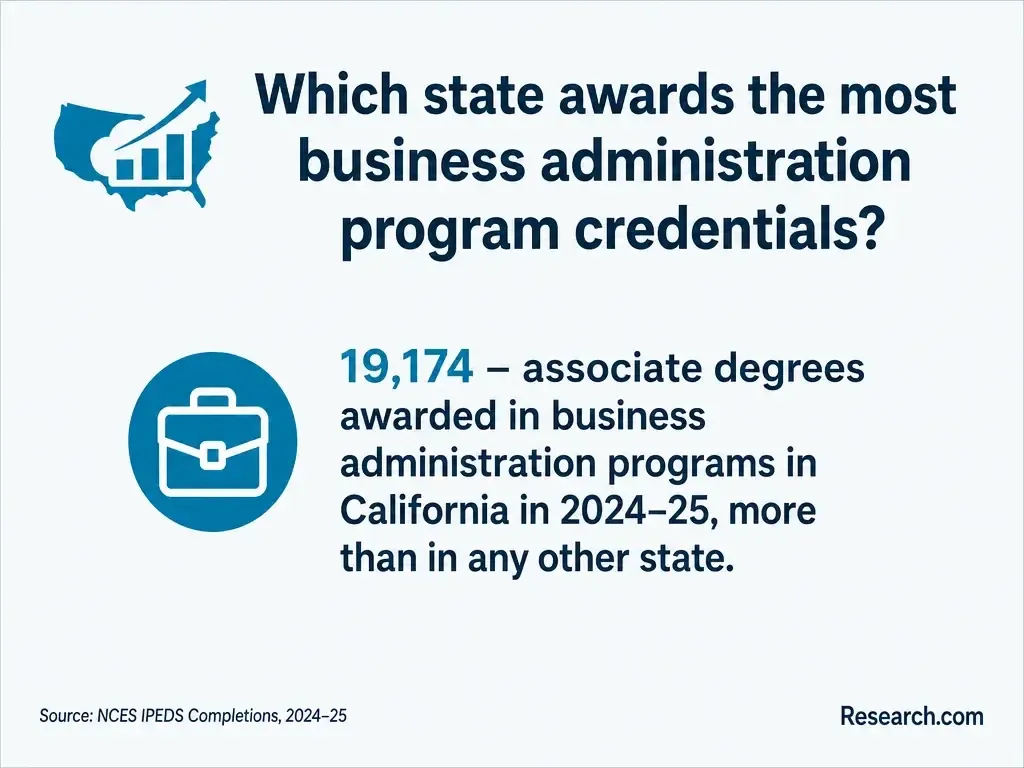
A dependable Imperial-wide average is not available from a single local program price. As a starting point, California community colleges publish a $46-per-unit enrollment fee; confirm the applicable year and any residency-based charges with Imperial Valley College before budgeting (California Community Colleges Chancellor's Office; Imperial Valley College). That rate is not the full cost of a degree.
Add mandatory campus fees, books or access codes, a computer and internet service, transportation, and living expenses. A working student should also consider earnings lost if class times reduce paid hours. Compare the cost of a feasible completion schedule - not just the first term's bill - and request a current estimate if your residency status may affect charges.
Eligible students can explore federal grants, work-study, and loans through the FAFSA; California students should also check the California College Promise Grant and other state aid for which they qualify. Eligibility, covered charges, and deadlines differ, so confirm a personal award offer rather than assuming an advertised benefit will pay the entire bill (Federal Student Aid; California Student Aid Commission; California Community Colleges Chancellor's Office).
Ask Imperial Valley College's financial aid office how enrollment intensity affects aid and whether scholarships or employer tuition assistance can cover remaining costs. If comparing remote options through a guide to online colleges that take financial aid, verify the specific institution's federal-aid eligibility and the specific associate degree's availability. Borrow only after estimating total debt against realistic entry-level pay.
Check Imperial Valley College's current admission and placement procedures, residency documentation, and course prerequisites. Open-access college admission does not mean every accounting, math, or business course can be taken immediately. Prior college coursework may change placement or satisfy requirements, but the college must evaluate it against the degree plan (Imperial Valley College).
Business administration does not generally require a California occupational license for entry-level office roles. Institutional accreditation concerns the college; it is distinct from state authorization, course transfer agreements, optional professional certifications, and occupational licensing. Verify the college's accreditation with the recognized accreditor or U.S. Department of Education, and verify transfer courses separately with the intended receiving institution.
A business administration associate degree usually combines general education in writing, mathematics, and other broad subjects with courses such as financial and managerial accounting, economics, business law, and management. The precise mix depends on the degree and catalog year; a transfer-oriented plan may prescribe particular courses that an applied plan does not (Imperial Valley College; California Community Colleges Chancellor's Office).
Look beyond titles. Spreadsheet assignments, presentations, collaborative projects, and accounting exercises show whether you will practice the work employers request. Ask whether an internship or work-based project is required, optional, or unavailable; do not assume two similarly named degrees provide the same practical experience.
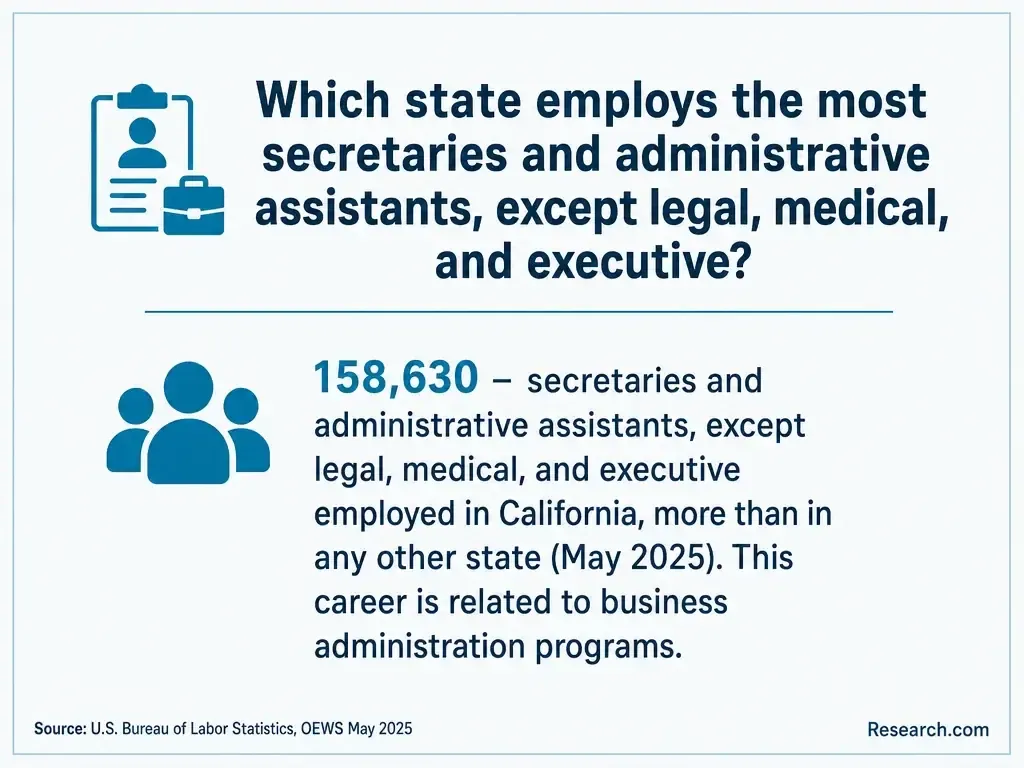
At the associate level, specialization may come through electives and projects rather than a formally named concentration. Accounting-focused courses can suit bookkeeping support; marketing or customer-facing coursework may better serve sales support; management and operations projects can help students already working in an organization. Confirm which choices fit Imperial Valley College's current degree map before treating them as available specializations (Imperial Valley College).
Choose electives backward from a goal: compare a relevant job posting or transfer course list with the approved degree requirements. An elective that builds a useful skill but delays graduation or fails to transfer may be a poor trade-off for a time- or cost-sensitive student.
The best choice is the degree you can complete affordably and use for your intended next step. A ranking can narrow the search, but it cannot account for your work schedule, commute, prior credits, or target employer. Before enrolling, make these checks with Imperial Valley College:
Common mistakes are treating a manager's median wage as starting pay, assuming every online course transfers, and choosing the lowest tuition without checking completion time. A written degree plan and realistic budget are better safeguards than a ranking position alone.
An associate degree can be a foundation for administrative or customer-service work, bookkeeping support, sales coordination, or operations support. Advancement into supervision usually depends on demonstrated performance and experience, not the degree alone. Students who want more specialized work should compare the curriculum with that occupation's actual hiring requirements (U.S. Bureau of Labor Statistics, Occupational Outlook Handbook).
For career entry, pair coursework with evidence you can show an employer: accurate spreadsheets, accounting exercises, presentations, or a documented workplace project. Even if a longer-term search leads to questions such as what is the easiest doctorate to obtain, judge this associate degree first by its immediate employment value, cost, and verified transfer options.
Business administration leads to several occupations rather than one dedicated graduate job market. Nationally, employment of general and operations managers is projected to grow 5.0% from 2025 to 2035, but that projection describes an experienced occupation across the United States; it is not a forecast of Imperial entry-level openings (U.S. Bureau of Labor Statistics, Employment Projections).
For a local decision, examine recent Imperial County postings by job title and required skills, then compare them with California Employment Development Department regional projections. If openings consistently ask for experience you do not yet have, prioritize a program schedule that permits relevant work while studying. If your preferred roles are scarce locally, consider whether commuting or a wider job search is realistic before taking on debt.
Education is a significant investment. Research.com created the ranking to help readers compare programs against relevant local options, using reported outcomes, costs, and quality indicators rather than a school's name alone. Only programs with completions reported to IPEDS are included; an unlisted program is not necessarily unavailable or low quality.
The research team used the following sources to check institutional data and, where relevant to the occupation being evaluated, accreditation or industry recognition:
Best-program rankings assess student outcomes; earnings and return on investment; costs and debt; and quality and recognition. Occupation-relevant programmatic recognition accounts for 20% of the score, institutional accreditation for 10%, and student support for 10%. Outcomes, earnings, and costs make up the remaining 60%, with weights assigned through an entropy-based method. The separate most-affordable methodology scores only costs and debt. Health and construction organizations in the source list are relevant to other occupations, not automatically to business administration. Read more about how Research.com creates its rankings. Use the ranking as a shortlist, then verify the current degree requirements and costs directly with the college.
# 1 position
# 2 position
It can be if the courses match your job or transfer goal and the full cost fits your budget. Compare likely entry-level opportunities and your completion plan rather than using manager salaries as a return-on-investment estimate.
Imperial Valley College is the local institution to check. Confirm its current associate degree offerings, course schedule, and delivery formats directly with the college.
Choose a transfer-oriented AA or AS if verified course transfer is central to your plan. An applied degree may suit immediate workplace skills, but check its transfer rules before enrolling.
Do not assume so. Check whether every required course is offered online in the terms you need and whether any chosen work experience requires in-person participation.
Entry-level general business office roles do not generally require an occupational license. Particular jobs may have separate employer requirements; a college's accreditation is not a substitute for checking them.