# 1 position


Audited and Verified:
Our Editorial and Data Verification Process
Research.com uses government datasets, official education statistics and primary institutional information to support its career and degree guides. Our review process checks factual accuracy, occupational definitions, source dates and the requirements associated with the credentials discussed.
How This Article Was Fact-Checked
Our editorial team verifies salary estimates, employment projections, education requirements and program information against original data providers and official organizations. Salary figures are checked against the relevant occupational definitions and reporting periods. Information about licensure, accreditation and required in-person training is reviewed separately.
Fact-checked and verified on:

Co-Founder and Chief Data Scientist

Reviewed by Karolina Broda
Fact-Checker and Data Verification
Choosing an Iowa business administration associate degree means deciding whether you need a route into office work, a foundation for further study, or both. The U.S. Bureau of Labor Statistics projects 5% national growth for general and operations managers from 2025 to 2035, but those roles usually require substantial experience. This guide compares degree types, costs, transfer options, and realistic career entry points. It also features a Best Business Administration Associate Degree Programs in Iowa for 2027 ranking created by the Research.com team of data scientists to help students identify programs worth considering.
Expect a broad introduction to how organizations budget, market, manage people, and run daily operations. An associate degree can support entry into administrative or customer-facing work while building a foundation for further study. It does not, by itself, qualify someone for a management position.
The degree title matters less than its required courses and intended next step. This comparison helps distinguish programs that may otherwise sound interchangeable.
| Degree pathway | Typical emphasis | Best fit | Check before enrolling |
| Associate of Arts (AA) | Broad general education alongside introductory business courses | Students prioritizing transfer | Whether each course meets the intended receiving institution's requirements |
| Associate of Science (AS) | General education with potentially more quantitative coursework | Students whose intended transfer pathway calls for that course mix | Required mathematics and course equivalencies |
| Associate of Applied Science (AAS) | More occupation-focused business and applied coursework | Students prioritizing job-ready skills | Which credits transfer if plans change |
An AAS may still offer transfer opportunities, and an AA can still support employment; neither outcome is automatic. If you are still deciding whether business fits your interests, comparing what are the best college majors may help frame that choice, but use the Iowa program's actual course map to make the enrollment decision.
Possible settings include healthcare offices, manufacturers, insurers, retailers, logistics businesses, and local government. Across Iowa, the practical difference is often the mix of nearby employers: a student in a smaller community may need a broader office-skills curriculum, while someone near a larger employment center can compare more specialized openings. Review actual postings within commuting distance before choosing electives.
Administrative assistant, customer service representative, sales support worker, and office coordinator are more realistic initial targets than general manager. Employers may value spreadsheet proficiency, accurate records, scheduling, and communication as much as a business course title. Iowa Workforce Development labor-market information and local job postings can help test whether the jobs you want are available where you plan to live.
There is no single salary for this degree: pay depends on the occupation, location, employer, and prior experience. The U.S. Bureau of Labor Statistics reports a May 2025 national median annual wage of $105,770 for general and operations managers. Because that occupation commonly involves significant experience, the figure is a potential later-career reference - not a forecast for a new Iowa associate degree graduate.
For a useful earnings estimate, select the entry-level job titles you would actually apply for, then compare their Iowa wage information from Iowa Workforce Development with local postings. Evaluate whether the program adds skills or access you lack now; counting all future earnings as a return on the degree would overstate its value.
Full-time associate degree study is commonly planned around two academic years, but the required credits and course sequence depend on the college and degree type. Part-time attendance, prerequisite coursework, and courses offered only in certain terms can extend the timeline. Ask for a term-by-term plan showing the credits required for the specific award, not just a suggested completion date.
Working students should check when required courses meet and whether online sections run every term. Prior college credit or an approved prior-learning assessment may shorten the plan, but the receiving college decides what counts toward graduation. Finishing faster can reduce living costs; an overloaded schedule that jeopardizes completion can erase that benefit.
Online study can make lectures, discussions, and assignments easier to schedule around work or a rural commute. Campus study offers scheduled access to instructors, peers, and support services. Business coursework such as accounting and spreadsheets can often be delivered remotely, but a particular program may require in-person exams, presentations, or an internship. Confirm those requirements rather than assuming "online" means no travel.
Compare the same degree award and course requirements across formats. A directory of best non profit accredited online universities can suggest providers to investigate, but it does not establish that a provider offers the Iowa-accessible associate degree or transfer courses you need. Institutional accreditation and permission to serve Iowa students are separate checks; neither guarantees that credits will transfer.
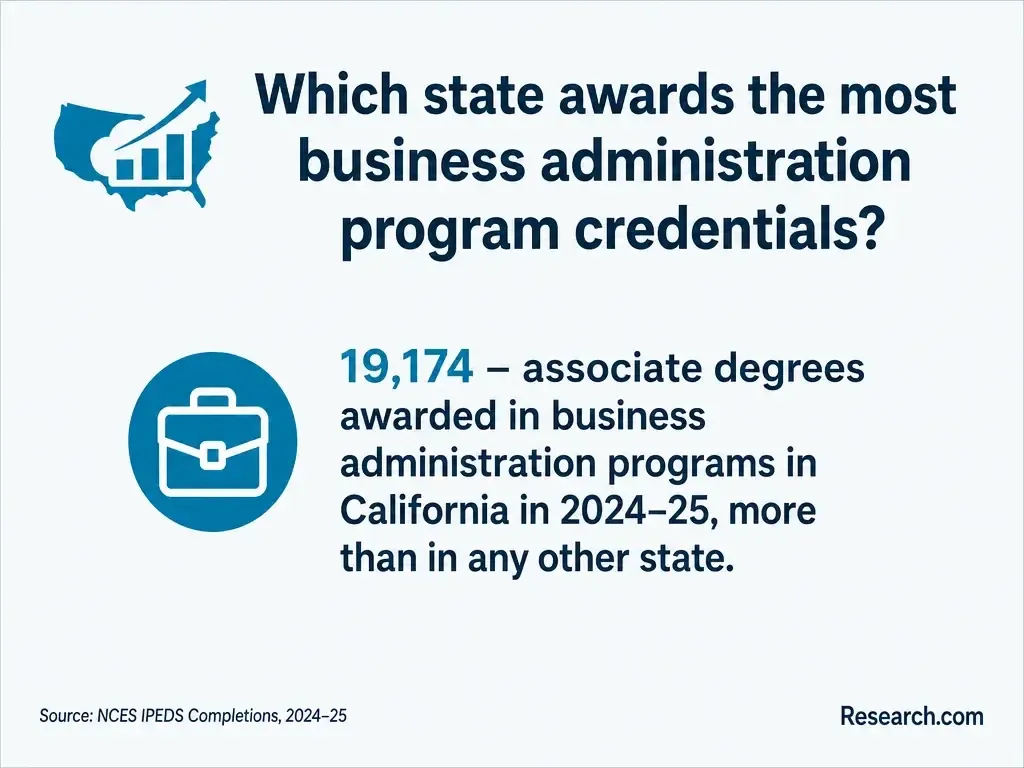
No single statewide price reliably describes every Iowa business administration associate degree. Published tuition varies by college, residency classification, credit load, and year, while a student's total expense also depends on aid and time to completion. Use each school's current tuition schedule and individualized aid offer rather than an unsupported statewide "average."
The comparison below separates charges that are easy to spot from expenses that can change the decision.
| Cost component | What to compare | Why it matters |
| Tuition and mandatory fees | Charges for every required credit, including online or course fees | The advertised per-credit rate may omit required charges |
| Books and technology | Access codes, software, device, and internet needs | Digital coursework can still create recurring costs |
| Attendance and lost earnings | Travel, living expenses, and work hours reduced to attend | A cheaper schedule may cost more if it delays completion |
| Net funding and borrowing | Grants, scholarships, employer assistance, and expected debt | The lowest sticker price is not always the lowest net cost |
Most affordable associate programs online can provide a comparison starting point, but verify Iowa eligibility, required fees, and the cost of completing the exact degree. A sound return-on-investment comparison considers completion likelihood, forgone earnings, debt, current pay, plausible post-degree pay, and how long benefits may last - not tuition alone.
Eligible students may use federal Pell Grants, federal student loans, institutional scholarships, and employer tuition assistance. Submit the Free Application for Federal Student Aid (FAFSA) and review each college's aid offer; Federal Student Aid notes that eligibility and award amounts depend on individual circumstances. Loans must be repaid, so compare the amount you would borrow through graduation rather than just the first term.
Iowa's Last-Dollar Scholarship can help eligible students in designated high-demand programs, but a business administration degree is not automatically on the eligible-program list. Check the current program designation and student requirements with Iowa College Aid and the college before including it in your budget. Ask the financial aid office whether state assistance, scholarships, and employer benefits can be combined and how part-time enrollment affects your offer.
Start with the college's current admissions requirements and the business degree's course prerequisites. Colleges may request prior academic records and use placement information to determine the appropriate starting courses. Admission to a college does not mean every required business or mathematics course is immediately available to you; confirm placement and sequencing before choosing a completion timeline.
Ask how transfer credit is evaluated and whether work experience can earn applicable prior-learning credit. These decisions are institution-specific. Business administration itself does not normally require a state occupational license for admission or general office employment, so be wary of claims that a broadly named business degree confers licensing eligibility for a separate regulated occupation.
Typical coursework combines written communication, mathematics, and other general education with accounting, business communication, marketing, management, economics, and computer applications. The balance differs: a transfer-oriented plan usually reserves more room for general education, while an applied plan may devote more courses to workplace processes.
Look beyond course names. A useful program gives students practice with spreadsheets, business documents, budgets, presentations, and collaborative problem-solving. An internship or employer project can provide evidence of those skills, but such experiences are program-specific, not a universal associate degree requirement. Request the current catalog and ask what completed work you could show an employer.
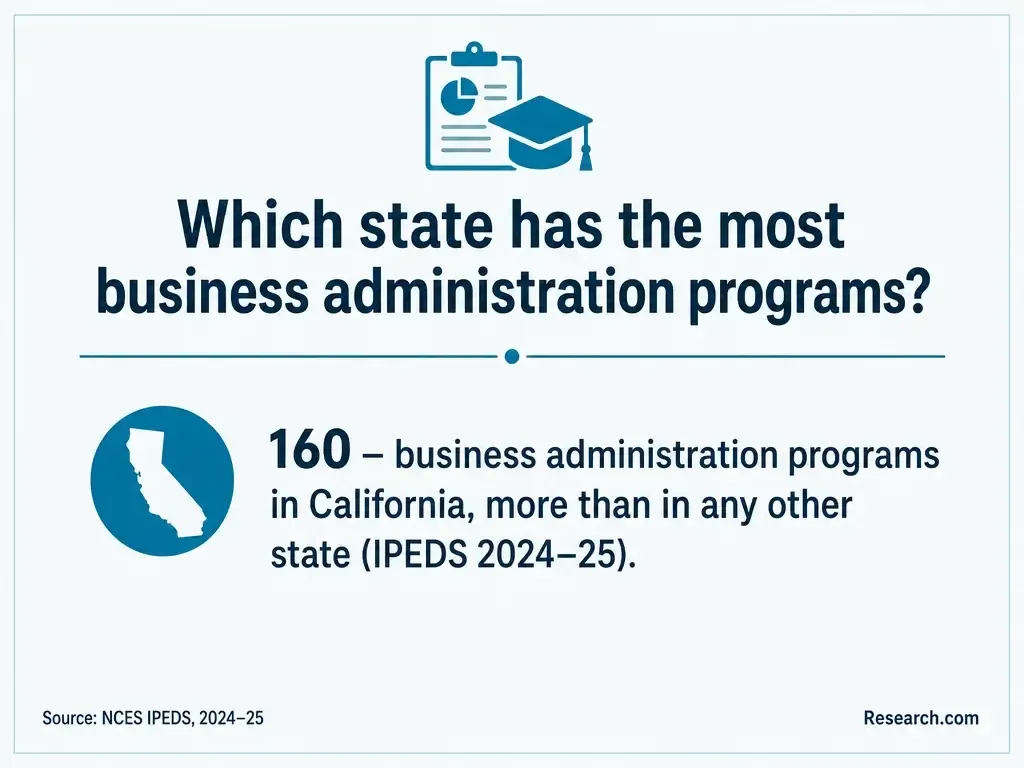
Depending on the college, students may be able to emphasize accounting support, marketing, entrepreneurship, management, or office technology through electives or a named pathway. Availability and degree requirements vary. Choose an emphasis by comparing its required courses with nearby job postings or the receiving institution's transfer map; a specialization label alone establishes neither.
If your goal is broad administrative work, retaining flexible electives may be more useful than a narrow emphasis. A directory of top trade schools online is not evidence that a provider offers a transferable business administration associate degree. Confirm the award, curriculum, and applicable accreditation with the institution itself.
The best choice is the degree you can realistically complete that meets your next-step requirements at a manageable net cost. Western Iowa Tech Community College, Des Moines Area Community College, Iowa Central Community College, Kirkwood Community College, and Eastern Iowa Community College District are among the Iowa providers readers may investigate; compare their current degree catalogs rather than assuming similarly titled programs have identical outcomes. Institutional accreditation is worth verifying through the recognized accreditor or U.S. Department of Education, but it is not a transfer agreement or employment guarantee.
Use these checks with admissions and academic advising staff before committing:
A search for easiest masters degrees cannot answer whether an Iowa associate degree meets your immediate career and transfer goals. Make that decision from the actual degree plan, written transfer information, and your expected net cost.
Graduates may pursue administrative support, customer service, sales support, bookkeeping support, or operations coordination, depending on their coursework and experience. An applied degree with substantial spreadsheet and accounting practice may better support an immediate office role; a transfer-oriented degree may be preferable when keeping further study options open. Neither route makes a graduate an experienced manager on graduation.
Progression usually depends on demonstrated results: accurate reporting, reliable customer communication, process improvement, and the ability to supervise work. Optional software or professional certifications may help with a specific employer's systems, but there is no general Iowa business-administration occupational license attached to this associate degree. Compare job requirements before paying for an additional exam.
The market is broad but not uniform because "business administration graduate" is not a single occupation. The U.S. Bureau of Labor Statistics projects 5% national employment growth for general and operations managers over 2025-2035. That projection indicates demand for an experienced management occupation; it does not measure Iowa openings for new associate degree graduates or promise advancement.
For a local decision, compare Iowa Workforce Development occupational information and recent postings for the specific entry-level titles you would seek. Pay attention to whether openings cluster within a workable commute, require industry experience, or list software skills your chosen degree actually teaches. If the jobs you want consistently require experience you do not yet have, favor a program offering substantial projects or work-based learning over one chosen solely for its title.
Investing in an associate degree is a consequential decision, so Research.com designed its ranking to help readers compare programs with options in the same occupation and location. Only programs with completions reported to the Integrated Postsecondary Education Data System (IPEDS) are included; absence from the ranking does not establish that another program is unavailable or poor quality.
Best-program rankings assess student outcomes; earnings and return on investment; costs and debt; and quality and recognition. Completion and full-time and part-time retention inform outcomes. Earnings measures include median earnings one year after completion and earnings relative to annual attendance cost. Cost measures include resident and nonresident tuition, attendance cost, median debt - including for students who withdrew - and federal loan default rates. Institutional accreditation, relevant programmatic accreditation or industry recognition, and student support services inform quality. Relevant programmatic recognition receives 20% of the score, institutional accreditation 10%, and student support 10%; an entropy-based method distributes the remaining 60% across outcomes, earnings, and cost indicators according to how much they distinguish programs. Most-affordable rankings instead score only tuition, attendance cost, debt, and default rates using entropy-based weights; quality indicators are not part of that score.
The Research.com team draws on the following sources to check coverage, outcomes, costs, and recognition. Some occupation-specific organizations listed here are relevant to other rankings, not necessarily to business administration.
These measures make the ranking a useful starting point, not a substitute for checking a particular degree's curriculum, transfer agreement, schedule, and net cost. Readers can review Research.com's full methodology for more detail on how the rankings are created.
# 1 position
# 2 position

# 3 position

# 4 position
# 5 position
# 6 position

# 7 position

# 8 position

# 9 position

# 10 position

# 11 position

# 12 position
# 13 position
# 14 position

# 15 position

# 16 position
# 17 position

# 18 position

# 19 position

# 20 position

Choose based on your next step, not the initials alone. An AA or AS often fits a transfer plan; an AAS usually emphasizes applied coursework. Have the college confirm the exact courses that meet your employment or transfer goal.
Some programs offer remote coursework, but exam, presentation, internship, or other attendance requirements vary. Ask the college what must be completed in person and whether every required course is available online when you need it.
No. It can support entry into business operations and later advancement, but management hiring commonly depends on relevant work experience and demonstrated supervisory ability.
Not automatically. Ask the intended receiving institution to confirm how each required course applies to your planned program. Institutional accreditation and acceptance of some credits do not establish that every credit fulfills a requirement.
Compare your likely net cost and debt through completion with the skills, jobs, and transfer options the specific program provides. Include time away from work and use realistic entry-level pay - not a manager's median wage - when weighing the investment.