# 1 position


Audited and Verified:
Our Editorial and Data Verification Process
Research.com uses government datasets, official education statistics and primary institutional information to support its career and degree guides. Our review process checks factual accuracy, occupational definitions, source dates and the requirements associated with the credentials discussed.
How This Article Was Fact-Checked
Our editorial team verifies salary estimates, employment projections, education requirements and program information against original data providers and official organizations. Salary figures are checked against the relevant occupational definitions and reporting periods. Information about licensure, accreditation and required in-person training is reviewed separately.
Fact-checked and verified on:

Co-Founder and Chief Data Scientist

Reviewed by Karolina Broda
Fact-Checker and Data Verification
Choosing a business administration associate degree in Roxboro means deciding whether you need a direct route into office work or coursework designed to transfer. The distinction matters: the U.S. Bureau of Labor Statistics projects 5% national growth in general and operations manager employment from 2025 to 2035, but those jobs typically require substantial experience. This guide examines costs, coursework, career prospects, and transfer questions. It also accompanies the Best Business Administration Associate Degree Programs in Roxboro for 2027 ranking, created by the Research.com team of data scientists to help students identify programs worth considering.
Expect a mix of business fundamentals and general education, but first check which associate degree the program awards. Piedmont Community College lists a business administration Associate of Applied Science (AAS), a career-focused pathway. An Associate of Arts (AA) or Associate of Science (AS) generally places more emphasis on general education and transfer. Similar course titles do not make these degrees interchangeable; the college catalog and the receiving institution determine how credits apply (Piedmont Community College; North Carolina Community College System).
This comparison identifies the choice that most affects a student's next step:
| Associate pathway | Best fit | Important limitation to check |
| Business administration AAS | Students seeking applied business coursework and entry-level office or operations roles | Whether individual courses satisfy a later transfer plan |
| AA or AS with business-related coursework | Students whose first priority is transfer | Whether the chosen courses satisfy both the associate degree and the intended transfer agreement |
For Roxboro residents, a nearby campus can make advising and group projects easier to access without a long commute. Ask to see the current course sequence and whether any internship, project, or employer-based experience is required or optional; do not assume one is included because the degree is applied.
Business administration graduates can seek office support, customer service, sales support, scheduling, purchasing support, and operations-assistant roles. In and around Roxboro, that means looking across local government, healthcare administration, retail, and employers with production or distribution offices - not only at businesses with "business" in their names. These are possible job settings, not placement commitments (U.S. Bureau of Labor Statistics, Occupational Outlook Handbook).
Roxboro's smaller labor market makes commuting distance a practical part of the decision. Compare job postings you could realistically reach with the program's accounting, spreadsheet, communication, and operations coursework. A degree focused on general office work is less persuasive for a targeted role if it omits the software or applied projects that nearby employers request.
There is no reliable single salary for everyone holding this degree in Roxboro: pay depends on the job, experience, employer, and work location. The U.S. Bureau of Labor Statistics reports a $105,770 national median annual wage for general and operations managers in May 2025. That is an occupation-wide figure, not a Roxboro wage or an expected starting salary for an associate-degree graduate. Management usually follows experience and demonstrated responsibility.
For a useful earnings estimate, identify reachable entry-level job titles, review their advertised pay, and compare it with your current earnings. Comparisons of what bachelor's degrees make the most money answer a different question and should not be used to estimate the return on this associate degree.
Associate degrees commonly take about two academic years of full-time study, but the current catalog - not a general estimate - sets the required credits and course sequence. Part-time attendance can extend the timeline, particularly if a required business course is offered only in certain terms. Piedmont Community College's current degree audit can show how previously earned credits apply to its business administration AAS (Piedmont Community College).
Students considering accelerated courses should ask whether shorter terms change course availability, weekly workload, or financial aid eligibility. Finishing sooner may reduce living and commuting costs, but an overloaded schedule that delays completion can erase that advantage.
Online delivery can reduce trips from Roxboro for reading, discussions, and some business software assignments. Campus classes provide scheduled access to instructors, classmates, and college facilities. A hybrid option splits those activities. None of these labels tells you whether exams, presentations, advising, or an optional internship require travel; request a course-by-course schedule before enrolling.
If flexibility is the deciding factor, compare the actual requirements behind online college enrollment with a local schedule. Check deadlines, technology requirements, available support hours, institutional accreditation, and whether the awarded associate degree meets your intended transfer requirements. Online access alone does not establish credit transferability (North Carolina Community College System).

A trustworthy Roxboro-wide average cannot be inferred from one local college or from tuition alone. To price Piedmont Community College's AAS, multiply the credits you still need by the applicable tuition rate, then add mandatory fees, books or digital materials, computer and internet costs, transportation, and living expenses while studying. North Carolina residency classification can affect the tuition rate, so confirm your status and obtain a current itemized estimate from the college (Piedmont Community College; North Carolina Residency Determination Service).
When comparing the cheapest online college per credit hour with a local option, compare total remaining degree cost, not the advertised credit price. Transfer-credit acceptance, extra fees, aid, and the possibility of needing additional terms can change which option is actually less expensive.
Eligible students can be considered for federal Pell Grants, loans, and work-study through the Free Application for Federal Student Aid (FAFSA). North Carolina residents should also check current state aid eligibility and deadlines, including the Next NC Scholarship, with Piedmont Community College's financial aid office. Employer tuition assistance and institutional scholarships may further reduce out-of-pocket cost; eligibility and award amounts vary (Federal Student Aid; North Carolina State Education Assistance Authority; Piedmont Community College).
Ask for an aid estimate based on your intended enrollment load, not just a full-time example. Compare grants separately from loans, confirm whether aid covers every required term, and calculate any remaining balance plus commuting and lost work hours. Borrowing to cover a low tuition bill may still be costly if attendance significantly reduces your earnings.
Start with Piedmont Community College's current admissions and placement instructions. Ask what documentation establishes admission, whether prior coursework changes your starting classes, and how North Carolina residency is determined for tuition. Admission to the college, placement into a particular course, and acceptance of transfer credit are separate decisions (Piedmont Community College; North Carolina Residency Determination Service).
A business administration associate degree is not, by itself, an occupational license. That means students should focus admissions questions on academic readiness and degree fit rather than assume a licensing examination follows graduation. If your intended job asks for a particular software skill or work experience, confirm how the curriculum helps you demonstrate it.
A business administration AAS typically combines general education - such as communication, mathematics, and social science - with applied work in accounting, management, marketing, economics, business law, and computer applications. The exact mix and prerequisites depend on the current Piedmont Community College catalog, which should be the basis for planning rather than a generic course list (Piedmont Community College).
Look beyond course names. Spreadsheet-based budgeting, business writing, presentations, and analysis of routine operating decisions can produce work samples for office roles. If transfer is your goal, verify that each general education and business course fulfills the intended associate pathway; a useful job skill and a transferable course are not necessarily the same thing.
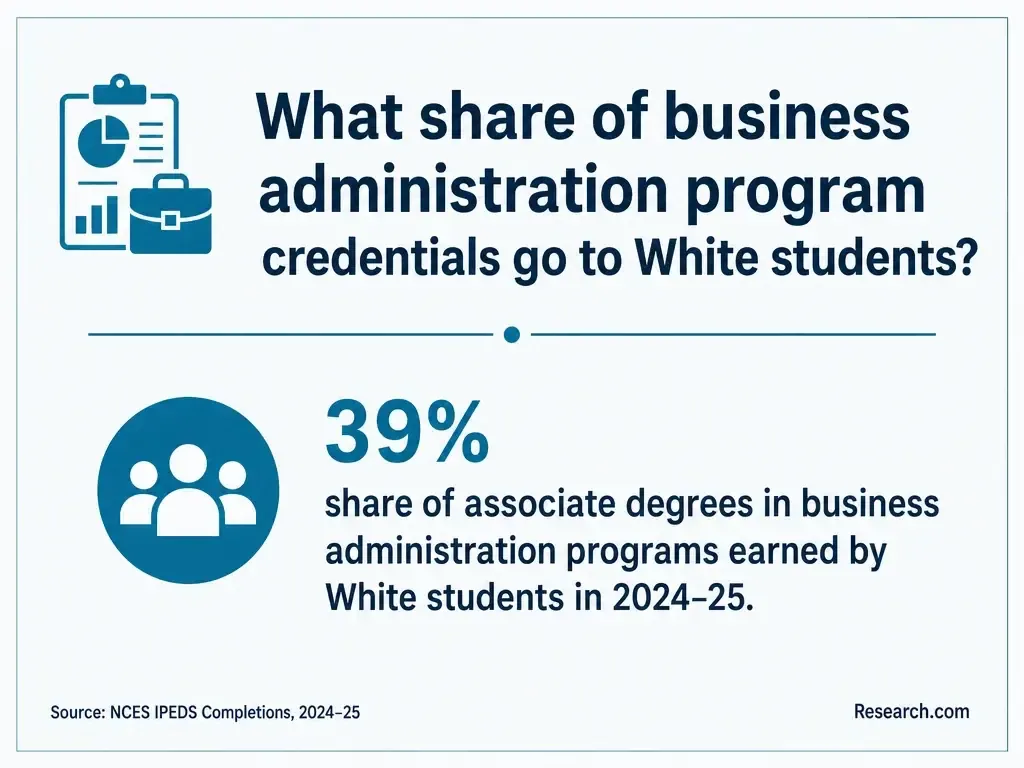
Business administration coursework can support interests in accounting, marketing, management, or operations, but an interest area is not necessarily an officially named specialization. Check Piedmont Community College's current AAS requirements and elective choices before assuming a concentration appears on the degree or transcript (Piedmont Community College).
Choose electives against a specific goal: accounting and spreadsheet work for bookkeeping support, customer and marketing work for sales support, or operations and communication work for coordination roles. A narrowly selected set of courses may help with entry-level applications; it should not be mistaken for the experience normally required for a manager position.
Start with the outcome you want: entry-level work soon, transfer under a verified agreement, or a schedule you can sustain while employed. Then compare the awarded degree, required courses, total net cost, completion timeline, and evidence of practical work. Institutional accreditation, state authorization, and transfer agreements answer different questions; none alone promises a job or acceptance of every credit.
Use these checks before committing, especially if comparing a local AAS with an online or transfer-oriented associate degree:
A common mistake is treating similarly named pathways as interchangeable. Resources on joint degree programs undergraduate do not replace a written transfer evaluation for an associate degree. The best investment is the option that fits your goal and that you can afford and complete - not simply the highest-ranked or fastest-advertised program.
An associate degree can help a candidate compete for administrative assistant, customer service, sales support, bookkeeping support, or operations-assistant openings. Job titles vary: an employer may prioritize spreadsheet ability, scheduling experience, or customer communication over the exact wording of the degree (U.S. Bureau of Labor Statistics, Occupational Outlook Handbook).
Progression usually comes through stronger software and financial skills, reliable work performance, and responsibility for projects or people. Optional job-relevant certifications may help in a particular workplace, but there is no general North Carolina occupational license required simply to work in business administration. If immediate earnings matter more than completing a degree, compare available entry-level openings with the roles that explicitly value associate-level coursework before spending tuition.
The job market is broader than one occupation but harder to summarize with one projection. The U.S. Bureau of Labor Statistics projects 5% national employment growth for general and operations managers from 2025 to 2035; that describes a later-career management occupation, not demand specifically for new associate-degree graduates in Roxboro. A national growth rate also cannot show how many openings are within a workable local commute.
For a local decision, sample recent postings for office, customer-service, bookkeeping-support, and operations roles across the area you could travel to. Record the required software, experience, schedule, and pay, then compare those requirements with the degree map. Because routine administrative tasks can change as employers adopt new software and AI tools, favor coursework that lets you demonstrate judgment, accurate data handling, and clear communication rather than familiarity with one tool alone.
Investing in an associate degree is a consequential decision, especially when a program's price, completion prospects, and career fit differ. Research.com developed the accompanying ranking to make comparable options easier to assess. Its team reviews reported outcomes and costs alongside quality indicators, checks the relevance of those indicators to the occupation, and limits the ranking to programs reporting completions to IPEDS. A provider's absence from that dataset does not, by itself, indicate poor quality or lack of authorization.
Best-program rankings assess student outcomes, earnings and return on investment, costs and debt, and quality and recognition. Programmatic accreditation or relevant industry recognition accounts for 20% of the score; institutional accreditation and student support services account for 10% each. The remaining 60% covers outcomes, earnings, and costs, with weights distributed using an entropy-based method. Most-affordable rankings instead score only tuition, attendance cost, median debt, and federal loan default rate; they do not include accreditation or other quality indicators in the score. Earnings and costs are comparative signals, not predictions of an individual student's results.
The ranking draws on the following sources. Some occupation-specific organizations in the broader source set concern fields other than business administration; their inclusion does not imply that their approval applies to a business degree.
Use the ranking to build a shortlist, then verify the current degree plan, price, and transfer terms with each school. Research.com provides further detail on how its rankings are created.
# 1 position
# 2 position
Its business administration AAS is an applied associate degree. Review the current course map to see how well it matches the office or operations jobs you want (Piedmont Community College).
No. Ask for a course-by-course transfer evaluation and confirm the applicable agreement before choosing classes. An AAS and an AA or AS can have different transfer treatment (North Carolina Community College System).
Do not assume so. Confirm the current availability of every required course and ask whether exams, presentations, or other activities require attendance.
There is no general occupational license for business administration. Particular jobs may have their own employer requirements; the associate degree alone does not qualify someone for every business role.
It can be if its courses match jobs or a verified transfer goal and the expected benefit justifies your net cost, debt, lost earnings, and time to completion. Compare those factors using your own aid estimate and realistic entry-level opportunities.