# 1 position


Audited and Verified:
Our Editorial and Data Verification Process
Research.com uses government datasets, official education statistics and primary institutional information to support its career and degree guides. Our review process checks factual accuracy, occupational definitions, source dates and the requirements associated with the credentials discussed.
How This Article Was Fact-Checked
Our editorial team verifies salary estimates, employment projections, education requirements and program information against original data providers and official organizations. Salary figures are checked against the relevant occupational definitions and reporting periods. Information about licensure, accreditation and required in-person training is reviewed separately.
Fact-checked and verified on:

Co-Founder and Chief Data Scientist

Reviewed by Karolina Broda
Fact-Checker and Data Verification
The cheapest advertised tuition may not produce the lowest-cost business administration associate degree. Fees, commuting, aid, and credits that do not transfer can change the calculation. The Research.com team of data scientists created the Most Affordable Business Administration Associate Degree Programs in Fort Lauderdale for 2027 ranking to help students identify programs worth considering. Nationally, general and operations managers had a May 2025 median salary of $105,770, but that is not entry-level pay (U.S. Bureau of Labor Statistics). This guide helps working adults and new students compare degree pathways, costs, and realistic career outcomes.
Expect a mix of general education and business coursework covering communication, quantitative reasoning, accounting, management, and workplace technology. The central choice is whether you want credits structured primarily for further study or a program emphasizing near-term workplace skills. Degree names alone do not settle that question: inspect the catalog and ask how each required course applies to your intended next step.
Broward College and Keiser University-Ft Lauderdale are local institutions to investigate, but do not assume their similarly named business options award the same degree, require the same courses, or have the same transfer arrangements. Ask each for its current program sheet and a written estimate of applicable credits.
Potential settings include offices supporting Broward County's hospitality, healthcare, retail, logistics, and professional-services employers. Relevant work may involve scheduling, purchasing support, customer operations, records, or accounts support; the degree does not make every management vacancy an entry-level opportunity. Fort Lauderdale's mix of service and office employers makes it useful to choose electives or work experience that match a particular function, rather than treating "business" as a single job title.
Before enrolling, review actual local postings for the tasks you want to perform. Compare their software and experience requirements with the program's coursework, and ask whether internships or employer projects are available and optional or required.
There is no single reliable salary for everyone with this degree: pay depends on occupation, prior experience, employer, and responsibilities. The U.S. Bureau of Labor Statistics reports a $105,770 national median annual wage in May 2025 for general and operations managers. Many people in that occupation have substantial experience, so this figure should not be used as an associate-degree starting-salary estimate or a Fort Lauderdale wage estimate.
For a useful personal estimate, compare current local postings for specific entry-level roles with the pay and advancement available in your present job. If you already work in an office, the degree may be more valuable as a route to added responsibility than as an immediate change of employer. Do not use the manager median to calculate your expected return on investment.
An associate degree is commonly planned around two years of full-time study, but the applicable credits, course sequence, and term availability determine your actual finish date. Part-time study may preserve earnings while extending the time you pay for transportation, technology, or other recurring costs. An accelerated schedule can shorten elapsed time but may reduce hours available for paid work.
Request a term-by-term plan showing required credits, prerequisites, and when each course runs. If you have prior college credit, ask for a formal evaluation before counting it toward graduation. Readers considering how to get an associates degree fast should compare the proposed completion date with its workload and total cost, not just its advertised pace.
Online coursework can reduce trips across Broward County and make study easier around shifts; campus study may offer more scheduled interaction and access to on-site support. Neither format is automatically cheaper or stronger for employment. Business courses often lend themselves to remote assignments, but an internship, supervised project, or examination may have separate attendance rules.
The comparison below identifies practical questions to resolve before committing to either format. Confirm the current program's requirements directly rather than assuming every course follows the same schedule.
| Consideration | Online or hybrid | On campus |
| Schedule | May offer flexible coursework; deadlines and live sessions can still apply | Scheduled travel and class times are more likely |
| Practical work | Projects may be remote; verify any required in-person activity | On-site interaction may be easier to arrange |
| Cost beyond tuition | Technology and any required travel | Commuting and parking, where applicable |
Ask whether the same degree and courses are offered in each format, what support is available remotely, and whether your chosen course schedule keeps you on track to finish.
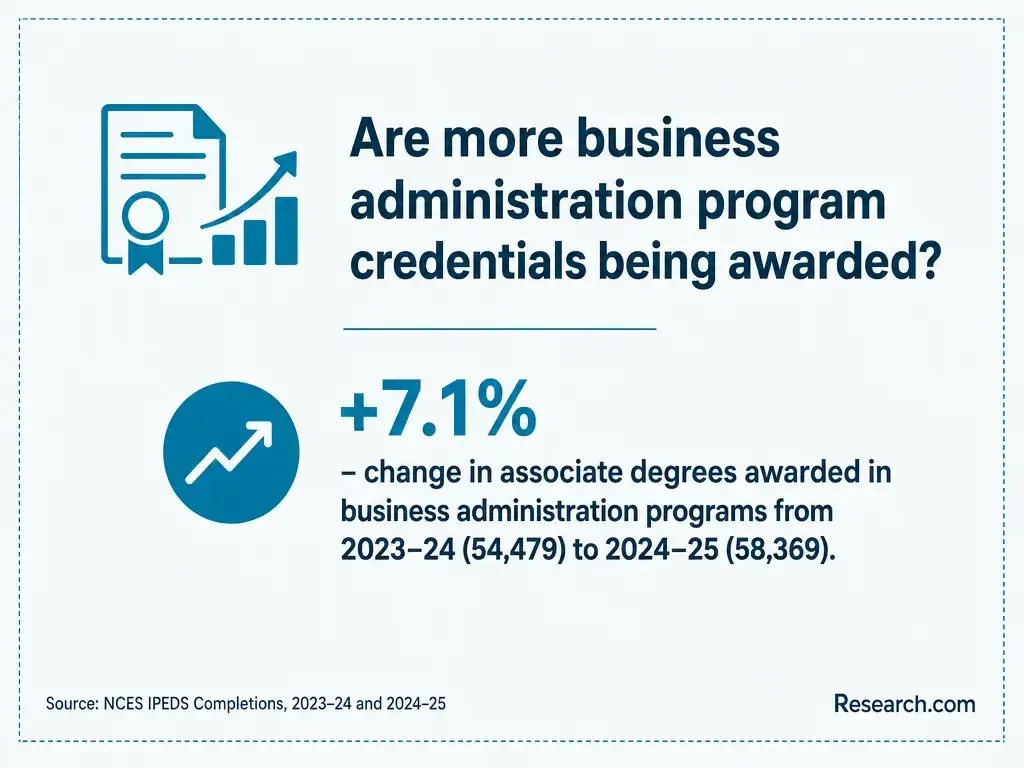
A defensible Fort Lauderdale average requires comparable, current program-level prices and residency assumptions; a single local average would obscure meaningful differences between offers. Instead, obtain a written cost estimate from each school for all terms needed to graduate. Check whether the quoted rate depends on residency, course load, or delivery format, and whether fees change by term.
Add mandatory fees, books or access codes, a suitable computer and internet service, and transportation. Then subtract aid you are actually offered. Lost earnings matter too: a faster schedule is not necessarily less expensive if it substantially reduces your working hours. Comparing quick college courses that pay well is most useful when the comparison includes completion time and earnings you would forgo, rather than tuition alone.
Depending on eligibility and the institution, students may use federal grants and loans, institutional scholarships, Florida aid, or employer tuition assistance. Federal Student Aid determines federal-aid eligibility through the FAFSA and the school's participation and program rules; submitting the application does not guarantee a particular award. Ask financial-aid offices which grants must be repaid, which awards require a minimum course load, and whether assistance covers summer terms.
For a working adult, employer reimbursement can materially change the choice between schedules, but check its grade requirements and repayment conditions before budgeting it as certain. If you are returning to college later in your career, advice about top college degrees for seniors online may help frame scheduling questions; your actual aid and program eligibility still require individual confirmation.
Admissions requirements vary by institution and program. Expect to confirm the school's current application requirements, prior education records, placement process, and any prerequisites for courses such as accounting or quantitative reasoning. Admission to a college is not the same as confirmation that all your previous credits will satisfy this degree.
Ask Broward College or Keiser University-Ft Lauderdale for the exact degree requirements and a written credit evaluation if you have studied elsewhere. If your schedule is constrained by work, also check when prerequisite courses are available; a course offered only in a particular term can delay completion even when admission is straightforward.
Typical study combines writing, mathematics, and other general education with introductory accounting, economics, management, marketing, business communication, and computer applications. The exact mix matters. More transferable general education may suit a student planning further study, while applied coursework and business projects may better suit someone seeking an office or operations role soon after graduation.
Look beyond course titles for practice using spreadsheets, preparing budgets, presenting findings, and working with customer or operations data. As workplaces adopt more digital tools, evidence that you can check AI-assisted output, protect information, and explain a business decision may be more useful than familiarity with a tool's name alone. Confirm which skills are actually assessed in the program you choose.
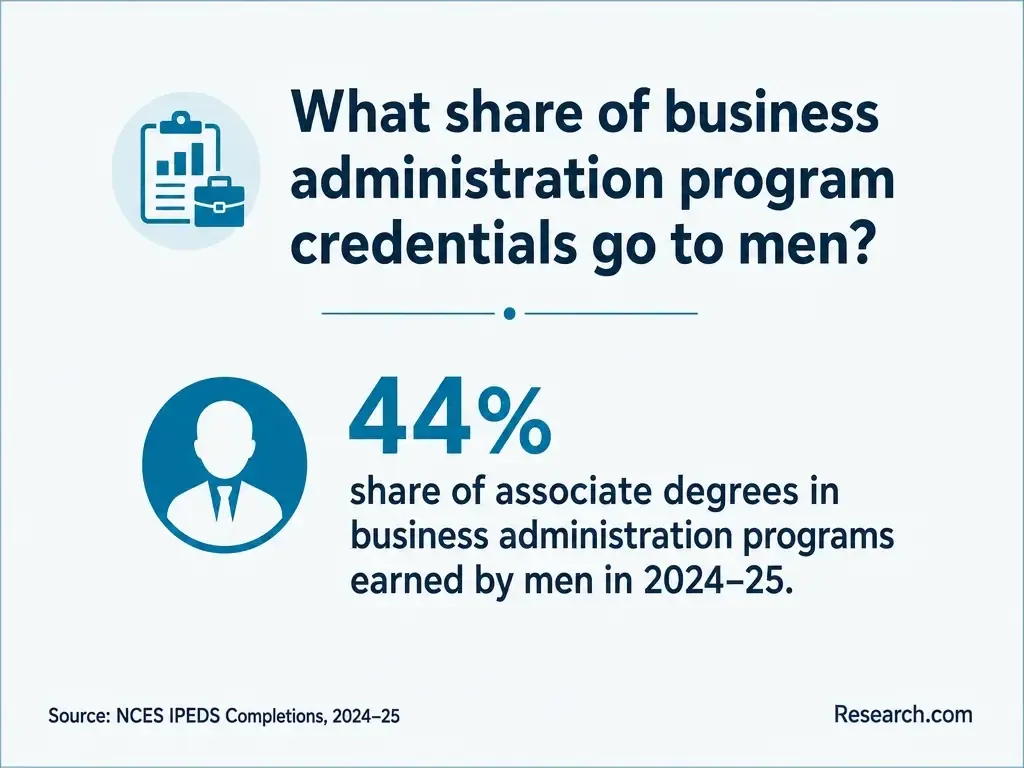
Depending on the catalog, students may be able to shape an associate degree through electives or projects in accounting support, marketing, management, or operations. Do not assume a specialization appears on the degree or guarantees a particular job. A student targeting purchasing support, for example, should prioritize relevant coursework and spreadsheet practice; one interested in customer operations may gain more from communication and service-process projects.
Ask whether an elective changes graduation requirements or reduces the number of credits applicable to your planned next step. If you are comparing claims about the highest paying certifications, keep the decision focused on what this associate degree itself teaches and what the roles you want actually require.
Start with the outcome you want: a defined entry-level business function, progression in your current workplace, or transferable study. Then compare written evidence, not just the ranking position. An affordability ranking measures cost and debt, so a low-ranked price is not proof of strong teaching, transferable credits, or a convenient timetable.
Use this sequence when contacting each school; it exposes the mistakes most likely to make an apparently inexpensive degree costly.
Business administration office roles generally do not require a Florida occupational license merely because they involve business tasks; this makes curriculum and employer fit more important than searching for a generic "business administration license."
Near-term possibilities include administrative coordination, customer operations, accounts support, and purchasing or scheduling support. These are different functions, not interchangeable titles: accounting-heavy work calls for stronger numerical accuracy, while customer operations places greater weight on communication and process improvement. Supervisory responsibility generally depends on demonstrated work performance and experience as well as education.
An associate degree may be a worthwhile investment when its courses fill a clear skill gap or help you advance with your current employer. Someone who already meets the requirements for a desired role should compare the value of additional study with the opportunity to apply directly. Readers exploring top paying 6 month online certifications should not assume that a shorter timeline provides the same breadth of general education or the same transferable credits as an associate degree.
Business administration graduates enter multiple occupations, so no single job-growth figure describes their local prospects. As one illustration of a later-career pathway, the U.S. Bureau of Labor Statistics projects 5.0% national employment growth from 2025 to 2035 for general and operations managers. That projection is not a forecast of entry-level associate-degree openings in Fort Lauderdale.
Use local job advertisements to identify the roles actually available within your commute and the experience they request. Compare several employers rather than relying on one posting, and look for repeated requirements - such as spreadsheets, scheduling systems, customer communication, or bookkeeping - that your chosen program will let you demonstrate. This is a more reliable test of immediate fit than a national management projection.
Choosing an associate degree is a consequential investment. Research.com created this ranking to make local cost comparisons more transparent, using standardized education and debt measures rather than advertised tuition alone. Programs are compared with other programs in the same field and location; only programs with completions reported to IPEDS are eligible. Consequently, the ranking is not a complete inventory of every available option.
Most affordable rankings score tuition, cost of attendance, median student debt, and federal loan default rate. An entropy-based method gives more weight to measures that vary more across eligible programs. Accreditation, student support, and earnings are not part of this affordability score; readers should check them separately. The team consulted the following sources in developing and checking its rankings. Occupation-specific sources are used where relevant, not as additional scoring measures for this affordability ranking:
These checks help readers use the ranking as a cost-focused shortlist, then verify the degree awarded, current charges, and fit with their goals. Further details appear on Research.com's methodology page.
# 1 position
# 2 position
# 3 position

The cheapest option for you depends on your residency, applicable credits, aid, fees, and time to completion. Use the affordability ranking as a shortlist, then request comparable written total-cost estimates.
Choose based on the actual curriculum and your goal. An AA generally emphasizes transferable study; an AS or AAS generally has a stronger career focus. Confirm how the specific program's credits apply to your plans.
That depends on the school's current delivery options and any required in-person activity. Ask whether every required course, examination, and project can be completed in your preferred format.
It may help build relevant skills, but management jobs commonly require experience. Compare the requirements for specific openings with your existing work history and the program's coursework.
General office and business administration work does not have a single Florida occupational license attached to this degree. Particular jobs can have separate employer or regulatory requirements, so check the role you intend to pursue.