# 1 position
Best Criminal Justice Associate Degree Programs & Schools in Chattanooga for 2027
Audited and Verified:
Our Editorial and Data Verification Process
Research.com uses government datasets, official education statistics and primary institutional information to support its career and degree guides. Our review process checks factual accuracy, occupational definitions, source dates and the requirements associated with the credentials discussed.
How This Article Was Fact-Checked
Our editorial team verifies salary estimates, employment projections, education requirements and program information against original data providers and official organizations. Salary figures are checked against the relevant occupational definitions and reporting periods. Information about licensure, accreditation and required in-person training is reviewed separately.
Fact-checked and verified on:

Co-Founder and Chief Data Scientist

Reviewed by Karolina Broda
Fact-Checker and Data Verification
Choosing a criminal justice associate degree in Chattanooga means checking more than a program's name: the degree must fit your career goal, budget, schedule, and any hiring requirements. The U.S. Bureau of Labor Statistics projects 3.5% national growth for police and sheriff's patrol officers from 2025 to 2035, but entry depends on agency selection and training. This guide explains local options and trade-offs. It also features the Best Criminal Justice Associate Degree Programs in Chattanooga for 2027 ranking, created by the Research.com team of data scientists to help students identify programs worth considering.
Key findings about associate criminal justice degrees in Chattanooga
- Start by confirming that a Chattanooga-area school currently awards a criminal justice associate degree; a school's presence in the city or in a ranking does not establish that it offers this particular degree.
- Choose the degree by purpose: a transfer-oriented AA or AS generally prioritizes transferable coursework, while a career-focused AAS prioritizes occupational study. Check the receiving institution's credit evaluation before enrolling.
- The U.S. Bureau of Labor Statistics reports a $76,210 national median annual wage for police and sheriff's patrol officers in May 2025. That occupation-wide figure is not a Chattanooga starting salary or a return promised by an associate degree.
Table of Contents
- Best Criminal Justice Associate Degree Programs & Schools in Chattanooga for 2027
- What can I expect from an associate criminal justice degree in Chattanooga?
- Where can I work with an associate criminal justice degree in Chattanooga?
What can I expect from an associate criminal justice degree in Chattanooga?
Expect an associate degree that combines general education with study of policing, courts, corrections, and the legal limits on public authority. The useful first distinction is between a degree designed chiefly for transfer and one designed chiefly for career preparation. A criminal justice title alone does not tell you which outcome its credits support.
This comparison helps you identify the degree type to request when speaking with admissions and academic advisers:
| Degree pathway | Typical emphasis | Best fit | Check before enrolling |
| AA or AS | General education and transferable criminal justice coursework | Students who want to preserve options for further study | How each required course transfers to the intended destination |
| AAS | More occupation-focused coursework alongside general education | Students prioritizing near-term career preparation | Whether specialized credits transfer and whether employers value the curriculum |
At Chattanooga State Community College, verify the current catalog's degree title, curriculum, delivery format, and transfer pathway rather than assuming every criminal justice option has the same purpose. Do not assume Chattanooga College Medical Dental and & Technical Careers offers a criminal justice associate degree without obtaining its current program listing. If you are still comparing fields of study, a broader look at useful college majors can help clarify why criminal justice fits your interests.
Where can I work with an associate criminal justice degree in Chattanooga?
Possible settings include municipal or county public-safety agencies, detention facilities, court offices, and private security employers in the Chattanooga area. Duties and entry requirements differ substantially: an office-support position is not the same as a sworn police position, and an associate degree does not itself confer police authority. Agency recruitment, screening, and required training remain separate steps (U.S. Bureau of Labor Statistics; Tennessee Peace Officer Standards and Training Commission).
Look beyond an employer's industry label to the actual duties. Someone who prefers records, evidence documentation, or other detail-focused work may want to compare those roles with careers suited to quieter work styles; openings and qualifications still need to be checked individually.
There is no single wage for criminal justice associate degree holders. Pay depends on the occupation, employer, experience, shift arrangements, and whether a role requires agency training. The U.S. Bureau of Labor Statistics reports a $76,210 median annual wage for police and sheriff's patrol officers nationwide in May 2025. This describes workers across experience levels, not new associate degree graduates or Chattanooga hires.
For a usable local estimate, compare current Chattanooga-area postings for the specific job you want, including stated starting pay and benefits. Then compare that pay with your present earnings and the full cost and time needed to finish the degree. Do not use the national police median to justify borrowing for a court-support or private-security goal with a different pay scale.
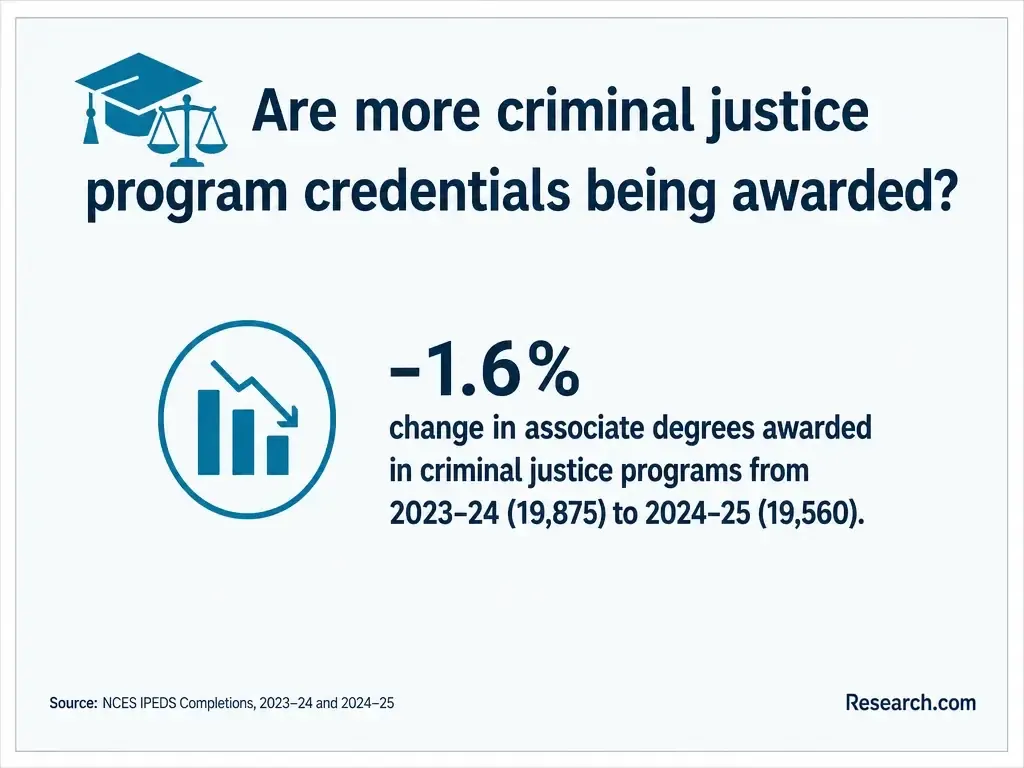
A full-time associate degree commonly takes about two academic years, but the controlling figure is the current program's required credits, not a general timeline. Part-time enrollment, unavailable required courses, placement needs, and work schedules can extend completion. Previously earned credits can shorten it only if the school accepts them toward specific requirements.
Ask for a term-by-term plan showing when criminal justice courses are offered, whether any course has a prerequisite, and how many credits remain after transfer or prior-learning review. A faster schedule is worthwhile only if you can sustain it; withdrawing or repeating a course can erase the apparent time savings. When comparing academic commitments more broadly, how degree difficulty varies is less important than whether this associate program's actual schedule fits your life.
Online study can make lectures, reading, discussion, and written case analysis easier to fit around shifts. On-campus study can provide more direct access to instructors, advising, and any scheduled practical activities. A hybrid option may combine these advantages, but "online" does not establish that every requirement can be completed remotely.
Check the course schedule for in-person examinations, simulations, internships, or employer-site activities before committing - especially if you live outside commuting distance. If comparing accredited online schools that accept financial aid, confirm both the institution's aid eligibility and the particular degree's availability to Tennessee residents. Neither online delivery nor institutional accreditation substitutes for an agency's hiring and training requirements.
A defensible Chattanooga average cannot be inferred from a single school's posted tuition. Your decision requires a program-specific total-cost estimate: tuition at your applicable residency rate, mandatory fees, books, technology, travel, and living expenses during the time you enroll. Any required background check, uniform, or internship travel belongs in that estimate as well. Published attendance budgets and individual bills can differ (National Center for Education Statistics; institution cost-of-attendance disclosures).
Request the current cost-of-attendance estimate and a degree plan from each school you are considering. Apply your likely grants and employer assistance, then examine remaining debt and earnings you may forgo while studying. An affordable-looking semester can become an expensive degree if a required course is offered infrequently or credits do not count toward your goal.
Eligible students can use the Free Application for Federal Student Aid to be considered for federal grants, loans, and work-study at participating institutions. Tennessee residents should also check current eligibility rules for Tennessee Promise or Tennessee Reconnect, as applicable; these programs have distinct conditions and do not automatically cover every degree expense (Federal Student Aid; Tennessee Student Assistance Corporation).
Compare net cost, not the largest advertised award. Ask each financial aid office which charges an award covers, whether enrollment intensity affects eligibility, and what happens if you change schedules. Employer tuition assistance may help working students, but reimbursement timing matters if you must pay the bill first.
Admissions requirements are set by the institution and can differ from requirements for a later job. Obtain the current application checklist for the exact degree: it may address prior education records, placement, residency documentation, and financial aid deadlines. Ask whether prior coursework can satisfy general education requirements and get the answer in a written credit evaluation (institution admissions and catalog policies).
Do not confuse admission with eligibility for sworn employment. Tennessee law-enforcement hiring and training involve separate agency and state standards; a college offer of admission does not mean an applicant will meet them (Tennessee Peace Officer Standards and Training Commission). If that is your goal, review the standards and the intended agency's recruitment requirements before spending money on a degree primarily for that purpose.
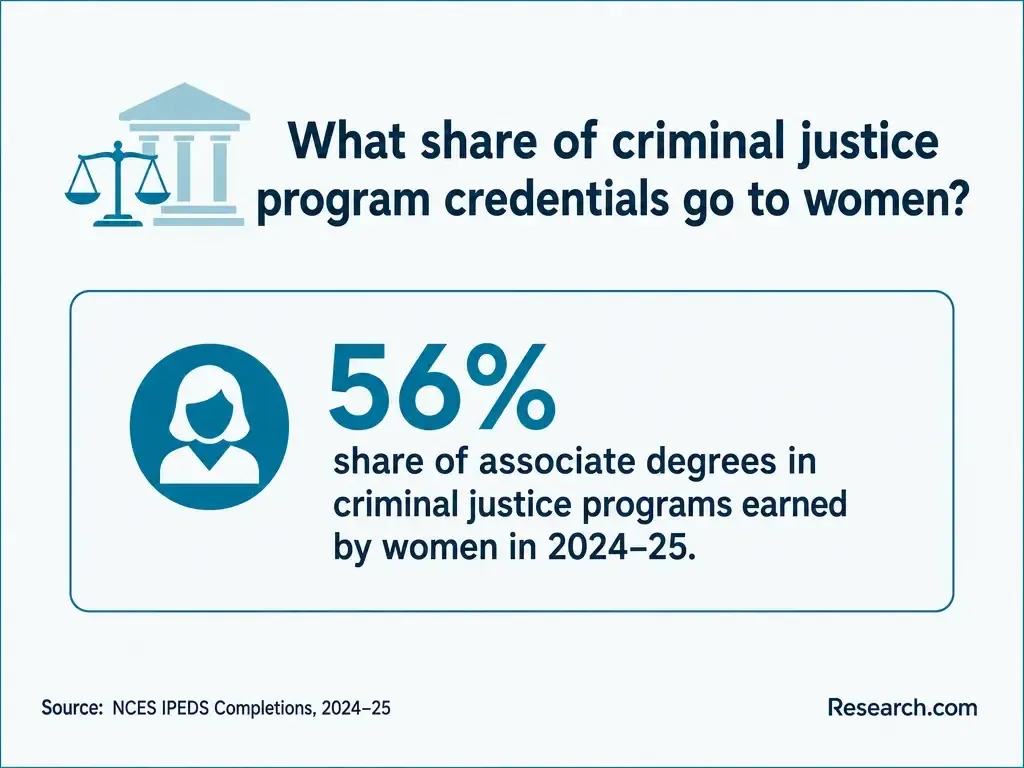
Criminal justice associate coursework commonly introduces the criminal justice system, criminal law, policing, corrections, and courts, alongside general education in writing, mathematics, and social or behavioral sciences. Course names and required credits depend on the current catalog. Writing and evidence-based reasoning matter across these subjects: graduates may need to explain events accurately without confusing an allegation with a proven fact.
Compare syllabi, not just course titles. Ask whether assignments include report writing, legal research, ethical decision-making, or analysis of real-world scenarios. If a school advertises an internship or field activity, verify whether it is required, how placements are arranged, and whether working students can complete it on their schedules.
A school may offer electives or a defined emphasis in areas such as law enforcement, corrections, or legal studies. Availability should be confirmed in the current catalog; an advertised area of interest is not necessarily a distinct associate degree. For transfer-oriented students, an elective is valuable only if it satisfies a requirement at the intended receiving institution. For career-focused students, its value depends on relevant skills and actual employer expectations.
A narrow concentration is not automatically better. Ask whether it replaces transferable general education, adds a required course offered rarely, or provides supervised experience. If your interests eventually lead toward research-intensive work, longer-term degree requirements are a separate decision; choose the associate curriculum for the next step it can demonstrably support.
Start with the outcome you need: eligibility to apply for a particular job, stronger preparation for entry-level work, or credits that will count toward further study. Then compare the exact degree awarded, required courses, delivery schedule, full net cost, and evidence of student support. Institutional accreditation, program-specific recognition, state authorization, transfer agreements, and occupational requirements answer different questions; do not treat one as proof of another.
Before accepting an offer, use these checks to expose the most costly mismatches:
- Get the current degree audit and ask which required courses are available when you can attend.
- Request a written explanation of how credits transfer if further study is your goal.
- Confirm institutional accreditation and any relevant state authorization using official records, then separately check the intended employer's entry standards.
- Compare the complete cost after aid with your completion plan, likely debt, forgone earnings, and realistic job prospects.
Rankings can help build a shortlist, but they cannot verify your personal credit transfer or hiring eligibility. Be wary of claims that a criminal justice degree alone guarantees a badge, a job, or a particular salary.
Graduates can investigate agency recruitment, detention and corrections roles, court support, records work, and private security positions. These are possible paths, not jobs reserved for degree holders; some employers may hire applicants without an associate degree, while sworn roles require additional screening and training. Review postings for the exact position before deciding the degree is the most efficient route (U.S. Bureau of Labor Statistics; Tennessee Peace Officer Standards and Training Commission).
Experience can open more specialized or supervisory opportunities, but requirements vary by employer. An associate degree may be a sound investment if its courses strengthen the skills a target employer requests or preserve valuable transfer credit. It may be less compelling if you can enter your chosen role directly and the degree neither improves eligibility nor advances a defined longer-term goal.
The national outlook is a reference point, not a local hiring forecast. The U.S. Bureau of Labor Statistics projects 3.5% growth for police and sheriff's patrol officers from 2025 to 2035. That projection covers an occupation rather than criminal justice graduates and cannot show how many Chattanooga openings will be suitable for a new applicant.
For a local decision, review recent postings from the agencies and employers you would realistically commute to. Record their minimum education, selection stages, schedules, and starting pay. A degree is more persuasive as an investment when it addresses requirements you repeatedly find in those postings - not when national growth is the only evidence of demand.
Best Criminal Justice Associate Degree Programs & Schools in Chattanooga for 2027
Research.com created the ranking because an associate degree is a substantial investment of time and money. Its team checks multiple datasets and evaluates programs against other programs in the same occupation and location, so readers can compare relevant options rather than rely on a school's reputation alone. Only programs with completions reported to IPEDS are included; absence from the ranking does not establish that another program is unavailable or poor quality.
Best-program rankings assess student outcomes; earnings and return on investment; costs and debt; and quality and recognition. Programmatic accreditation or relevant industry recognition receives 20% of the score, institutional accreditation 10%, and student support services 10%. The remaining 60% covers completion and retention, earnings, tuition, attendance costs, debt, and federal loan default rates, with weights distributed through an entropy-based method. Where applicable, most-affordable rankings instead score only cost and debt measures. A quality indicator drawn from another occupation should not be mistaken for criminal justice program approval.
The team uses the following sources to check institutional records, outcomes, costs, and occupation-relevant recognition. Some recognition sources cover other fields and do not imply that criminal justice programs require those approvals:
- IPEDS database
- National Center for Education Statistics
- College Scorecard database
- Peterson's database
- Commission on Accreditation of Allied Health Education Programs (CAAHEP)
- Accrediting Bureau of Health Education Schools (ABHES)
- Commission on Dental Accreditation (CODA)
- Dental Assisting National Board (DANB)
- National Center for Construction Education and Research (NCCER)
- Apprenticeship.gov Partner Finder
The ranking helps narrow a shortlist, not replace a review of the current catalog, aid offer, transfer rules, and hiring requirements. Readers can find further detail on Research.com's ranking methodology.
Frequently asked questions about criminal justice programs in Chattanooga
Not necessarily. Check the hiring standards of the agency you want to join and Tennessee's applicable training requirements. The degree does not replace selection, screening, or required agency training (Tennessee Peace Officer Standards and Training Commission).
Choose based on your next step. An AS generally emphasizes transferable coursework; an AAS generally emphasizes career-focused study. Ask for a written evaluation of credits if transfer matters.
That depends on the current program schedule. Confirm whether required courses, examinations, or field activities need in-person attendance before applying.
Check its current catalog for the exact criminal justice degree, required courses, and format. Confirm that its curriculum matches your intended job or transfer plan rather than relying on the degree title alone.
Compare total cost after aid, time away from work, completion feasibility, and likely borrowing with the specific career or transfer benefit you expect. Use actual employer requirements and your school's written credit evaluation, not an occupation-wide median wage.
- U.S. Bureau of Labor Statistics - Police and Detectives
Used to verify salary, employment outlook, and typical education requirements.
https://www.bls.gov/ooh/protective-service/police-and-detectives.htm - NCES College Navigator (IPEDS)
Used to verify programs offered and institutional accreditation.
https://nces.ed.gov/collegenavigator/ - O*NET OnLine - Police and Sheriff's Patrol Officers
Used to verify common responsibilities, skills, work settings, and education expectations.
https://www.onetonline.org/link/summary/33-3051.00 - Chattanooga State Community College - official website
Official school website (programs, tuition, admissions).
https://www.chattanoogastate.edu/ - Chattanooga College Medical Dental and & Technical Careers - official website
Official school website (programs, tuition, admissions).
https://www.chattanoogacollege.edu/