# 1 position


Audited and Verified:
Our Editorial and Data Verification Process
Research.com uses government datasets, official education statistics and primary institutional information to support its career and degree guides. Our review process checks factual accuracy, occupational definitions, source dates and the requirements associated with the credentials discussed.
How This Article Was Fact-Checked
Our editorial team verifies salary estimates, employment projections, education requirements and program information against original data providers and official organizations. Salary figures are checked against the relevant occupational definitions and reporting periods. Information about licensure, accreditation and required in-person training is reviewed separately.
Fact-checked and verified on:

Co-Founder and Chief Data Scientist

Reviewed by Karolina Broda
Fact-Checker and Data Verification
Choosing an affordable criminal justice associate degree in Taft means looking beyond tuition: the degree must also fit your career goal, schedule, and budget. The U.S. Bureau of Labor Statistics projects 3.5% national employment growth for police and sheriff's patrol officers from 2025 to 2035, but a degree alone does not qualify someone for the job. This guide explains costs, transfer options, and career requirements alongside the Most Affordable Criminal Justice Associate Degree Programs in Taft for 2027 ranking, created by the Research.com team of data scientists to help students make an informed choice.
Expect a combination of general education and study of policing, courts, corrections, and the legal system. At Taft College, confirm the current catalog title and award rather than assuming that a program called "criminal justice" is listed under that name; colleges may use "administration of justice." Ask for a degree audit showing which courses count toward graduation and which transfer.
The award matters. An Associate of Arts or Associate of Science may emphasize transferable general education, while an Associate of Applied Science, where offered, generally emphasizes occupational coursework. Neither label alone proves that credits will transfer or that the degree satisfies an employer's hiring standards. Students considering a later academic route can explore which bachelor degree is the easiest, but should base their immediate associate degree choice on documented course-to-course transfer rules.
Potential employers in and around Taft include local law enforcement, Kern County agencies, courts, and correctional employers. Their roles have different entry rules: an administrative or records position is not the same as a sworn peace-officer position. A small local labor market may also make a commute or broader Kern County search important. Review actual vacancies for required driving records, background screening, physical qualifications, schedules, and experience before choosing courses.
For California peace-officer positions, an associate degree does not replace agency selection or required basic training; the California Commission on Peace Officer Standards and Training (POST) sets relevant standards. Requirements for corrections and other roles differ by employer and position. Verify the specific job announcement rather than treating "criminal justice" as a universal occupational license.
The U.S. Bureau of Labor Statistics reports a $76,210 national median annual wage in May 2025 for police and sheriff's patrol officers. This is an occupation-wide figure, not a Taft starting salary or an estimate for all criminal justice associate degree holders. Entry pay depends on the hiring agency, position, experience, and eligibility for sworn work.
For a useful personal estimate, compare current pay scales in the particular Kern County jobs you would pursue with your likely earnings while studying. Do not use the national police median to value a degree intended for court administration, records, or corrections.
An associate degree commonly takes about two academic years of full-time study; part-time enrollment, course sequencing, and required general education can extend that timeline. Ask Taft College for the current unit requirement, a term-by-term course map, and whether needed classes are offered in the terms you can attend. This is particularly important if work shifts or travel limit campus availability.
An accelerated schedule may reduce time away from full-time earnings, but only if required courses and support are available when needed. Students whose immediate goal is a narrower skill set can compare best 6 month certificate programs that pay well; those alternatives should not be mistaken for associate degrees or assumed to meet the same transfer goals.
Online courses may make reading, writing, and discussion easier to schedule around work. On-campus classes may offer more direct access to instructors and classmates. Neither format substitutes for any in-person activity a particular course or employer requires, such as an internship, agency training, or hiring assessment. Confirm whether Taft College's required courses are available in your preferred format and whether online sections have scheduled meetings or proctored exams.
If you compare other online providers, online colleges accepting fafsa can help narrow an initial search. Before enrolling, verify institutional accreditation, California enrollment eligibility, total charges, and written transfer evaluations. Online delivery alone establishes none of those things.
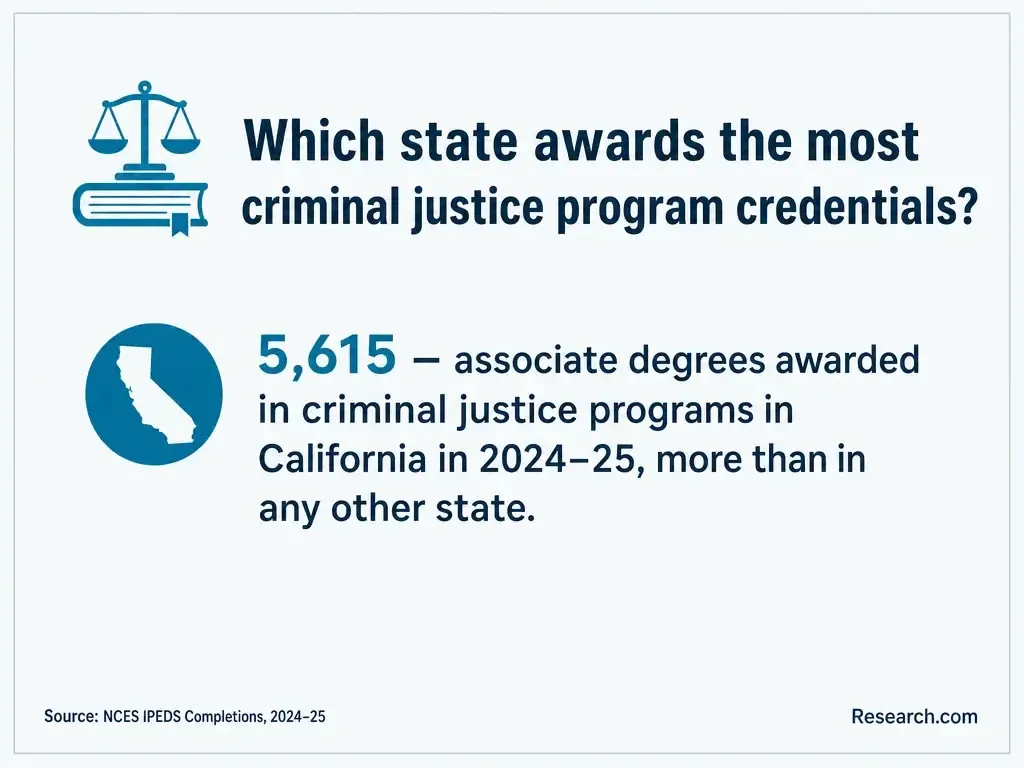
A defensible Taft-specific average total degree cost is not available here, and a published per-unit charge would not answer what an individual student will pay. Taft College's current residency classification, enrolled units, fees, and aid offer determine the direct bill. Living arrangements and travel can change the comparison even when tuition is identical.
Build a complete estimate from tuition and mandatory fees, books and software, technology, transportation, living expenses, and earnings forgone while studying. Add any course-specific materials or internship-related travel that the college identifies. Subtract grants, scholarships, and employer assistance; treat loans as financing that must be repaid, not a price reduction. Compare that net estimate with the time and coursework needed to finish.
Eligible students may be able to use federal grants, work-study, or loans, as well as California community-college aid and institutional scholarships. Eligibility depends on the student and program; a school's participation in federal aid does not guarantee an individual award (Federal Student Aid; California Student Aid Commission). Ask Taft College's aid office which current grants or fee waivers apply to your residency and enrollment status.
File the appropriate aid application, then compare the college's actual award notice against its full cost of attendance. A working student should also ask an employer about tuition assistance and check whether reducing hours to study would outweigh the aid received. Borrow only after accounting for the program's completion timeline and realistic target-job pay.
Check Taft College's current admission and course-placement instructions for documentation, registration steps, and any prerequisites attached to required classes. Admission to the college should not be confused with eligibility for an internship or a future agency job. Law-enforcement employers may separately evaluate age, background, driving history, medical fitness, and other conditions under their applicable rules (California POST).
Before registering, request an evaluation of prior college credit and any applicable prior-learning credit. Written confirmation matters: credit accepted by Taft College may fulfill an elective without fulfilling a specific degree requirement.
Criminal justice associate degree coursework commonly introduces the justice system, criminal law, criminal procedure, policing, courts, corrections, and ethics. General education builds writing, quantitative reasoning, and social-science skills useful for reports, evidence-based decisions, and public interaction. Taft College's current catalog - not a typical course list - determines the actual graduation requirements.
Compare course descriptions with your goal. Someone interested in policing should look for legally sound report-writing and procedure; someone interested in courts or records may value documentation and information-management coursework. Ask whether practical projects, simulations, or internships are available, required, and feasible with your schedule; do not assume a classroom degree includes an agency placement.

Possible areas of emphasis include law enforcement, corrections, courts, or general administration of justice, but availability depends on Taft College's current catalog. A group of electives is not necessarily a formally awarded specialization. Ask whether an emphasis changes the degree name, required courses, total units, or transfer treatment.
Choose electives for the tasks and hiring rules of your intended role. For example, corrections-focused coursework may be informative without replacing employer-required instruction; a transfer-focused student may benefit more from broadly transferable classes. The best specialization is the one documented to advance your next step, not the one with the most appealing title.
Start with the job or transfer destination, then test the degree against it. A low-price ranking is useful for finding candidates, but its affordability score does not measure accreditation, support, or whether the curriculum matches your goal. Institutional accreditation, state authorization, transfer agreements, professional certification, and occupational eligibility answer different questions; verify each one that applies.
Ask Taft College for written answers to these comparisons before committing:
For longer-term academic planning, a dual degree university guide addresses a different kind of decision; it should not replace a written evaluation of this associate degree's credits. The common mistake is choosing on tuition or a ranking position alone, then discovering that required classes, transfer credit, or employment eligibility do not align.
An associate degree can support applications for administrative, records, or support roles and provide a foundation for pursuing agency-specific law-enforcement or corrections opportunities. It does not confer sworn status. Employers make hiring decisions, and academy instruction or other agency requirements may follow selection (California POST).
Career progression depends on the role: experience and employer instruction may lead to specialized assignments or supervision, while additional study may open other opportunities. Readers considering much later academic options, such as accelerated master's programs online, should first establish whether the associate degree fits their immediate employment or transfer objective. If a target vacancy accepts applicants without an associate degree, compare direct entry with the degree's added cost, time, and potential value.
The U.S. Bureau of Labor Statistics projects 3.5% national growth from 2025 to 2035 for police and sheriff's patrol officers. That projection concerns an occupation nationwide, not openings reserved for graduates or demand within Taft. A small local pool of employers can make the timing of vacancies and willingness to search across Kern County more consequential than the national growth rate.
Use current agency postings to check hiring frequency, entry requirements, shifts, and pay before assigning a return to the degree. A worthwhile investment depends on the cost after aid, debt, completion likelihood, earnings you give up while studying, likely job outcome, and how long you expect to use the education - not on a single wage or growth figure.
Education is a consequential investment, so Research.com compares programs with others in the same field and location rather than treating every low tuition figure as equally useful. Only programs with completions reported to the Integrated Postsecondary Education Data System (IPEDS) are eligible. That boundary matters: an unlisted option is not necessarily unapproved or low quality.
The most affordable ranking uses tuition, cost of attendance, median student debt, and federal loan default rate. Weights are assigned through an entropy-based method, which gives more weight to measures that differ more across programs. Accreditation, recognition, support services, earnings, and completion are not part of this affordability score. Research.com's separate best-programs rankings consider those broader measures; readers should therefore verify program fit and outcomes alongside affordability.
Research.com draws on the following sources across its rankings. Some occupation-specific sources below concern fields other than criminal justice; their inclusion does not imply that allied-health or construction credentials are required for this degree.
This approach helps readers identify lower-cost reported options, not a guaranteed lowest personal bill. Compare current program charges and aid offers before enrolling. More detail appears on Research.com's methodology page.
# 1 position
# 2 position
Yes, if you want a local option. Check its current administration-of-justice-related catalog offerings, course schedules, residency-based charges, and aid estimate before comparing a remote provider.
No. California peace-officer hiring and required instruction involve separate agency and POST standards. Ask the agency about its current entry process (California POST).
That depends on the current availability of every required course and any in-person components. Obtain a term-by-term schedule rather than relying on an "online" label.
No. Transfer depends on the receiving institution, individual courses, and applicable agreements. Request a written evaluation tied to your intended destination.
Not necessarily. Compare mandatory fees, books, commuting, time to completion, aid, and likely borrowing alongside tuition.