# 1 position


Audited and Verified:
Our Editorial and Data Verification Process
Research.com uses government datasets, official education statistics and primary institutional information to support its career and degree guides. Our review process checks factual accuracy, occupational definitions, source dates and the requirements associated with the credentials discussed.
How This Article Was Fact-Checked
Our editorial team verifies salary estimates, employment projections, education requirements and program information against original data providers and official organizations. Salary figures are checked against the relevant occupational definitions and reporting periods. Information about licensure, accreditation and required in-person training is reviewed separately.
Fact-checked and verified on:

Co-Founder and Chief Data Scientist

Reviewed by Karolina Broda
Fact-Checker and Data Verification
Choosing a business administration associate degree in North Canton means deciding whether you need a route into office work, a foundation for further study, or both. The U.S. Bureau of Labor Statistics projects 5% growth for general and operations managers from 2025 to 2035, although those roles typically require experience. This guide explains degree types, costs, transfer questions, and realistic career outcomes. It also features the Best Business Administration Associate Degree Programs in North Canton for 2027 ranking, created by the Research.com team of data scientists to help students identify programs worth considering.
Expect a mix of general education and business subjects such as accounting, management, economics, marketing, and workplace communication. The important distinction is whether the program is designed primarily for transfer, career entry, or both. A business associate degree can support applications for administrative and operations-support roles, but the degree alone does not qualify someone to manage an organization.
Degree labels provide a starting point, not a transfer guarantee. This comparison helps you identify which course plan to request from a school.
| Associate degree | Typical emphasis | Best question to ask |
| Associate of Arts (AA) | General education and transferable business foundations | Will the intended receiving institution accept these courses toward my next program? |
| Associate of Science (AS) | Business foundations that may include more quantitative coursework | Do the math and accounting courses match the next program's requirements? |
| Associate of Applied Science (AAS) | Applied business coursework and preparation for work | Which courses transfer, and what workplace projects or experience are included? |
For a local starting point, request Stark State College's current business associate degree plan and ask Walsh University to evaluate specific courses if it is a potential next destination. Do not assume that a similarly named program or nearby campus creates an articulation agreement.
Potential workplaces include offices supporting retail, manufacturing, healthcare, logistics, and professional services across the North Canton area and broader Canton labor market. Relevant work may involve scheduling, purchasing support, customer accounts, payroll support, or sales administration. The location matters because a wider commuting radius may substantially expand the range of employers and job titles you can consider.
Read local postings before choosing electives: recurring requirements for spreadsheets, bookkeeping software, customer relationship management systems, or inventory tools can reveal which applied courses will be useful. Compare the posting's experience requirement with what a program actually provides; an internship or employer project may help you demonstrate skills, but it does not replace years of experience.
There is no single salary for a business administration associate degree. Pay depends on the occupation, experience, employer, and location. For context - not an entry-level prediction - the U.S. Bureau of Labor Statistics reports a May 2025 national median annual wage of $105,770 for general and operations managers. Many people in that occupation have substantial prior experience, so using its median to calculate a new graduate's return would overstate likely early earnings.
For a more useful estimate, collect pay ranges from current Canton-area postings for roles you could qualify for now and compare them with your current earnings. If future income is your main consideration, research majors in college that pay well, but judge this associate degree using realistic first-job options and advancement requirements rather than a manager's median.
A full-time plan often spans about two academic years and roughly 60 semester credits, but the published degree audit - not that rule of thumb - determines what you must complete. Part-time study, course sequencing, developmental coursework, and the availability of evening or online sections can extend the timeline. Prior college credit may shorten it only after the school evaluates that credit.
If speed matters, ask which required courses run every term and whether summer enrollment changes the total price or aid eligibility. Guidance on how long does it take to get an associate degree can help frame the question, but obtain a term-by-term completion plan before choosing an accelerated schedule.
Online study can reduce trips to campus and accommodate work shifts; on-campus sections offer scheduled face-to-face instruction and easier access to some services. Business lectures, discussions, and spreadsheet assignments can often be completed remotely. A program may still require proctored assessments, an in-person internship, or attendance at a particular site, so verify each requirement rather than relying on an "online" label.
Working adults - including those exploring college courses for older adults online - should compare course availability, technical support, and access to advising. For any online institution, confirm institutional accreditation and separately ask whether the courses meet your intended transfer destination's rules; format and accreditation alone do not ensure transfer.
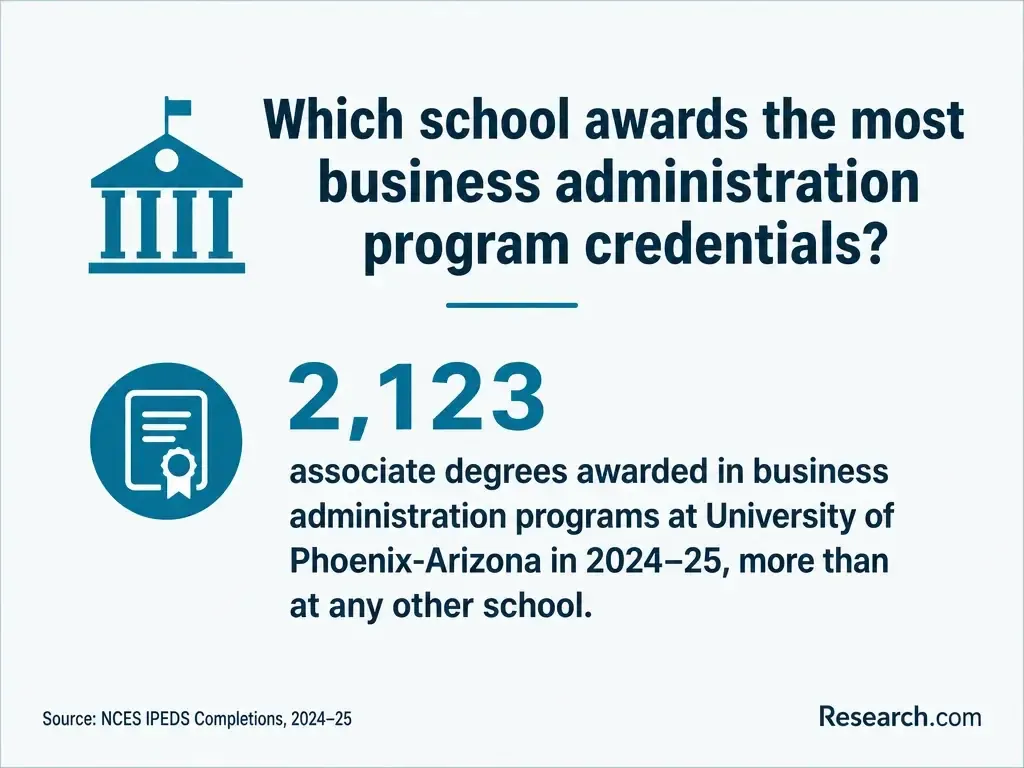
A reliable North Canton average would require comparable, current prices for the programs a student can actually attend. Instead of treating an advertised per-credit rate as the degree price, request a written estimate for all remaining credits under your residency classification. A nearby public option and a remote option may have different tuition rules, fees, and travel costs, so compare their totals on the same completion timeline.
Include mandatory fees, textbooks or access codes, a suitable computer and software, transportation, and living expenses. Add lost earnings if your schedule requires fewer work hours; subtract aid and employer assistance only when you know you qualify. This total-cost view is more useful than choosing the lowest tuition figure in isolation (institutional tuition and cost-of-attendance disclosures).
Eligible students may receive federal grants, loans, or work-study after submitting the Free Application for Federal Student Aid; eligibility and award amounts depend on individual circumstances and the institution's participation (Federal Student Aid). Ask each school about institutional scholarships, Ohio aid for which you qualify, payment plans, and whether an employer will reimburse approved business coursework.
Compare net cost and debt at completion, not just the first term's offer. Check satisfactory academic progress rules, enrollment-level requirements, and whether your planned summer courses are covered before building an accelerated schedule. Aid that reduces borrowing improves the investment calculation; a loan postpones payment rather than reducing the degree's price.
Ask the institution for its current admissions requirements, application deadlines, transcript rules, and placement process. A program may admit students before they are ready for a required accounting or quantitative course; placement or prerequisite coursework can then affect both cost and completion time. Previous college study should be reviewed course by course, not assumed to count toward the major.
Business administration itself is not an occupational license in Ohio. Institutional accreditation concerns the college's recognized status; state authorization concerns permission to operate; neither promises admission, transfer credit, or a job. Verify these matters separately when comparing a campus program with an online provider (U.S. Department of Education; Ohio Department of Higher Education).
Common requirements combine composition, mathematics, and other general education with introductory accounting, economics, management, marketing, business communication, and computer applications. Compare the specific accounting and math sequences if you intend further study: a transferable course may still fail to satisfy a particular major requirement at the receiving institution.
For career entry, look for applied work using spreadsheets, business writing, data interpretation, and collaborative projects. Ask whether an internship or employer-based project is required, optional, or unavailable, and how students secure placements. Business programs do not generally require clinical training, so do not pay a premium for a vague promise of "hands-on learning" without examples of assessed work.
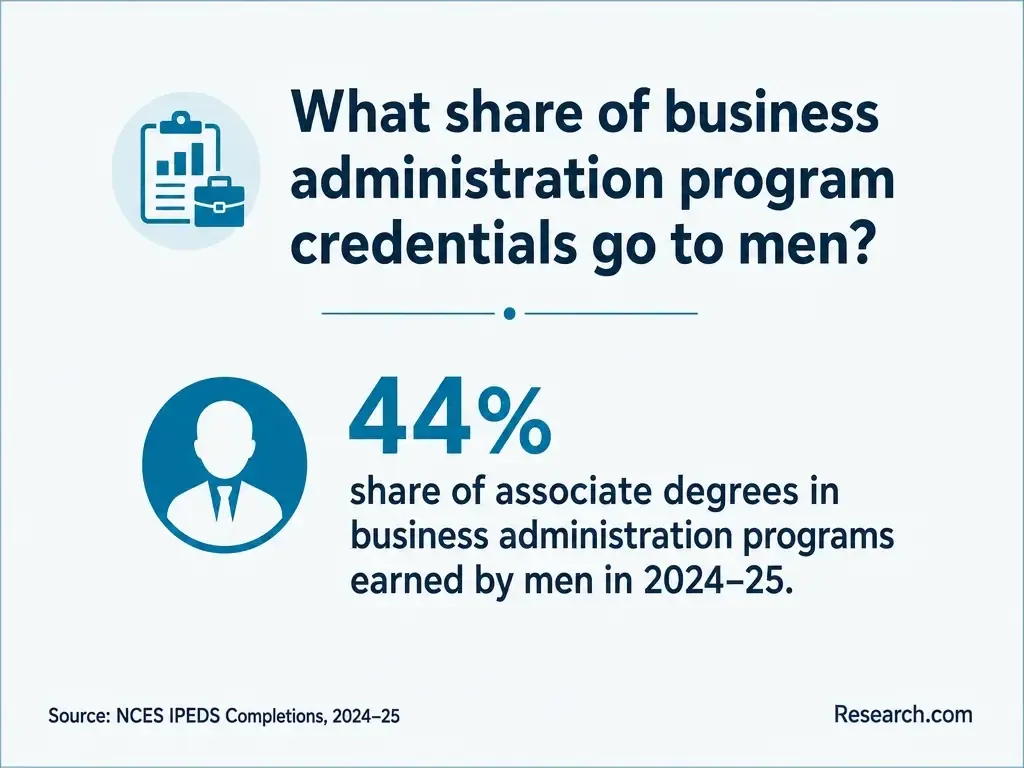
Where offered, electives or concentrations may emphasize accounting support, marketing, management, entrepreneurship, or office operations. Availability varies by institution and catalog year; a concentration name is less important than the courses you can finish on your schedule and apply to your goal.
Choose accounting-oriented coursework if you want bookkeeping or accounts support, and operations-oriented coursework if purchasing, scheduling, or inventory work appeals to you. If transfer is the priority, confirm that specialized electives count toward your next program before taking them. If employment is the priority, compare their software and project assignments with local job postings.
Start with the outcome you need: a first business job, advancement with your current employer, or a transferable foundation. Then compare programs using the same questions, rather than assuming the highest-ranked or quickest option is the best personal investment.
Use this sequence when speaking with admissions and advising staff:
A shorter schedule can be worthwhile if it lets you finish and work sooner, but a manageable part-time plan may be safer if acceleration raises your risk of stopping out. Include completion probability, current and plausible future earnings, debt, and the time it takes benefits to materialize in your own return-on-investment estimate.
Possible first steps include administrative assistant, customer service representative, sales support specialist, and purchasing or bookkeeping assistant, subject to each employer's requirements. Experience and demonstrated software, communication, and problem-solving skills can support progression into coordination or supervisory work. An associate degree is a foundation, not an automatic promotion to management (U.S. Bureau of Labor Statistics, Occupational Outlook Handbook).
If you already have relevant experience, the degree may help you document broader business knowledge. If your goal is simply the fastest possible job change, compare current openings with the time and cost of the full degree; resources on quick schooling to make good money can provide context, but should not substitute for checking local employer requirements.
The U.S. Bureau of Labor Statistics projects 5% national growth for general and operations managers from 2025 to 2035. That describes an experienced occupation nationwide, not the number of entry-level openings in North Canton. Business graduates therefore need a narrower job search: compare current Canton-area postings by title, required experience, software, pay range, and commuting distance.
Pay particular attention to whether employers ask for an associate degree, accept equivalent experience, or require skills the proposed curriculum does not teach. As offices adopt more digital and automated processes, assess whether assignments require you to analyze information and solve problems - not merely enter data. That distinction can guide both elective choices and the work samples you build while enrolled (U.S. Bureau of Labor Statistics, Occupational Outlook Handbook).
Investing in an associate degree is a consequential decision. Research.com created this ranking to help readers compare programs against relevant options in the same location, using reported outcomes, costs, and quality indicators rather than reputation alone. Only programs with completions reported to IPEDS are eligible; an absent program is not necessarily unapproved or low quality.
Best-program rankings assess student completion and retention; earnings one year after completion and relative to annual attendance cost; tuition, attendance cost, debt, and federal loan default; and accreditation, relevant recognition, and student support. Relevant programmatic accreditation or industry recognition receives 20% of the score, institutional accreditation 10%, and student support 10%. The remaining 60% covers outcomes, earnings, and costs, with weights distributed through an entropy-based method. The sources used in the ranking framework are:
Occupation-specific sources in this framework, including healthcare and construction organizations, should not be read as accreditors of business administration programs. Most-affordable rankings use only cost and debt indicators, with entropy-based weights; quality indicators do not contribute to that score. Readers can use the ranking to narrow a shortlist, then confirm current program details directly. See Research.com's methodology for more information.
# 1 position
# 2 position

It can be if the courses match your target jobs or transfer plan and the total cost is manageable. Compare likely first-job opportunities with your current earnings, aid, borrowing, and probability of finishing; do not use a manager's median salary as your expected starting pay.
Choose by course requirements and your intended outcome. An AA or AS may suit a transfer-focused plan, while an AAS may emphasize applied work. Obtain written guidance on how credits will count before deciding.
Possibly, but check the specific program for in-person assessments, internships, and course availability. Also verify that the degree and individual courses meet any intended transfer requirements.
There is no general Ohio occupational license for business administration. Particular jobs may impose their own qualifications, so review the requirements for the role you want.
Choosing on tuition or ranking position alone. Confirm the degree awarded, full completion cost, course schedule, applied experience, and transfer treatment before enrolling.