# 1 position


Audited and Verified:
Our Editorial and Data Verification Process
Research.com uses government datasets, official education statistics and primary institutional information to support its career and degree guides. Our review process checks factual accuracy, occupational definitions, source dates and the requirements associated with the credentials discussed.
How This Article Was Fact-Checked
Our editorial team verifies salary estimates, employment projections, education requirements and program information against original data providers and official organizations. Salary figures are checked against the relevant occupational definitions and reporting periods. Information about licensure, accreditation and required in-person training is reviewed separately.
Fact-checked and verified on:

Co-Founder and Chief Data Scientist

Reviewed by Karolina Broda
Fact-Checker and Data Verification
Choosing a business administration associate degree near Marietta, Ohio, means deciding whether you need a direct route into office work, a foundation for further study, or both. The Research.com team of data scientists created its Best Business Administration Associate Degree Programs in Marietta for 2027 ranking to help students identify programs worth considering. The stakes are real: the U.S. Bureau of Labor Statistics reports a May 2025 median salary of $105,770 for general and operations managers - but that is not a typical new graduate's pay. This guide helps you compare pathways, costs, and realistic outcomes.
Expect a mix of general education and business coursework, commonly covering communication, accounting, management, economics, and workplace software. An AA or AS generally emphasizes courses intended for transfer; an applied associate degree generally emphasizes occupational preparation. The label alone does not establish transferability or job readiness - course requirements do.
For a Marietta student, Washington State College of Ohio is a relevant local institution to investigate. Ask which business-related associate degrees it currently awards and whether required courses are offered at times and locations you can attend. Marietta College is another local institution, but do not assume it offers the associate degree you want; confirm the current award and program before including it in an associate-degree comparison.
Business administration typically does not require clinical placements or an occupational license. Still, projects, internships, or employer-based assignments can make a difference if you need evidence of spreadsheet, customer-service, or operations skills when applying for your first role.
Potential settings include local healthcare organizations, retailers, professional offices, manufacturers, nonprofits, and businesses serving the Ohio River area. The degree can support applications for administrative, customer-service, scheduling, purchasing-support, and sales-support work; the employer and role determine what experience or software proficiency is required.
Marietta's location matters because a student's practical job search may extend beyond the city and across the Ohio-West Virginia border. Before choosing an internship or campus schedule, compare the commute with the employers you can realistically reach. Business office roles generally do not require an Ohio occupational license, although a specialized job may impose its own requirements.
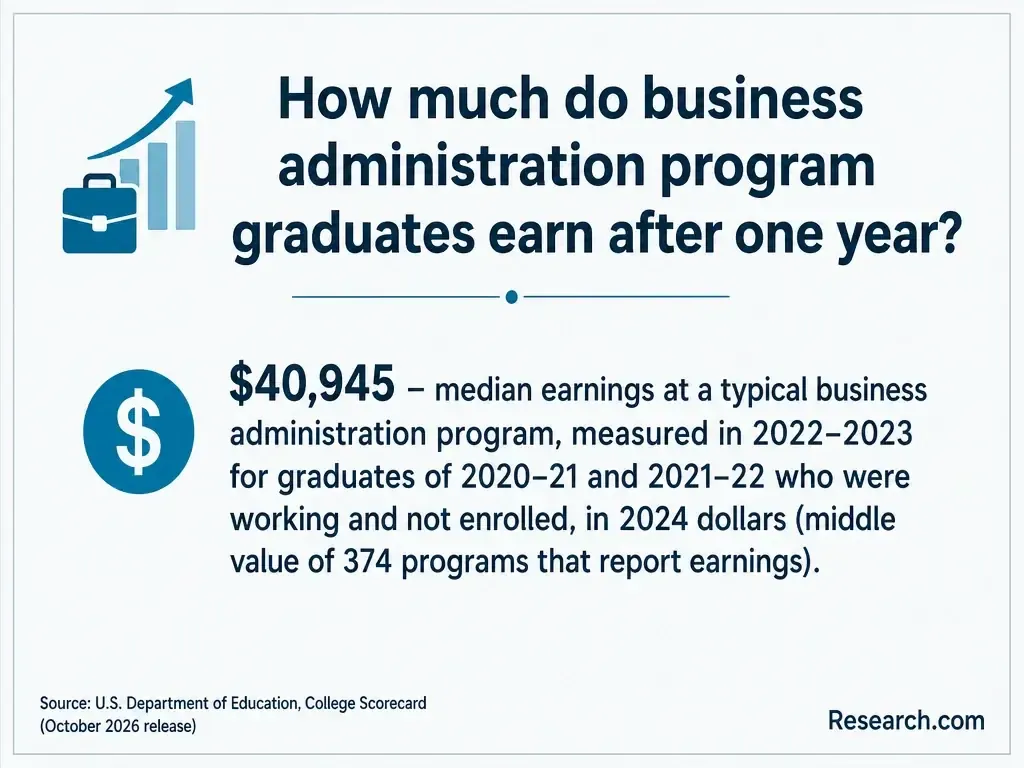
There is no single reliable salary for everyone with this degree. Pay depends on the occupation, experience, employer, and work location. The U.S. Bureau of Labor Statistics reports a May 2025 national median of $105,770 for general and operations managers; it projects 5.0% growth in that occupation for 2025-2035. Managers commonly bring substantial prior experience, so this figure is a long-term occupational reference - not an associate-degree starting-salary estimate.
For an enrollment decision, identify the actual entry-level job titles in your target commuting area and compare their posted pay and requirements. Do not calculate a return on investment using a manager's median wage unless you already have a credible route to that role.
Full-time students often plan around two academic years, but a program's required credits, course sequence, transfer credits, and class availability determine the actual finish date. Part-time attendance can make work more manageable while extending the time until completion. Ask for a term-by-term plan showing when each required business course is offered, especially if you can attend only evenings or online.
An accelerated schedule is worthwhile only if you can sustain its course load without jeopardizing completion or income. Search results for one year masters programs describe a different education level; they should not be used to estimate an associate degree's length.
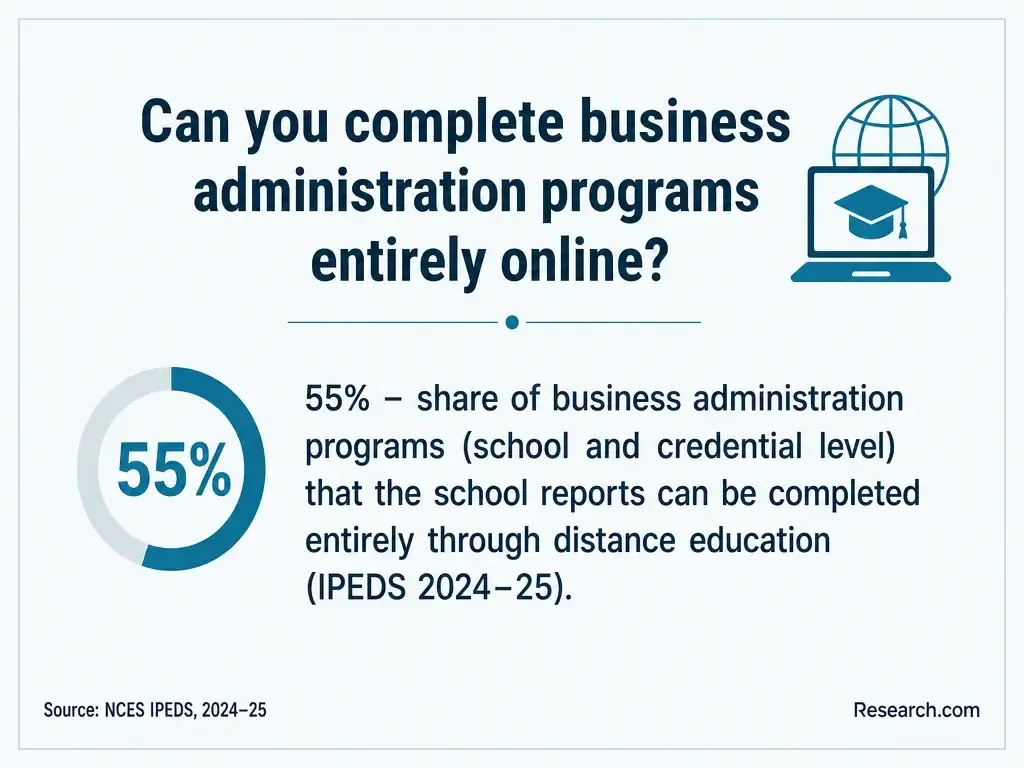
Online delivery may reduce trips to campus, while on-campus classes provide a set meeting schedule and easier access to in-person services. In either format, check whether accounting, presentations, group projects, proctored assessments, or an internship require attendance at a particular place or time. "Online" does not necessarily mean self-paced.
Compare formats using your actual weekly schedule and technology needs. A list of top online colleges can help start a search, but the deciding evidence is the specific associate degree's curriculum, support, price, and any required in-person activity. Online delivery alone does not establish that another institution will accept its credits.
A defensible Marietta-wide average cannot be calculated from a single school's advertised tuition, and no verified local program-price set is available here. Instead, request a written full-program cost estimate for each eligible associate degree. Include tuition at your applicable residency rate, mandatory fees, books or access codes, computer and internet costs, and transportation. Add living expenses and earnings you might forgo if attendance reduces your work hours.
Compare net cost after confirmed grants or employer assistance - not an assumed award. A lower per-credit price can still produce a higher total bill if required courses, fees, or a schedule change extend your enrollment.
Depending on the student and institution, possible funding includes federal grants and loans, Ohio aid, institutional scholarships, and employer tuition assistance. Federal Student Aid bases federal eligibility on the student's circumstances and the school's participation; Ohio aid programs have their own rules. Ask the financial aid office to identify which awards apply to your specific associate degree and enrollment load.
Review the award notice alongside the entire degree budget. A loan reduces the amount due now but does not reduce the degree's price; a grant or scholarship generally does, subject to its conditions. If you plan to study part time, ask how that changes aid and the expected completion date.
Admissions requirements depend on the institution and program. Expect to check the school's application, proof of prior education, placement or course-readiness process, and any documentation needed to evaluate previous college credit. Business courses may have prerequisites even when admission to the institution is open.
Before enrolling, request the current catalog requirements and ask which math and writing courses you can enter immediately. This helps prevent a surprise preparatory course from changing your budget or graduation timeline. Confirm admission, financial aid eligibility, and acceptance into the intended associate degree separately.
A business administration plan commonly combines writing and quantitative general education with introductory accounting, economics, management, marketing, and business technology. Course titles and requirements vary: one program may emphasize transferable theory, while another devotes more space to workplace applications. Check whether you will actually practice spreadsheets, business communication, and interpreting financial information rather than relying on the program name.
Claims about what is the easiest degree to get online are a poor substitute for examining your required courses. If accounting or quantitative work is unfamiliar, look for tutoring and a course sequence that gives you time to build those skills.
Depending on the current catalog, a business-related associate degree may allow electives or a concentration in accounting, marketing, management, entrepreneurship, or office operations. Do not assume a specialization exists locally because another school advertises it. Compare the courses you would complete, not just the concentration title, with the jobs you want or the requirements of a receiving institution.
A specialized associate degree makes sense when it retains the general business foundation you need and adds relevant practice. A broad degree may be better if you are undecided or need flexibility. Lists of online certification programs that pay well cover a different type of option; they do not establish what a business associate degree includes or where its credits transfer.
Start with the outcome you need: entry-level office work, transferable coursework, or both. Then compare programs using the same evidence rather than treating a ranking position as a final answer. These checks address the mistakes most likely to cost you time or money:
Institutional accreditation, state authorization, transfer agreements, and any voluntary professional recognition answer different questions. Business administration office roles generally have no occupational licensing-board approval to verify; be wary of a school that implies its accreditation guarantees a job or transfer.
An associate degree can support a move into administrative support, customer-facing operations, sales support, or coordination work. With relevant experience, someone may pursue greater responsibility in operations or supervision. Further study is another possible path, but credit acceptance must be checked before enrollment; an associate degree does not automatically secure admission or advanced standing.
Choose the path that matches your starting point. A working professional who already has office experience may benefit more from courses that strengthen accounting or operations skills; a newcomer may need practical projects and entry-level work experience alongside the degree. Articles about highest paying college majors should not be read as predictions of pay from this associate degree.
Business administration is not one occupation, so a single growth forecast cannot describe every graduate's prospects. The BLS projection for general and operations managers concerns a potential later-career destination, not the number of Marietta openings for new associate-degree holders. Local demand also varies with the employer's industry and the applicant's experience.
For a useful market test, review current postings within a commute you would accept, including relevant opportunities across the state border. Record recurring job titles, required software, experience, schedules, and pay ranges. If few roles match your intended pathway, favor an associate degree with adaptable coursework and a realistic plan to gain work experience while enrolled.
Investing in education is an important decision. Research.com created the ranking to help readers compare programs against relevant local options rather than relying on a school's name alone. Its team checks program and institutional information across multiple sources; readers should still confirm current offerings, prices, and transfer terms directly with each school.
Best-program rankings assess student outcomes; earnings and return on investment; costs and debt; and quality and recognition. The scoring weights are 20% for relevant programmatic accreditation or industry recognition, 10% for institutional accreditation, 10% for student support, and 60% for outcomes, earnings, and costs. Indicators within that final group receive entropy-based weights, so measures that vary more across programs carry more weight. Only programs with completions reported to IPEDS are included. Consequently, an omitted program is not necessarily unavailable or poor quality. These are ranking rules, not a claim that every source below is equally relevant to business administration.
The ranking draws on the following data sources:
Readers can use the ranking as a shortlist, then test each option against their own budget and goals. For further detail on scoring, see Research.com's methodology. A most-affordable ranking, if presented separately, uses only tuition, attendance cost, debt, and federal loan default measures; it does not score accreditation or other quality indicators.
# 1 position
# 2 position
It can be if its coursework fits a reachable job or further-study goal and its total cost is manageable. Compare likely entry-level opportunities and your expected debt - not experienced managers' wages - before deciding.
An AA or AS may suit a transfer-focused plan; an applied associate degree may suit a more occupational plan. Ask the school and intended receiving institution how the actual courses will count.
That depends on the specific program. Verify any required campus visits, scheduled assessments, presentations, or internship before enrolling.
General administrative and operations-support roles do not ordinarily require an occupational license. Check the requirements of any specialized role you intend to pursue.
Use the ranking to identify options, then verify the degree awarded, transfer rules, schedule, full cost, and practical learning opportunities against your own goals.