2026 Forensic Nursing Degree Jobs That Do Not Require Licensure

Co-Founder and Chief Data Scientist
What career options exist for individuals holding a forensic nursing degree who prefer to avoid the demands of licensure? As the healthcare industry and legal systems evolve, more opportunities arise for graduates seeking roles that do not require passing licensing exams. Approximately 15% of forensic nursing degree holders pursue positions focusing on victim advocacy, program coordination, and educational support, which leverage their specialized knowledge without the need for a professional license.
These alternative career paths provide valuable contributions to the forensic nursing field while offering flexibility. This article explores forensic nursing degree jobs that do not require licensure and what candidates can expect when pursuing these roles.
Key Benefits of Forensic Nursing Degree Jobs That Do Not Require Licensure
- Absence of licensure requirements enables quicker workforce entry, reducing delays commonly faced by 40% of forensic nursing graduates seeking initial employment.
- Diverse roles across healthcare, legal, and social services sectors allow graduates to access broader career options without licensing constraints.
- Non-licensed positions help build critical skills and professional experience early, which support advancement and licensure eligibility later in forensic nursing careers.
What Jobs Can You Get With a Forensic Nursing Degree Without Licensure?
Graduates with a forensic nursing degree have access to several career opportunities that do not require professional licensure, allowing them to engage in the healthcare-legal field in versatile ways. Employment in forensic science-related roles without licensure is projected to grow by about 14%, reflecting expanding demand. Below are common positions where a forensic nursing background is valuable without the need for licensure.
- Forensic Nurse Liaison: Acting as a critical link among healthcare providers, law enforcement, and legal teams, these professionals coordinate communication and provide education to support victims through legal processes. Their degree equips them with an understanding of medical-legal issues crucial for this role.
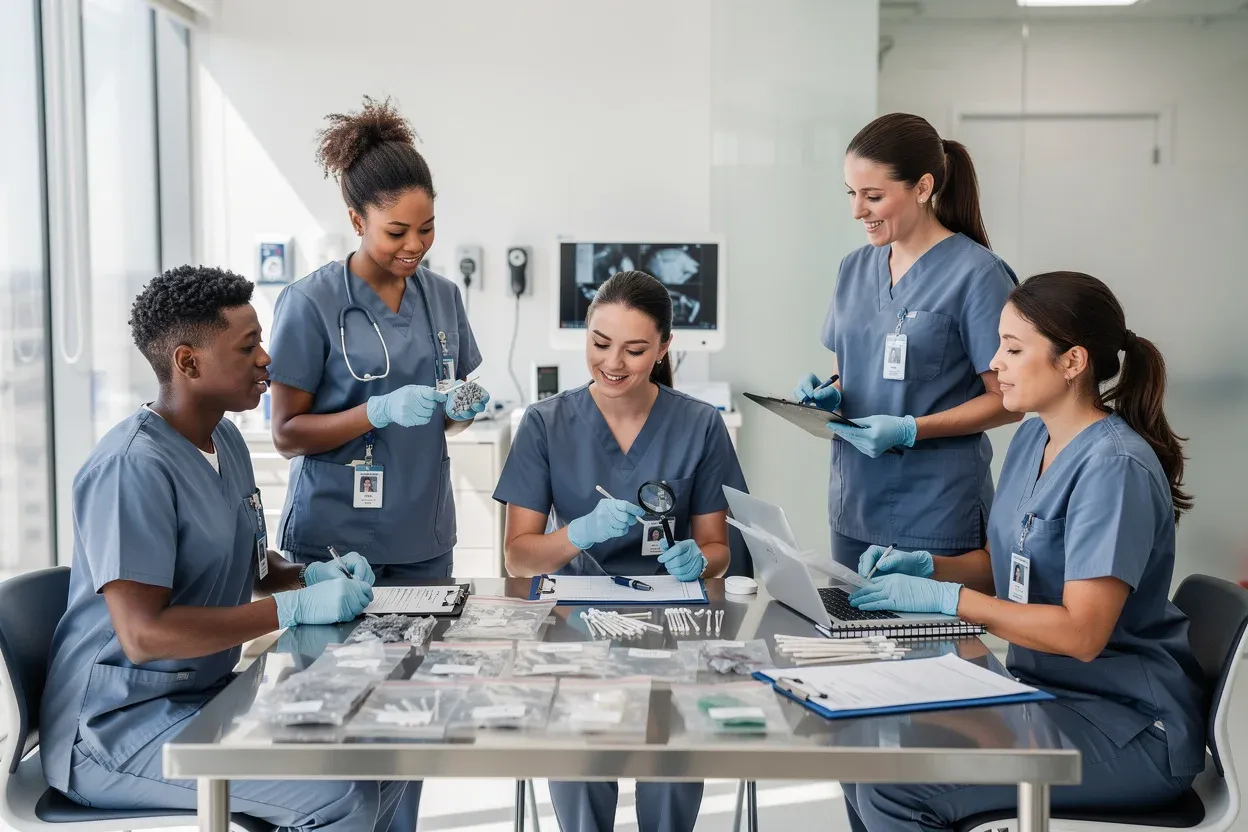
- Crime Scene Investigator (CSI): While not requiring nursing licensure, this role benefits from forensic nursing knowledge when collecting and documenting biological evidence and injury details at crime scenes, aiding investigations and court proceedings.
- Victim Advocate: Providing emotional support and resource referrals to victims, victim advocates utilize training in trauma-informed care gained from their forensic nursing education to address victims' needs compassionately and effectively.
- Forensic Research Assistant: These assistants contribute to forensic or healthcare research by collecting data, analyzing findings, and preparing reports, with their forensic nursing background offering insight into clinical and legal aspects without requiring licensure.
- Legal Nurse Consultant: Working alongside legal teams without direct patient care, legal nurse consultants interpret medical records and provide expert opinions based on their forensic nursing education, supporting cases with medical expertise rather than requiring a nursing license.
Students interested in expanding their career opportunities beyond traditional roles may also explore the easiest online DNP programs to further enhance their qualifications and options.
Table of contents
Which Industries Hire Forensic Nursing Graduates Without Licensure?
Many industries recognize the value of transferable knowledge and academic training over formal licensure for forensic nursing graduates. Recent surveys indicate about 18% of these graduates find employment in roles that do not require professional licensure but still utilize their specialized expertise. These positions often emphasize collaboration with licensed professionals and focus on skills beyond direct clinical care. Below are key industries that commonly hire forensic nursing graduates without licensure.
- Criminal Justice System: This sector seeks forensic nursing graduates to support law enforcement agencies and crime scene investigations. Their skills in trauma analysis, evidence collection, and forensic science help translate medical facts for legal purposes, assisting victim advocacy and legal processes.
- Public Health Sector: Forensic nursing knowledge is valuable in public health organizations for injury assessment, documentation, and tracking epidemiological patterns of violence and abuse. Graduates contribute to programs aimed at preventing and reporting domestic violence, sexual assault, and child abuse.
- Academic and Research Fields: These graduates often work alongside licensed professionals conducting forensic science research and data analysis. Their expertise supports studies of criminal behavior, victimization trends, and forensic methodologies, contributing to program development and evidence-based practice.
- Legal Sector: The legal field employs forensic nursing graduates as expert consultants and forensic case reviewers. Their ability to interpret medical evidence without acting as licensed practitioners aids attorneys in understanding complex medical information relevant to civil and criminal cases.
- Victim Advocacy Organizations: These roles leverage forensic nursing skills to provide emotional support, assist with legal documentation, and educate victims about forensic procedures. Their involvement improves service quality in trauma-sensitive situations.

What Entry-Level Jobs Are Available Without Forensic Nursing Licensure?
Many industries offer entry-level roles that depend more on academic background and transferable skills than on professional licensure. Forensic nursing graduates often find that about 35% secure positions within six months of completing their degree, even without formal certification. Below are several entry-level job options that leverage relevant knowledge while not requiring a license.
- Forensic Nursing Assistant: Supports licensed professionals by managing case files, gathering preliminary data from victims or scenes, and performing administrative duties. This role benefits from a solid understanding of forensic nursing principles to facilitate clear communication and accurate reporting without delivering clinical care.
- Evidence Technician: Handles the organization and preservation of forensic evidence under law enforcement guidance. Graduates' insights into the handling of biological and physical materials help ensure evidence integrity during collection and storage.
- Victim Advocate Assistant: Provides emotional support and resource coordination for victims during early reporting and recovery phases. Knowledge of trauma-informed care enhances communication and empathy when assisting clients through sensitive situations.
- Research Assistant: Participates in data gathering, literature reviews, and study coordination within forensic nursing or criminal justice research projects. Specialized education aids in interpreting medical and forensic data essential for maintaining research accuracy.
- Health Education Aide: Assists in creating and distributing community outreach materials focused on violence prevention and forensic awareness, using forensic nursing insights to educate populations effectively and safely.
A forensic nursing degree graduate shared that entering the field without a license involved navigating uncertainty and patience. He described applying to many assistant roles before finding a position where his forensic knowledge was valued despite the absence of direct clinical responsibilities. He remarked, "It was challenging at first not being able to perform certain duties, but focusing on support roles helped me build experience and stay connected to the field." This experience highlighted the importance of flexibility and determination for new graduates pursuing non-licensed forensic nursing careers.
Which Forensic Nursing Jobs Pay the Highest Salaries Without Licensure?
Salary levels for non-licensed forensic nursing roles vary widely based on factors such as industry demand, technical expertise, and leadership duties. Bachelor's-level forensic nursing professionals without licensure can expect wages generally ranging from $48,000 to $70,000, reflecting strong earning potential in specific positions. Below are some of the highest paying forensic nursing jobs that do not require licensure.
- Forensic Case Manager: This role centers on coordinating services for crime victims, guiding them through medical, legal, and social systems. It offers salaries between $45,000 and $65,000, with the forensic nursing background adding value through specialized knowledge in victim support and case coordination.
- Crime Scene Investigator Assistant: Assisting in the collection and documentation of medical evidence, professionals in this position earn approximately $50,000 to $70,000. The expertise gained from a forensic nursing degree helps improve evidence accuracy and case outcomes without needing licensure.
- Legal Nurse Consultant: These consultants analyze medical records for legal cases and typically earn from $60,000 to $90,000. Their skills reduce direct patient care needs while leveraging forensic nursing expertise to clarify complex medical details, often without requiring formal licensure.
- Research Coordinator: Overseers of forensic nursing studies and clinical trials in this role make about $55,000 to $75,000. Their knowledge ensures strict adherence to protocols, supporting research integrity without licensure mandates.
- Forensic Educator or Trainer: Focused on developing training programs for healthcare and legal professionals, these positions generally start around $50,000 and can exceed $80,000. The comprehensive forensic nursing education aids in delivering effective professional training.
For students exploring alternatives, enrolling in a nursing school that does not require TEAS test can be a strategic step toward entering these well-compensated roles without licensure.
What Skills Help Forensic Nursing Graduates Get Hired Without Licensure?
Employers hiring forensic nursing graduates without professional licensure often emphasize practical skills and adaptability. A 2023 National Association of Forensic Nurses survey found that 68% of employers prefer candidates with strong transferable abilities over formal credentials for support roles. These competencies can make non-licensed graduates valuable team members in various settings. Key skills include:
- Critical Thinking: The ability to analyze evidence and complex situations carefully helps graduates contribute valuable insights during investigations. This skill supports collaboration with legal and law enforcement teams, enhancing case outcomes even without direct clinical duties.
- Effective Communication: Strong written skills enable clear documentation of findings and preparation of accurate reports, which is essential for legal processes and multidisciplinary work. Clear communication also aids data accuracy and team coordination.
- Attention to Detail: Precision in following procedures and protocols is vital to avoid errors that could jeopardize investigations. Graduates who demonstrate meticulousness increase their reliability and suitability for roles requiring accuracy with sensitive information.
- Interpersonal Skills: The ability to work well with diverse teams, including healthcare providers and law enforcement, fosters better cooperation and problem-solving. Strong interpersonal skills improve teamwork and make candidates more adaptable in collaborative environments.

Can Certifications Replace Licensure in Some Forensic Nursing Careers?
Certifications and licensure serve different roles within the nursing profession. Licensure is a mandatory legal credential issued by state boards, granting nurses authorization to practice within defined clinical scopes and ensuring minimum competency to protect public safety. Certifications are voluntary, offered by professional organizations to recognize specialized expertise beyond licensure requirements. In some forensic nursing career paths, certifications can replace licensure, particularly in roles that do not require direct clinical care. For instance, a 2022 survey by the International Association of Forensic Nurses found that 38% of employers valued forensic nursing certification options without licensure as equally or more important than traditional licensure for hiring in non-clinical forensic roles.
Certifications as alternatives to forensic nursing licensure are often accepted in positions focused on evidence collection, victim advocacy, forensic documentation, community education, or administrative support. These roles emphasize specialized knowledge rather than hands-on patient care, allowing certified professionals to contribute without the legal authority of licensure. However, certifications do not authorize nurses to perform clinical tasks such as patient assessment or treatment, which require compliance with state nursing laws.
Prospective professionals should assess job requirements and local regulations carefully before relying solely on certification credentials. For students seeking educational pathways aligned with these alternatives, exploring universities with no application fee can reduce entry barriers into forensic nursing-related studies.
What Remote Jobs Can Forensic Nursing Graduates Get Without Licensure?
The rise of digital technologies and virtual collaboration has greatly increased remote work opportunities across many fields. Recent studies show that remote job listings grew by over 90% in the last few years, reflecting a strong demand for flexible roles. For forensic nursing graduates without licensure, several remote positions leverage their expertise in non-clinical ways.
- Medical Writer: This role involves producing educational content, articles, or summaries that explain complex forensic and medical topics clearly. Forensic nursing knowledge ensures accuracy and relevance while working remotely for publishers or advocacy groups.
- Research Coordinator: Graduates can support research projects by coordinating tasks, managing data, and assisting with study design. These positions, often found in academic or government settings, allow remote contribution under licensed professionals' supervision without requiring direct patient care.
- Victim Advocate: Providing emotional support and resources to crime survivors remotely, victim advocates use forensic insights to understand trauma and guide clients through legal and healthcare systems. This role depends on communication skills rather than clinical licensure.
- Case Review Specialist: Reviewing medical records and legal files to assist legal teams or insurers, this job emphasizes document analysis. It draws on forensic nursing training but does not involve hands-on nursing duties, making licensure unnecessary.
- Online Educator: Developing digital forensic nursing courses or continuing education programs allows graduates to share their expertise remotely. They create and deliver instructional materials without providing clinical services.
When I spoke with a professional with a forensic nursing degree, she described the challenge of finding work that matched her skills without credentials that require licensure. "It felt frustrating at first because many roles seemed off-limits, but I found that writing and advocacy opened doors I hadn't considered," she shared. She explained how developing educational content and working in victim support helped her use her forensic nursing background in meaningful ways, even without traditional licensure. "Remote work gave me space to build confidence and contribute in different capacities, which was both empowering and rewarding."
What Challenges Do Non-Licensed Applicants Face?
Not having professional licensure can significantly reduce job competitiveness for forensic nursing graduates, especially since 68% of employers prefer or require licensure when hiring. This preference highlights systemic barriers that non-licensed applicants frequently encounter in the field. Below are key challenges that affect their employment opportunities.
- Employer Preference: Many organizations favor candidates with licensure as proof of clinical skills and legal compliance, placing non-licensed applicants at a disadvantage during hiring processes.
- Credential Barriers: Licensure acts as a verified benchmark of competency. Without it, employers are often reluctant to offer positions involving tasks that legally require credential verification, limiting available roles.
- Experience Requirements: Forensic nursing jobs usually demand clinical experience in licensed environments. Non-licensed graduates face difficulties gaining such experience, creating a catch-22 that hinders initial job entry.
- Regulatory Limitations: Certain forensic nursing duties involve legal responsibilities that necessitate a licensed practitioner. Non-licensed nurses may be legally restricted from performing these tasks, reducing their scope of work.
Are There Career Limitations for Non-Licensed Professionals?
Career limitations do exist for non-licensed forensic nursing professionals. While possessing a forensic nursing degree provides essential knowledge, the absence of professional licensure often excludes graduates from many roles that require official credentials. Workforce data shows that about 75% of forensic nursing jobs in healthcare and law enforcement require a valid nursing license or an equivalent certification, creating a substantial occupational barrier. This reality impacts job prospects without forensic nursing licensure, restricting access to positions involving regulated medical responsibilities.
The nature of these career limitations includes restricted entry into regulated practice areas and slower advancement within forensic nursing careers. Non-licensed professionals frequently face barriers to providing direct patient care, offering legal affidavits, or progressing into senior roles. Many rely on alternative credentials or experience, which may not be universally recognized, thereby limiting their professional growth and earning potential.
Individuals exploring options with a forensic nursing degree might also consider additional training or degrees, such as a nutrition degree online, to broaden their qualifications and opportunities in related fields.
What Factors Should Students Consider Before Skipping Licensure?
Deciding whether to pursue licensure is a critical step that shapes the future trajectory of forensic nursing graduates. Data indicates that licensed professionals enjoy a 25% higher retention and promotion rate in forensic healthcare settings, highlighting the impact of credentials on career paths. Several key factors should guide students before choosing to skip licensure.
- Career Goals: Licensure enhances eligibility for advanced clinical roles and leadership positions, which many non-licensed roles do not offer. Students targeting specialized or management pathways will find that obtaining licensure aligns better with their long-term ambitions.
- Industry Requirements: Many employers in healthcare, law enforcement, and forensic settings mandate licensure regardless of job titles. Awareness of these norms can prevent unnecessary barriers, ensuring smoother entry into preferred work environments and avoiding disconnects between job expectations and qualifications.
- Long-Term Growth: Forensic nursing graduates without licensure may face limitations in promotion opportunities and salary progression. Licensed professionals benefit from greater career stability and upward mobility, supported by evidence showing stronger retention and advancement rates.
- Job Accessibility: While some forensic nursing degree jobs do not require licensure, these positions might be more competitive or geographically limited. Understanding regional demand and credential expectations helps students gauge realistic employment prospects.
- Transferability: Licensure facilitates mobility across states and sectors, providing flexibility for graduates who plan to relocate or shift specialties. Non-licensed pathways often restrict such options, potentially narrowing future career choices.
Students exploring alternatives can also consider direct entry MSN programs for non nursing majors as an option to bolster their qualifications and career potential.
What Graduates Say About Forensic Nursing Degree Jobs That Do Not Require Licensure
- Khai: "Choosing not to pursue licensure allowed me to enter the workforce more quickly and focus on the unique investigative aspects of forensic nursing. It was empowering to start my career without the lengthy wait for licensing exams while still contributing meaningful expertise to cases. This path has shown me that passion and specialized knowledge can open doors in diverse roles that don't always require formal licensure."
- Julio: "Reflecting on my journey, I realized that by not seeking licensure, I could dedicate more time to hands-on forensic nursing work that directly supports law enforcement and victims. It has been rewarding to make an impact through interdisciplinary collaboration, proving a formal license isn't the sole marker of professionalism or success in this field. For me, the ability to engage immediately in meaningful cases outweighed the traditional path."
- Jayden: "My career in forensic nursing without licensure has been a distinct advantage, allowing me valuable flexibility in choosing roles that emphasize evidence collection and patient advocacy. The absence of licensure requirements has broadened my opportunities in both medical and legal environments. I appreciate how this career choice supports my dedication while avoiding the administrative challenges associated with formal nursing licenses."
Other Things You Should Know About Forensic Nursing Degrees
Yes, many forensic nursing positions without licensure still require thorough background checks. Employers seek to ensure candidates have no criminal history that could compromise the integrity of sensitive forensic work. This process is especially common when working with legal or law enforcement agencies.
Non-licensed forensic nursing professionals can pursue various continuing education options, such as workshops, seminars, and online courses focused on evidence collection, trauma-informed care, and victim advocacy. These programs help maintain relevant knowledge and keep skills current in a rapidly evolving field.
Having a solid grasp of legal procedures is crucial even for forensic nursing graduates working without licensure. Understanding how to document findings accurately, chain of custody requirements, and courtroom testimony ensures their contributions are valid and admissible in legal settings. This knowledge supports effective collaboration with law enforcement and legal professionals.
Yes, forensic nursing graduates without licensure can contribute to research and data analysis roles focused on forensic healthcare topics. These roles may include assisting with study design, collecting data, and interpreting findings related to injury patterns or healthcare outcomes for victims. Such positions support the advancement of forensic nursing knowledge without requiring clinical licensure.
References
- Sign Up for the Journal of Nursing. https://www.asrn.org/journal-advanced-practice-nursing/3435-15-nursing-jobs-that-take-place-away-from-the-bedside.html
- A Pandemic, A Nursing Shortage, and 7,600 Fake Nursing Diplomas https://www.aafs.org/article/pandemic-nursing-shortage-and-7600-fake-nursing-diplomas
- Forensic Nurse Career Guide: How to Become a Forensic Nurse (2025 Guide) https://nurseslabs.com/forensic-nurse-career-guide/
- Forensic Nursing Program: Navigating Ethical Dilemmas – AIHCP https://aihcp.net/2024/10/18/forensic-nursing-program-navigating-ethical-dilemmas/
- How to Become a Forensic Nurse | Incredible Health https://www.incrediblehealth.com/blog/forensic-nurse/
- Forensic Nursing: A Comprehensive Guide - Madonna https://absn.madonna.edu/blog/forensic-nursing/
- Forensic Nurse Salary, Career Outlook & Education Requirements https://www.forensicscolleges.com/careers/forensic-nurse
- 3 Top Reasons You Should Become a Forensic Nurse https://www.edumed.org/articles/reasons-to-become-a-forensic-nurse/
- Forensic Nurse Career https://www.healthcarepathway.com/health-care-careers/forensic-nurse/
- Non-traditional Nursing Jobs | University of Phoenix https://www.phoenix.edu/articles/nursing/nontraditional-nursing-jobs.html